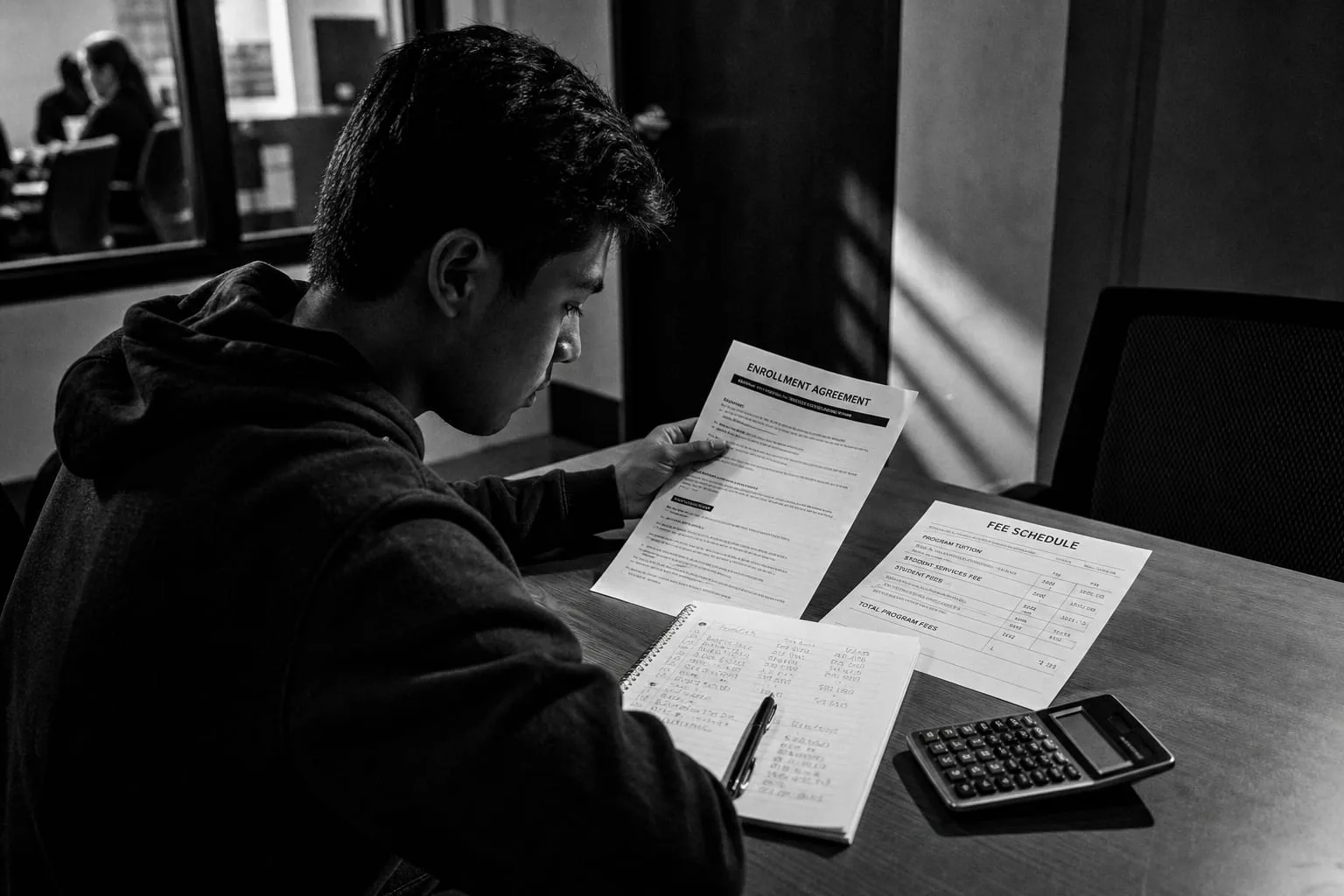
The shortest program on the list is almost never the cheapest one. It is the one with the smallest number printed on the enrollment agreement, which is a different thing, and the gap between those two facts is where most of the money in vocational training quietly goes.
I will not give you a single figure for what a training route costs, because there isn't one. A commercial driving credential, a phlebotomy certificate, a state real estate license and a two-year associate degree in an allied health field sit in four different price universes, and each one shifts again depending on which state you are standing in. What can be done is bracket the number. That means listing every line that will eventually appear, deciding which ones you control, and refusing to sign anything until the school has answered questions in writing.
Tuition is one line on a longer bill
Ask a school what the program costs and you will usually get tuition. Ask what it costs to finish and you get a longer answer, if you get one at all. The lines that show up later, in rough order of how often people forget them:
- Registration and technology fees, charged per term rather than once, so a program that runs long charges them more times.
- Books, kit and tools. In trades and cosmetology this is not trivial and it is often mandatory from a specific vendor.
- Background check, fingerprinting and drug screening, sometimes twice if a clinical or externship site requires its own.
- Licensing exam fees, paid to the state or a national board, not the school.
- Retake fees, paid again per attempt.
- Transportation and parking to a campus, plus to whatever externship site you are assigned, which may not be near either.
- Immunizations, uniforms, liability insurance where a clinical placement demands them.
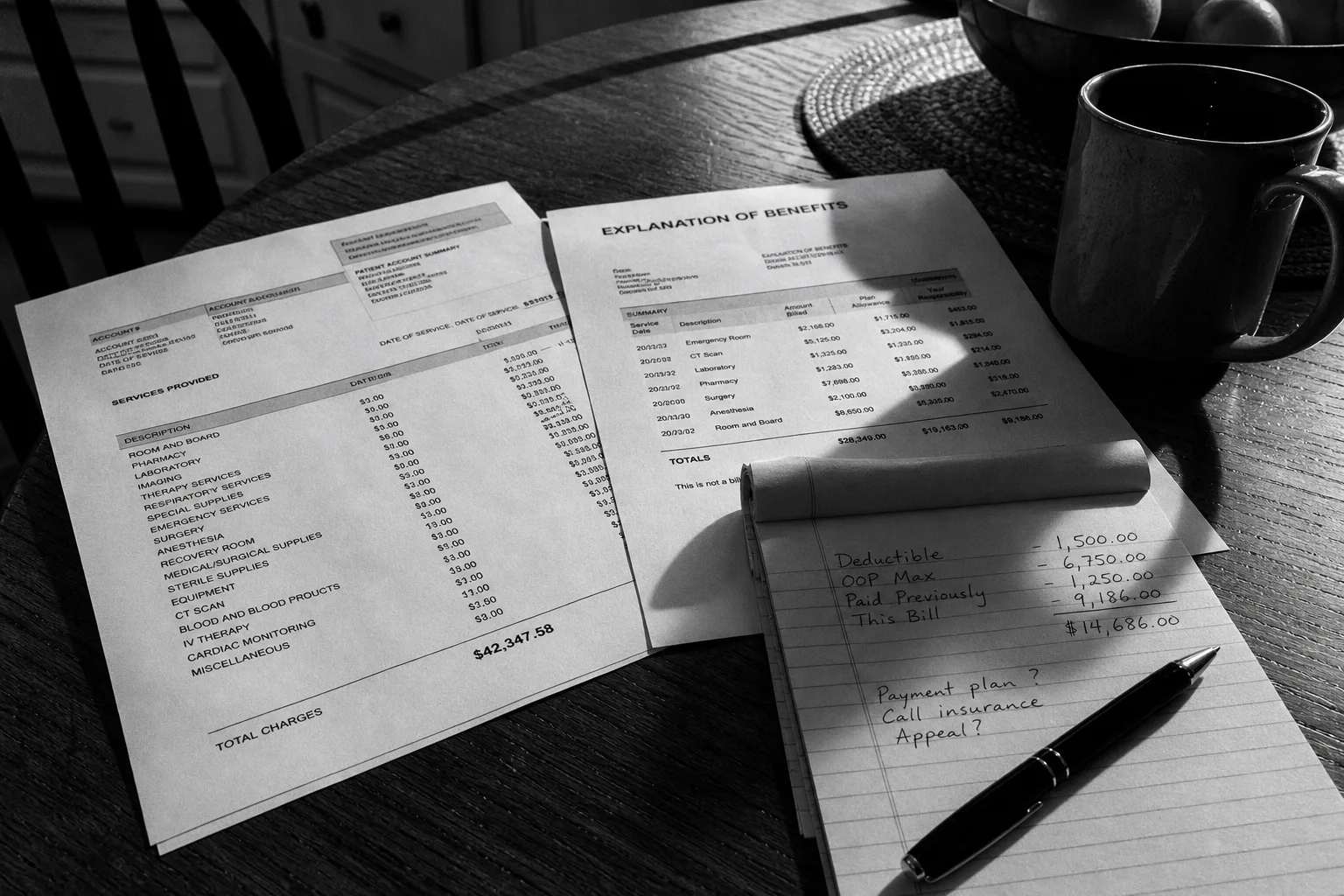
None of these are hidden in a sinister sense. They are simply on different pages, arriving at different times, and no one hands you the sum.
The hours you cannot work are the largest number in the file
Here is the part that gets compressed programs sold and also the part that makes them expensive. A schedule that runs eight hours a day, five days a week, for a few months does not coexist with a full-time job. So the real cost of that program is tuition plus fees plus the wages you do not earn while attending. For anyone currently working, that forgone pay is frequently larger than everything the school charges.
The slower evening or weekend version of the same program often costs more in tuition and less in total, because you keep working. It also takes longer, and there is a genuine cost to that too: another year before the credentialed wage starts. Which route wins depends on your current hourly rate, the expected rate after, and how long you can carry the gap. That is arithmetic you can actually do, and it is worth an hour at the kitchen table before an admissions appointment rather than after.
What actually moves the range
Four things move the total more than anything on the brochure.
Required clock hours. Most licensed occupations are regulated at the state level, with a minimum number of instructional or supervised hours. Two schools advertising the same credential in the same state are teaching to the same floor. If one claims to do it in half the calendar time, it is compressing days, not reducing hours.
Exam pass rates and retakes. A program that gets students through the first attempt is cheaper than one that does not, regardless of tuition. Every retake is a fee, a wait for the next test date, and more weeks before you can be hired at the credentialed rate. Ask for the school's first-time pass rate for your specific program and cohort. If the answer is vague, that is itself information.
Placement waits. Programs with a clinical, externship or road-test component are only as fast as the queue for a slot. This is where the twelve-week program becomes a twenty-week program, and the tuition does not change while the lost wages do.
Financing. Interest on a loan taken for a short program is small in absolute terms and large as a percentage of the total. Know the rate, the term, and whether payments begin during training.
Questions that get you a defensible number
Take these to the admissions office and write the answers down. The Department of Labor oversees registered apprenticeship and workforce training standards, and a school accustomed to that environment will not be troubled by any of them.
- What are the total required clock hours, and how many weeks does the typical student, not the fastest one, take to complete them?
- What is the full charge list including all fees, from enrollment to the day I sit the exam?
- What is the first-time pass rate for graduates of this program?
- How are externship or clinical placements assigned, and what is the current wait?
- What is the refund schedule if I withdraw in week two, week six, or week fifteen?
Question five matters most and gets asked least. Withdrawal is common, usually for reasons unrelated to the coursework, and the refund policy decides whether that costs you a few hundred dollars or the whole tuition.
A school with clear answers to all five is a school that has done this arithmetic before and expects prospective students to do it too. That is the one to enroll in, whichever calendar it runs on.