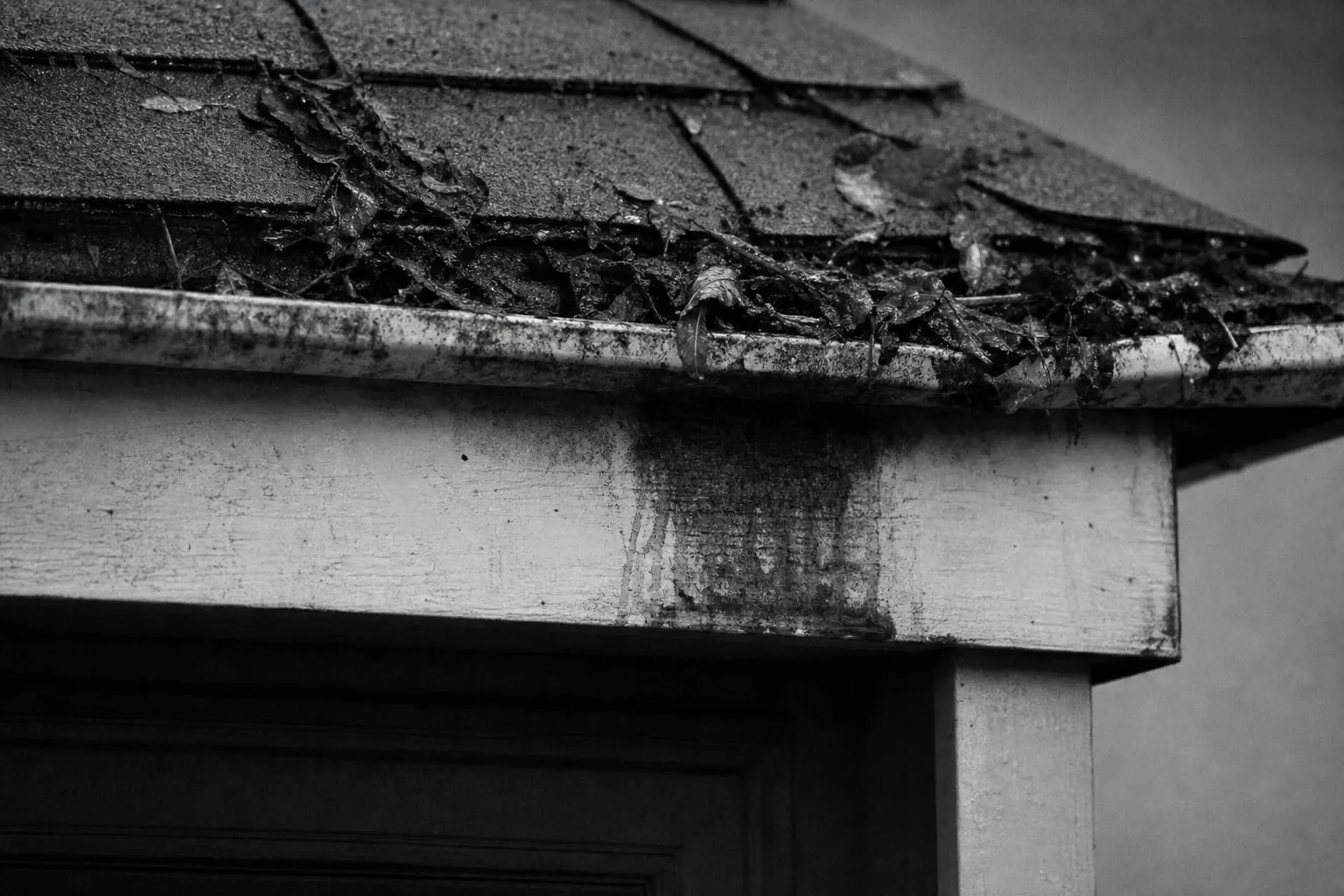
A gutter full of leaves is generally treated as untidiness rather than as damage, which is a reasonable reading of what it looks like and a poor reading of what it does. Water leaving a roof has one intended path and a full gutter closes it, so the water takes a different one, and that path runs across materials chosen for their appearance rather than for their tolerance of being wet. The sequence that follows is well understood, entirely predictable, and slow enough that nobody connects the first stage to the last.
Year One: Water Goes Somewhere It Was Not Meant To
The first thing a blocked gutter does is overflow at the back rather than the front, which is the detail that makes the problem invisible. Debris packs against the outer lip and water backs up behind it, then spills over the rear edge and runs down between the gutter and the fascia board, which is exactly where nobody is looking. From the ground the gutter appears to be working, since water is visibly leaving the roof, and the leak is happening behind a board eighteen feet up.
In this first year nothing visible occurs. Paint on the fascia begins to lift in places, the board takes on and releases moisture through every wet spell, and the soffit above it starts to hold humidity. If anyone is on a ladder they might notice a soft patch. Nobody is on a ladder, because there is no reason to be, and the only symptom available at ground level is a gutter that needs cleaning, which is the symptom being ignored.
Year Two: The Fascia Stops Holding Fasteners
By the second season the fascia board is wet more often than it is dry, and wood in that condition loses its ability to hold a screw long before it looks rotten. Gutter hangers are fixed into that board, so the gutter itself begins to sag, usually at one end first. A sagging gutter holds standing water, standing water collects more debris, and the section that was overflowing occasionally is now overflowing constantly. The problem has started feeding itself.
This is the stage where a homeowner does usually notice something, in the form of a gutter that is visibly out of line or a section that has pulled away at one end. The common response is to refix it, and refixing a gutter into a fascia that has already softened works for a season and then fails again, sometimes in a different spot. The repair is treated as a gutter problem because that is the visible component, while the board behind it is the one that has actually failed.
Year Three: The Sheathing Behind the Board
Behind the fascia sits the edge of the roof sheathing and the ends of the rafters, and once the fascia is saturated for extended periods, water reaches both. Sheathing is usually oriented strand board or plywood, and the edge is its most vulnerable part, since it absorbs readily and dries slowly with a roof covering sitting on top of it. Delamination starts at the edge and works inward, at which point the roof covering along that run has nothing solid beneath it.
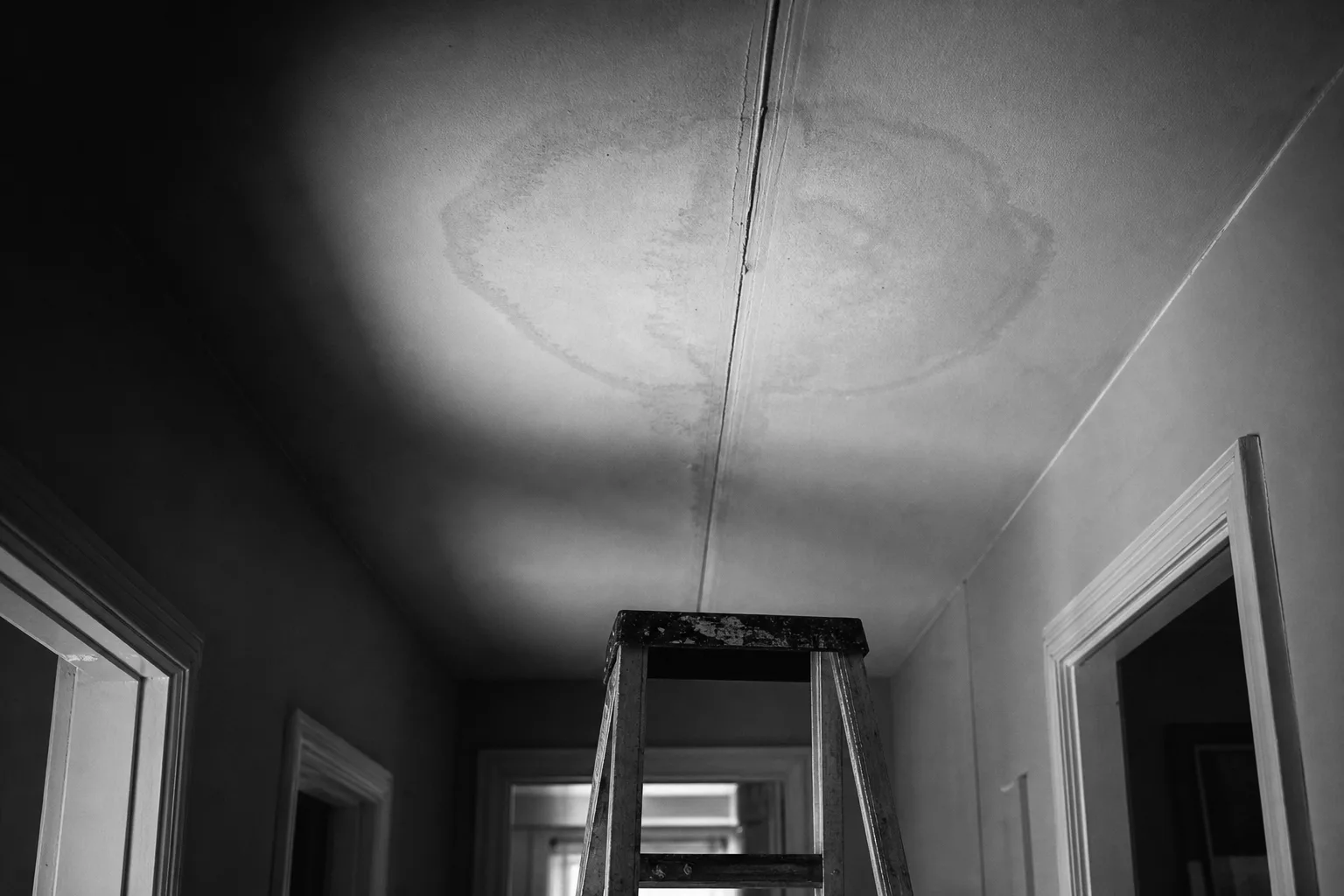
The signs from inside the house, where there are any, are indirect: a stain at the top of an exterior wall, a patch of ceiling near an outside corner that looks slightly different, or in a vented attic a visible dark line along the eaves. Most households do not go into the attic between one year and the next, and by the time somebody does, the repair has already grown from a board to a section of the roof edge.
Year Four: Framing, and the Cost Multiplies
The final stage reaches the rafter tails, meaning the ends of the structural members that carry the roof out past the wall. Repairing those is a different order of work entirely: the roof covering along that run comes off, the sheathing edge is cut back to sound material, the tails are sistered or replaced, and everything above is rebuilt. What began as a Saturday with a ladder and a bucket has become several days of work involving a carpenter, a roofer, and a dumpster, and the arithmetic between the two is not close.
A second branch of the same sequence runs downward rather than upward, and it is worth naming because it produces the more expensive repair of the two. Water spilling behind the gutter also falls straight down against the wall and into the ground beside the foundation, in a concentrated line rather than spread across a yard. Saturated ground next to a foundation is how basements get wet, how footings move in freezing climates, and how a crack that was stable for thirty years starts to open. The gutter is a small component sitting between a roof and both of those outcomes.
Where the Chain Is Cheapest to Break
Every stage of this is arrested by the same thing, which is water leaving the roof by the route it was designed to take. Clearing the gutters twice a year, once after the leaves finish and once in spring, breaks the chain at year zero for the cost of an afternoon or a modest invoice. Guards help in some settings and pack solid in others, so they reduce the frequency of the task rather than removing it. Checking the fascia while up there is the other half of the job, and a board that is soft at the corner is the last cheap warning the sequence offers.