Ask an installer what most often kills a residential solar project and the answer is rarely about panels. It is about the roof underneath them, and specifically about two findings that turn up on a site visit and end the conversation for several years. Both are things a homeowner can check themselves in an hour, with no equipment beyond a phone and a tape measure, which is worth doing before three companies are booked and three afternoons are spent listening to presentations that were never going to lead anywhere.
Start With the Age of the Roof, Not the Angle of It
Panels last a long time and the mounting hardware penetrates the roof surface, so the practical question is whether the covering underneath will outlive the array. An asphalt shingle roof approaching the end of its life is the first finding that ends projects, because removing and reinstalling an array to replace shingles underneath costs real money and adds nothing to the system. Most installers will decline the work outright if the roof has under roughly ten years left, and the ones who do not decline it should probably have done.
Working out the remaining life is easier than it sounds. Find the permit record or the receipt if either exists, and if neither does, look at the shingles from the ground with binoculars for granule loss, curled edges, and bald patches near the ridge. A roof that has lost enough granules to show the mat is well past halfway. This is also the single most useful thing to establish first, since a homeowner who discovers the roof has four years left has learned something worth knowing regardless of what happens with solar.
Orientation and Pitch, Measured Roughly From the Ground
Orientation matters less than people expect and still matters. South facing planes produce the most across a year in the United States, west facing planes produce less in total but more in the late afternoon when electricity is often worth more, and east facing planes produce a morning-weighted output that suits some households and not others. North facing is generally not worth mounting on. A compass app and two minutes in the yard will settle which planes exist and roughly which way each one looks.
Pitch is the other half of the same question and matters least of all within the normal range. Anything between a shallow slope and a steep one will produce respectably, with the difference across that range smaller than most homeowners assume and smaller than the difference a single tree makes. What is worth measuring properly is usable area: the length and width of each plane, minus the vents, the chimney, the skylights, and the setback that fire codes require around the edges and ridge, which is frequently the constraint that decides how many panels actually fit.
Shade Is a Time Problem, Not a Picture
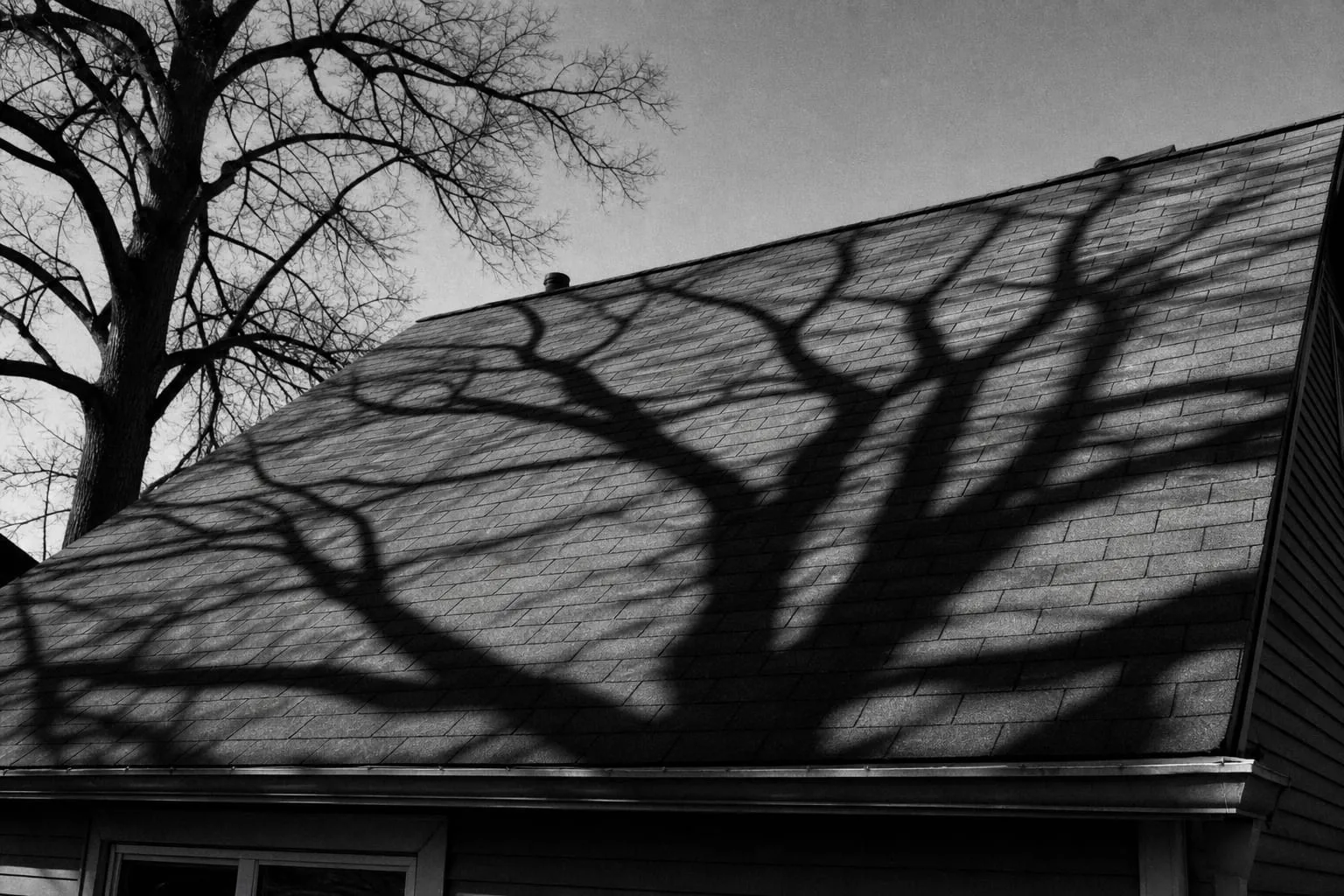
The second finding that ends projects is shade, and it is the one homeowners get wrong most often, because shade is assessed by walking outside once and looking. A roof that is clear at noon in January may be substantially covered at four in the afternoon in July, and the neighbor’s silver maple that casts nothing today will cast a great deal in six years. Shade has to be understood as something that moves across a day and across a year, not as a photograph taken at a convenient moment.
A rough version of the professional assessment is available to anyone with a phone and a free afternoon. Photograph each roof plane from the same spot at three or four points across the day, note what falls across it and when, and then think about the same trees in leaf if the day happens to be in winter. Partial shade also does disproportionate damage on strings without panel level electronics, so a corner in shadow for two hours can cost more production than its area suggests. Any installer worth using will model this properly, but knowing the answer in advance changes the conversation.
The Two Findings That End It Early
An aging roof and serious shade are the two results that mean the answer is not yet rather than never, and both are worth reaching alone rather than in a driveway with somebody waiting. A roof with a few years left turns solar into a roofing decision first, which is a perfectly good outcome and frequently the cheaper sequence, since installing an array onto a new covering avoids paying twice for the same labor. Heavy shade turns it into a tree decision, or into a question about whether ground mounting is possible.
What to Have Ready Before Anyone Comes Out
For a roof that clears both hurdles, four things make the quoting process quicker and the quotes more comparable: twelve months of electricity bills showing actual usage rather than an estimate, the approximate age of the roof, a sketch of the usable planes with dimensions, and the shade notes taken across the day. Consumer material published through the Department of Energy covers the same ground in more detail for anyone who wants it. The homeowner who arrives with all of that is no longer being sold a system. They are asking three companies to price the same job, which is a different conversation and a much shorter one.