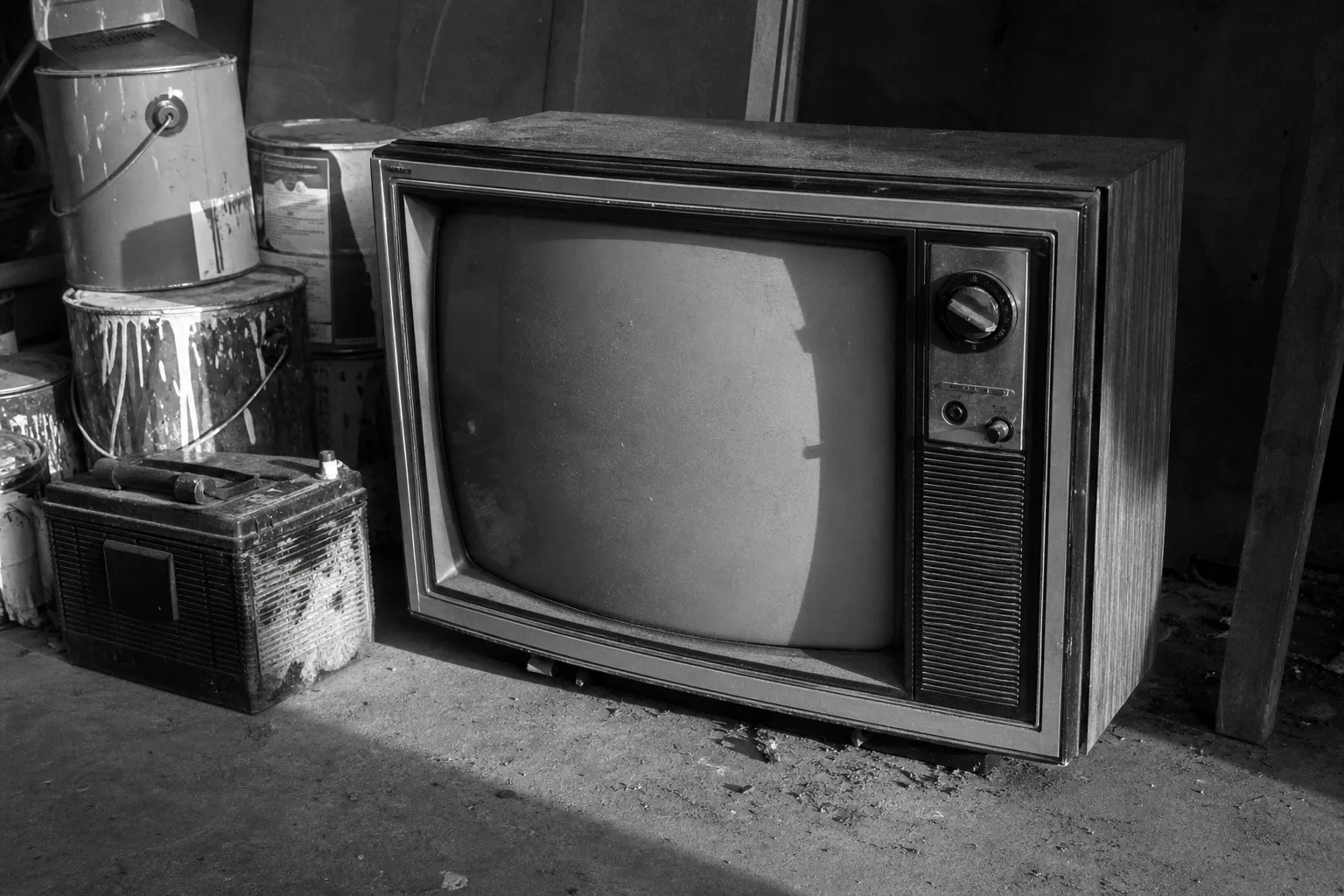
The belief is that electronics are recyclable, full stop. Somebody will take the old tube television, probably for free, probably on a Saturday, probably at a high school parking lot. So the set goes into the garage to wait for that Saturday, and then it waits four more years.
The belief is not baseless. It was true, in many places, for a stretch of years. It stopped being reliably true, and nobody sent a letter.
Where the free-recycling assumption came from
Cathode ray tube televisions and monitors contain several pounds of leaded glass. That lead is precisely why states wrote electronics recycling rules in the first place, and why a CRT is not supposed to go in the household trash in a good many jurisdictions. The Environmental Protection Agency oversees the federal framework for hazardous and electronic waste, and states layer their own collection programs on top of it.
For a while, the economics worked. Glass-to-glass recycling existed: leaded CRT glass could be sold to factories that made new CRTs. The recycler had a buyer. Collection events could be free to the public because the material at the end of the chain was worth something.
Then everyone bought flat screens. The factories that bought leaded glass closed. What had been a commodity became a disposal cost, and the recyclers who used to be paid for the glass started paying to get rid of it. The collection events did not all disappear, but the free ones started excluding CRTs specifically, or capping them at one per household, or charging by the inch.
So the set in your garage sits in an odd category: clearly recyclable in a technical sense, clearly restricted from the trash, and clearly not free. Most of the frustration people feel about it comes from measuring today's options against a rule of thumb that expired.
The five routes, side by side
For a single 32-inch console or tube set in a suburban or small-city setting, these are the realistic options. Costs vary enormously by state, so treat the pattern as the useful part rather than any specific dollar figure.
| Route | Who it suits | What to expect |
|---|---|---|
| Curbside bulk pickup | Almost nobody, for a CRT | Many programs list televisions as an explicit exclusion even when they take couches and mattresses. The set gets tagged and left at the curb, which is worse than where you started. |
| County or municipal household hazardous waste site | Residents with a permanent drop-off facility nearby | Usually the cheapest legitimate route. Often free or a modest per-item fee for residents, proof of address required, limited hours, limited quantities per visit. |
| One-day collection event | Patient people with a truck | Free or low cost, but CRTs are the item most likely to be excluded or capped. Read the item list, not the headline. |
| Retailer or manufacturer takeback | Anyone replacing an appliance anyway | Some retailers will haul the old set when they deliver a new one. The terms are narrow. Generally no takeback without a purchase, and often not for consoles over a certain size. |
| Certified private recycler | Households with several devices at once | Charges by weight or by screen size. Will take the thing today. Worth asking whether they hold a recognized electronics recycling certification, which tells you the material is tracked downstream. |
| Junk removal service | People moving, clearing an estate, or physically unable to lift it | Highest price per item, lowest effort. Priced by truck volume, so a lone television is the worst possible value and a garage full of items is the best. |
Two things fall out of that table immediately. The cheapest route and the easiest route are at opposite ends. And the price of the easy route collapses per item as soon as you have more than one thing to move.
What is actually setting the number
When a recycler quotes you a fee, three variables are doing the work.
Weight. A CRT is mostly glass and steel. A 27-inch set can run well over a hundred pounds, and a wooden console considerably more. Fees quoted per pound punish exactly this item.
Lead content. The leaded funnel glass is the part with no buyer. A flat panel of the same screen size costs the recycler far less to process, which is why a published price list often has a separate, higher line for CRTs.
Who the law makes responsible. A number of states run manufacturer-funded electronics recycling programs, where producers pay into a system that covers collection. In those states, residential drop-off is frequently free, and the cost is already embedded in the price of new electronics. In states without such a program, the household pays at the point of disposal. Same television, same physics, different bill, decided entirely by which side of a state line the garage is on.
That last one explains most of the advice contradictions you will find. A neighbor across a state line genuinely did drop one off for nothing. It does not mean you were overcharged.
The four questions that work on any awkward item
The television is a worked example. The judgement you want is portable, because the next item will be a half-full can of oil-based paint, a propane tank, a mattress, a stack of lead-acid batteries, or a chest freezer with refrigerant in it. Each has its own quirk. The questions do not change.
1. Is this item restricted, or merely inconvenient? A restricted item is one the trash hauler is prohibited from landfilling: electronics in many states, paint, motor oil, batteries, anything pressurized, anything with refrigerant. Inconvenient items, like a sofa, are allowed but awkward. Restricted items need a specific destination. Inconvenient items only need a truck. Getting this wrong is why people schedule the wrong service.
2. Does the material have a buyer at the end of the chain? Scrap steel and aluminum have buyers, which is why a scrapper will collect an old grill or washer for nothing and sometimes pay you. Leaded glass and latex paint do not, so you pay. This single question predicts the direction of the money better than anything else, and it tells you when a free offer is legitimate rather than a sign that something will be dumped down a ravine.
3. Who in my specific jurisdiction is responsible? The ladder is county solid waste authority, then municipality, then state environmental agency, then retailer. Call the county first. Their staff answer this question all day and will tell you plainly whether they take the item, at what fee, and who does if they do not.
4. Can I batch it? Nearly every route in the table gets cheaper per item with volume. Household hazardous waste sites set per-visit limits, so one trip can carry the television, the paint, the old car battery, and the fluorescent tubes. Junk haulers price by truck space. The most expensive way to deal with an awkward item is to deal with it alone, on its own trip, in a hurry.
What this looks like in practice
For the single television: call the county solid waste line, ask specifically about CRTs rather than about electronics, and ask whether residents get a free allowance. If there is a permanent drop-off, hold the set until you have three or four other restricted items to go with it and make one trip. If there is no drop-off within reasonable driving distance, price a certified recycler and a junk hauler on the same afternoon, then decide whether the difference is worth your own lifting.
The set has waited four years. It can wait three more weeks for the trip that also clears the paint shelf.