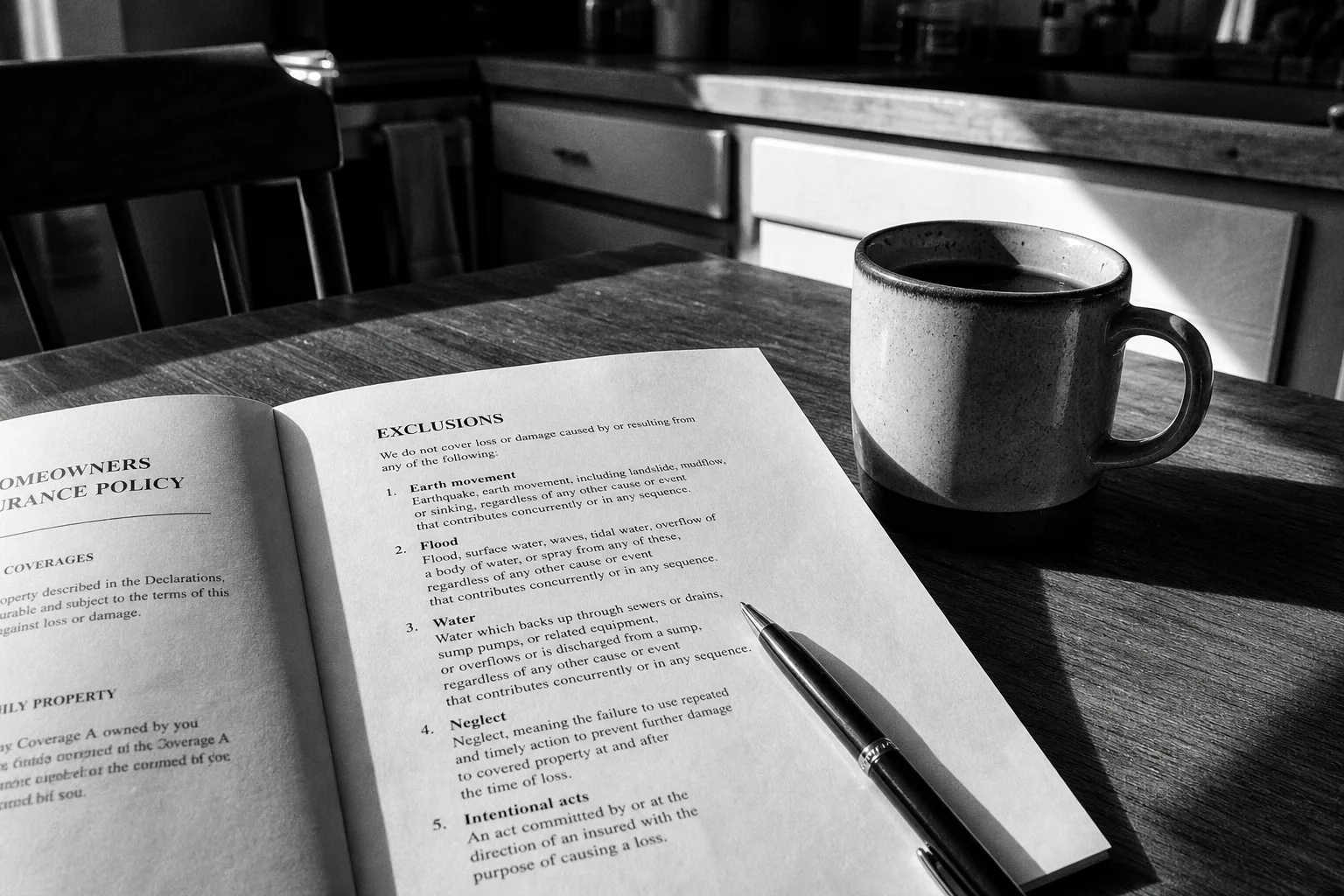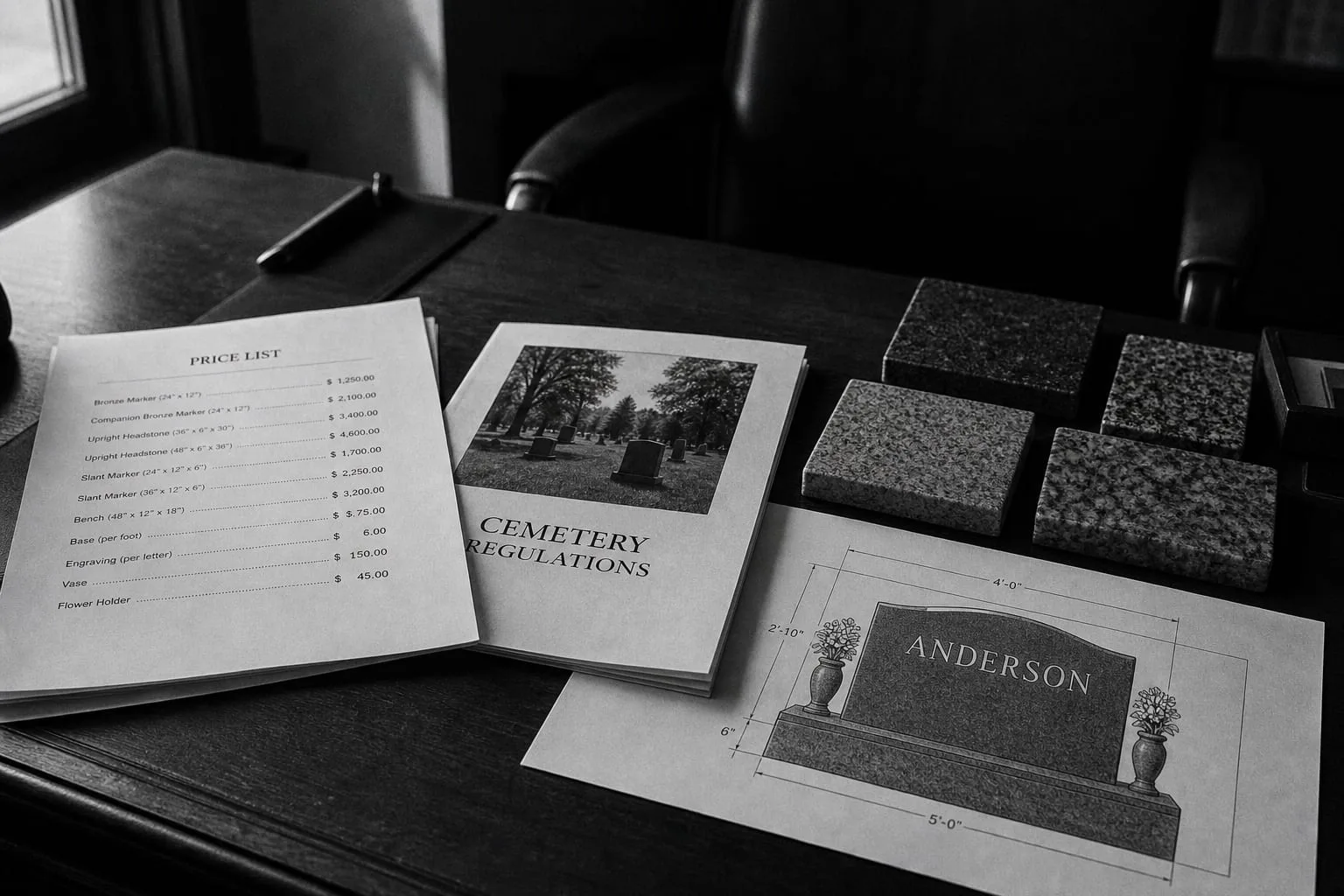
The single largest misunderstanding about funeral costs is that there is one bill. There are usually three, from three unrelated businesses, and they do not arrive at the same time. The funeral home invoices within days. The cemetery invoices around the burial, sometimes earlier if a plot is being bought that week. The monument company may not invoice for months, because the ground has to settle before anything heavy sits on it.
Families who assume a single number get surprised twice. Families who understand the three-part structure can sort the required from the optional in an afternoon, and can push the largest remaining decision out to a point where they are capable of making it well.
Why the bill is itemized at all
For most of the twentieth century, funeral pricing was quoted as a package. You picked a casket, and the casket price carried the staff, the vehicles, the room, the paperwork and the embalming inside it. There was no line to question because there were no lines. Comparing two providers meant comparing two caskets and hoping the rest was similar.
That changed when funeral pricing came under federal consumer protection oversight. The Federal Trade Commission is responsible for how funeral providers disclose prices to the public, and the practical effect of that oversight is the itemized general price list you are handed, or read over the phone, before anything is chosen. A provider quotes services separately. You can decline items. A package may still be offered, and it may still be the cheaper route, but you are entitled to see what is inside it.
That history matters on a Tuesday morning in an arrangement office, because the document in front of you is not a menu the funeral home designed for persuasion. It is a disclosure document with a required shape. Read it as a list of things you are choosing to buy, one at a time.
Bill one: the funeral home, within the first week
One charge on this list is not optional: the basic services fee. It covers the arrangement conference, the death certificate filings, the permits, the coordination with the cemetery or crematory, and the overhead of a licensed operation. It is charged whether you hold a two-hour graveside service or nothing at all.
Nearly everything else is a choice.
- Embalming. Generally not required by law. It becomes practically necessary when there is a public viewing with an open casket, or when transport across state lines or a long delay is involved. If there is no viewing, ask directly whether it is needed, and ask what refrigeration costs instead.
- Casket. The largest single optional number on the list. A provider must let you use a casket you bought elsewhere and cannot charge a handling fee for accepting it. Delivery timing is the real constraint, not permission.
- Viewing, visitation, ceremony use of the facility. Priced per event, per hour, or per room. A service held at a church or at home removes these lines entirely.
- Transportation. Hearse, family limousine, additional mileage. The limousine is optional in every case I have seen.
- Printed goods and register books. Small individually, not small together.
The week-to-week reality is that these decisions are made in one sitting, under fatigue, by people who have not eaten. That is why it helps to know before you sit down which line is fixed and which is not.
Bill two: the cemetery, and why it sets the rules for bill three
The cemetery is a separate company with separate pricing and, importantly, its own written regulations. Its charges typically include the plot or niche itself, the opening and closing of the grave, and a recording or transfer fee. If burial is on a weekend or a holiday, expect an overtime charge on the opening and closing.
Two cemetery items are commonly assumed to be legal requirements and are not. An outer burial container (a vault or grave liner) is generally required by the cemetery, not by state law, because it keeps the ground from collapsing under mowing equipment. A sealed casket is not required by anyone. Ask the cemetery office what its minimum container specification is, then buy to that specification rather than above it.
The cemetery also decides what your memorial may be. Flat markers only, upright permitted in certain sections, granite only, maximum dimensions, single or companion base sizes, and whether the foundation must be poured by cemetery staff at a set fee. Get those rules in writing before you shop. Every family that orders a stone first and reads the rulebook second pays for the lesson.
Bill three: the monument, and the timing that actually helps you
This is the one you can wait on, and waiting is not neglect. Most cemeteries want the grave to settle before a foundation is poured, which usually means several months. That interval is the only unhurried decision-making window the whole process gives you, and it is worth using.
Monument pricing breaks into a small number of components: the granite itself (color and size), the shaping and polishing of the faces, the lettering and any artwork, the base, the foundation, and the cemetery's setting or installation fee. Color drives more of the price than most people expect, because some granites are quarried far away. Polishing all four faces costs more than polishing two. Etched portraits, ceramic photographs, vases and bronze accents are each separate line items and each fully optional. By the time you are comparing headstones for sale, you should be holding the cemetery's specification sheet, because it eliminates most of the catalog before you spend an hour on it.
One item deserves planning rather than avoidance: on a companion stone, leaving the second date blank means a mason will travel to the cemetery years later to cut it on site. That is a known, quotable cost. Ask for the figure now and write it down where the family will find it.
Where a delay stops being recoverable
Most of this schedule is forgiving. Three points are not.
- Declining an item on the funeral home list. Once you sign the statement of goods and services and the work is performed, you are buying it. Decline before signing, not after.
- Approving the monument proof. The drawing you sign is what gets cut into stone. Names, dates, spelling, and the placement of every character. Read it out loud to another family member. After the sandblasting, a correction means a new stone.
- Plot selection when a section is closing out. If two people intend to be buried side by side, adjacent spaces have to be secured together. They cannot be recreated later.
Everything else. Type of service, marker design, memorial gathering, the second date. Those can move.
Sort the three bills by who issues them, ask each business which of its own charges are mandatory and which reflect its own policy, and the optional portion becomes visible quickly. It is usually larger than the family expected, and it is entirely yours to spend or keep.