When families compare funeral costs, they compare funeral homes. Two or three phone calls, two or three quotes, and a decision. What almost nobody does at that stage is call the cemetery, which is a separate business, with a separate price list, and a set of requirements that can add several thousand dollars to a plan that looked settled an hour earlier.
The cemetery is the overlooked party in this transaction. It is also, on a burial, frequently the one holding the least flexible terms.
The bill is two or three bills wearing one envelope
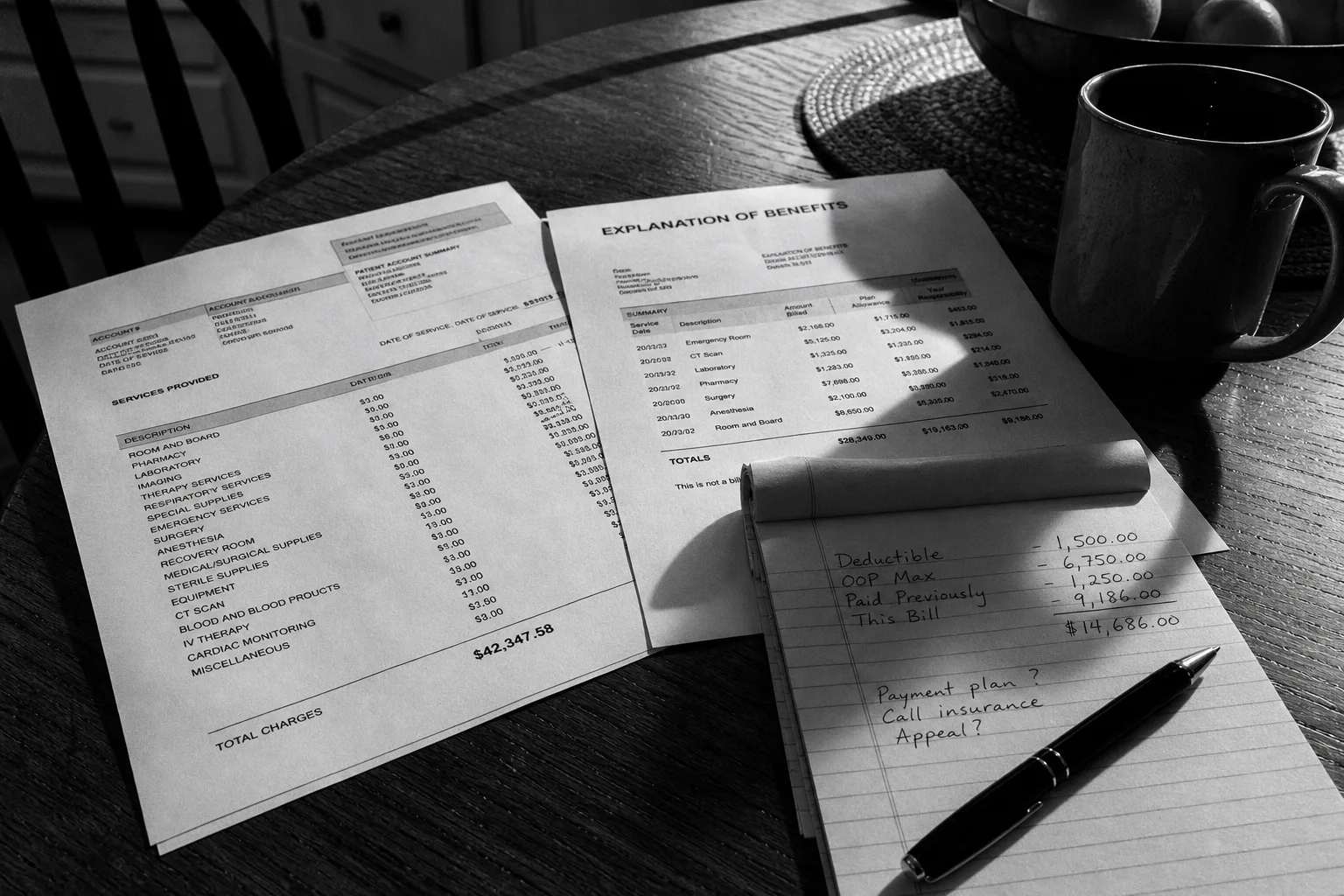
A funeral home will hand you a single itemized statement. That statement usually contains three categories of money, and they behave completely differently.
The first is what the funeral home sells: its own labor, facilities, vehicles, and merchandise. The second is what a third party charges and the funeral home passes through: the cemetery, the crematory, the clergy honorarium, the death certificate copies, the obituary placement. The third is a smaller set of government and quasi-government fees that are what they are.
Only the first category is genuinely a comparison exercise between funeral homes. The second category is where most families discover, late, that they have been comparing the wrong number. Two funeral homes can quote within a few hundred dollars of each other, and the final cost can diverge by thousands depending on which cemetery is involved and what that cemetery requires.
The Federal Trade Commission is responsible for the price disclosure rules that funeral homes operate under, and those rules are the reason you can walk in, ask for an itemized general price list, and be handed one without buying anything. Those rules govern funeral providers. A cemetery that sells only interment rights and services generally sits outside them. So the price list you have the clearest right to is the one covering the smaller half of the bill, and the one you have to ask for politely is the one that may decide the total.
The funeral home's own list, and the one line you cannot remove
On the funeral home's list, there is normally a single non-declinable charge, usually called something like the basic services fee or the professional services fee. It covers the overhead of the arrangement: staff time, permits, coordination, the building. You cannot decline it. You can compare it, and the spread between two firms in the same town on that one line is often wider than families expect.
Nearly everything else on that list is optional in the strict sense, even if declining it changes the shape of the service:
- Embalming. Rarely required by law. Often required by the funeral home as a condition of a public viewing, which is a different thing from being required, and worth hearing stated plainly.
- Casket. The single most variable line. You may supply one purchased elsewhere, and the funeral home may not charge you a handling fee for accepting it.
- Viewing, visitation, ceremony at the funeral home. Each is usually priced separately, per event or per hour.
- Transportation. Hearse, family car, additional mileage beyond a set radius.
- Printed materials, register book, acknowledgment cards. Small individually. Not small together.
A cremation without a service strips this list down to a handful of lines. A traditional burial with viewing keeps most of them. That structural choice moves the total more than any negotiation over individual items.
The cemetery's list, which arrives last and argues least
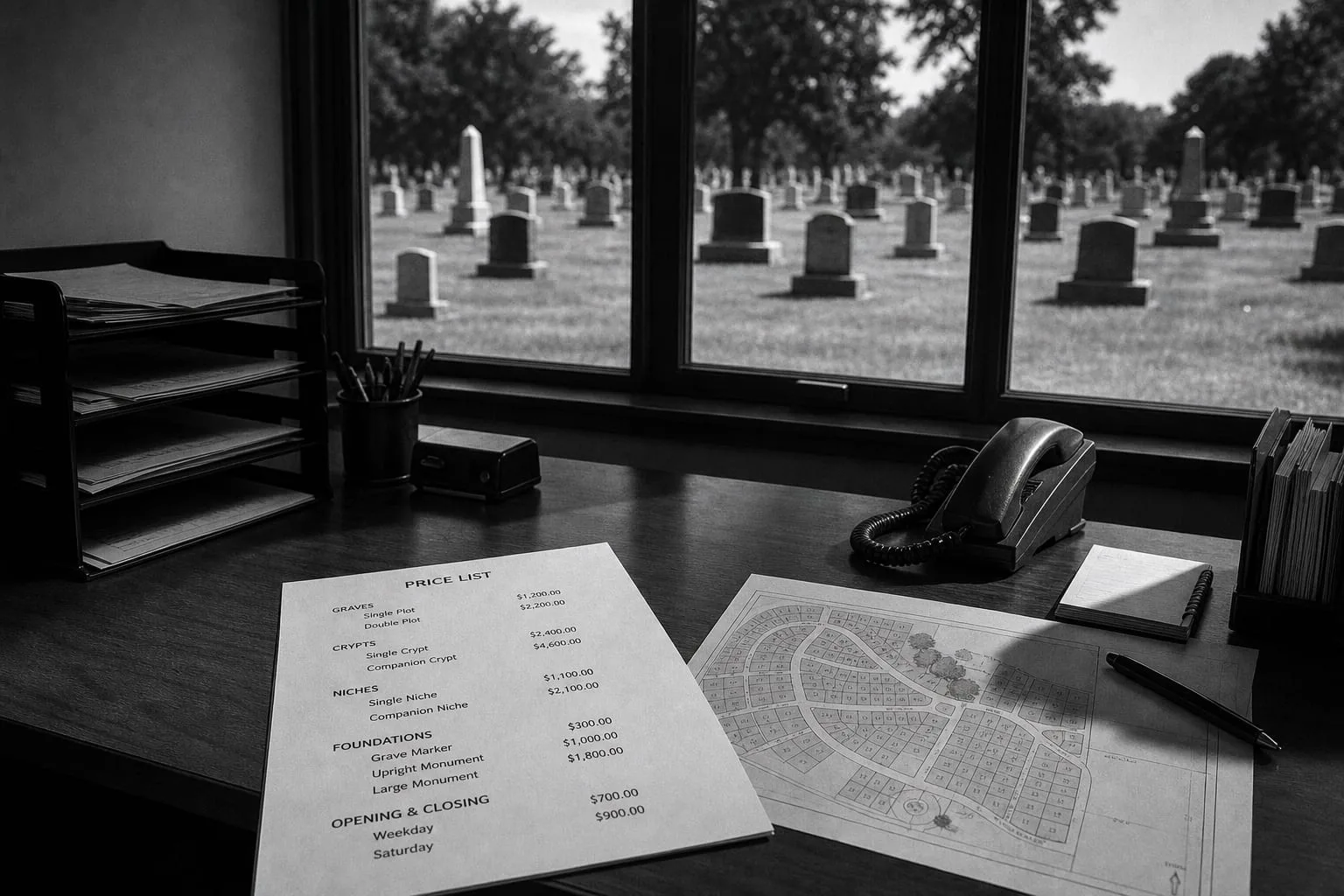
Call the cemetery before you finalize anything. Ask for its current price list in writing. The recurring items:
- The interment right, often called the plot or the grave space. This is a right of burial, not real estate.
- Opening and closing. The excavation and backfill. Priced as labor, and commonly higher for a Saturday, a holiday, or an afternoon arrival past a cutoff hour.
- Outer burial container. A grave liner or a vault. State law almost never requires one. Many cemeteries do, in their own rules, to keep the ground from settling. If the cemetery requires it, the question is not whether to buy one but which grade, and the grades vary enormously in price for a functionally similar result.
- Endowment or perpetual care. A contribution to the fund that maintains the grounds. Sometimes bundled into the plot price, sometimes a separate percentage.
- Marker or monument setting fee, plus in many cases a foundation charge, plus in some cases a rule limiting what kind of marker is permitted at all.
- Recording fee for the transfer of the interment right.
None of this appears on the funeral home's price list until it is passed through as a cash advance. A family that has chosen a casket and a service without knowing the cemetery's vault requirement and Saturday surcharge is working from an incomplete number.
Cash advances, and the question that flattens them
Pass-through charges are supposed to be pass-through. In practice, a funeral home may add a service charge for arranging them, or may receive a discount from the vendor and bill you the undiscounted amount. That is permitted, but it has to be disclosed.
So ask one question about every third-party line: is the amount on this statement the same amount the vendor charges you, and if not, what is the difference. It is not a confrontational question. It is the question that turns a bundled figure back into an arithmetic problem you can check.
Good job, barely adequate job
The difference is rarely warmth or attentiveness. Both versions can be kind. The difference is whether you were given the information early enough to make a decision that was still reversible.
| What happens | Barely adequate | Good |
|---|---|---|
| Price list | Handed over after the package selection | Handed over first, itemized, before any merchandise is shown |
| Cemetery charges | Estimated verbally, confirmed days later | Cemetery called during the arrangement, written figures obtained, added to the same worksheet |
| Vault or liner | Presented as required, without saying by whom | Stated clearly as a cemetery rule rather than a law, with the range of grades and prices shown |
| Embalming | Appears on the statement as a done deal | Explained as a condition of the viewing you chose, and declinable if you change the plan |
| Cash advances | Single bundled figure | Each vendor named, each amount matched to the vendor's own charge |
| Total | Grows between the arrangement and the invoice | Written once, and the invoice matches it |
The good version costs the funeral director an extra half hour of phone calls and gives up the easiest markup in the business. Plenty of firms do it anyway, and they are not hard to identify: they are the ones who volunteer the cemetery's number before you ask for it.
If you want one figure to hold on to before you sit down, there isn't one, and anybody who gives you a national average is selling you a comfort. What you can hold on to is the structure: one non-declinable fee, a long menu of choices, and a second vendor whose rules quietly govern several of them. Get both price lists on the same page of paper, in the same hour, and the total stops being a surprise.