Ask a home inspector what the average homeowner misses and the answer is rarely something technical. It is that nobody walks around the outside of their own house, deliberately, looking at it, more than once every several years, and by then whatever started small has had time to become something a contractor has to fix. The walk takes about an hour, requires a notepad and a flashlight, and finds most of what will otherwise be discovered by somebody sending an invoice.
Doing It in the Right Month and the Right Weather
Timing changes what the walk finds. Late summer or early autumn is the most useful window in most of the country, because there is still time to have work done before winter and because the vegetation has finished growing, which makes the ground line visible. Doing it in spring is the second best option and catches whatever the winter did. Doing it in February, in the dark, after something has already gone wrong is the version most households actually manage.
The other timing trick is to do part of it in the rain, or immediately after it. A downspout that discharges against a foundation, a gutter overflowing at a joint, and a low spot in the grade that holds water are all invisible on a dry afternoon and obvious during a storm. Ten minutes at a window during heavy rain, watching where the water actually goes, is worth more than an hour of inspection in dry conditions.
Start at the Roof Edge and Work Down
The walk goes top to bottom because water does. From the ground, with binoculars if the house has any height, look along the roof edge for missing or lifted shingles, for a ridge line that is no longer straight, and for anything growing where nothing should be. Look at the flashing at every intersection, since flashing failures produce more leaks than roof coverings do. Look at the gutters for sagging sections, standing water, and plants.
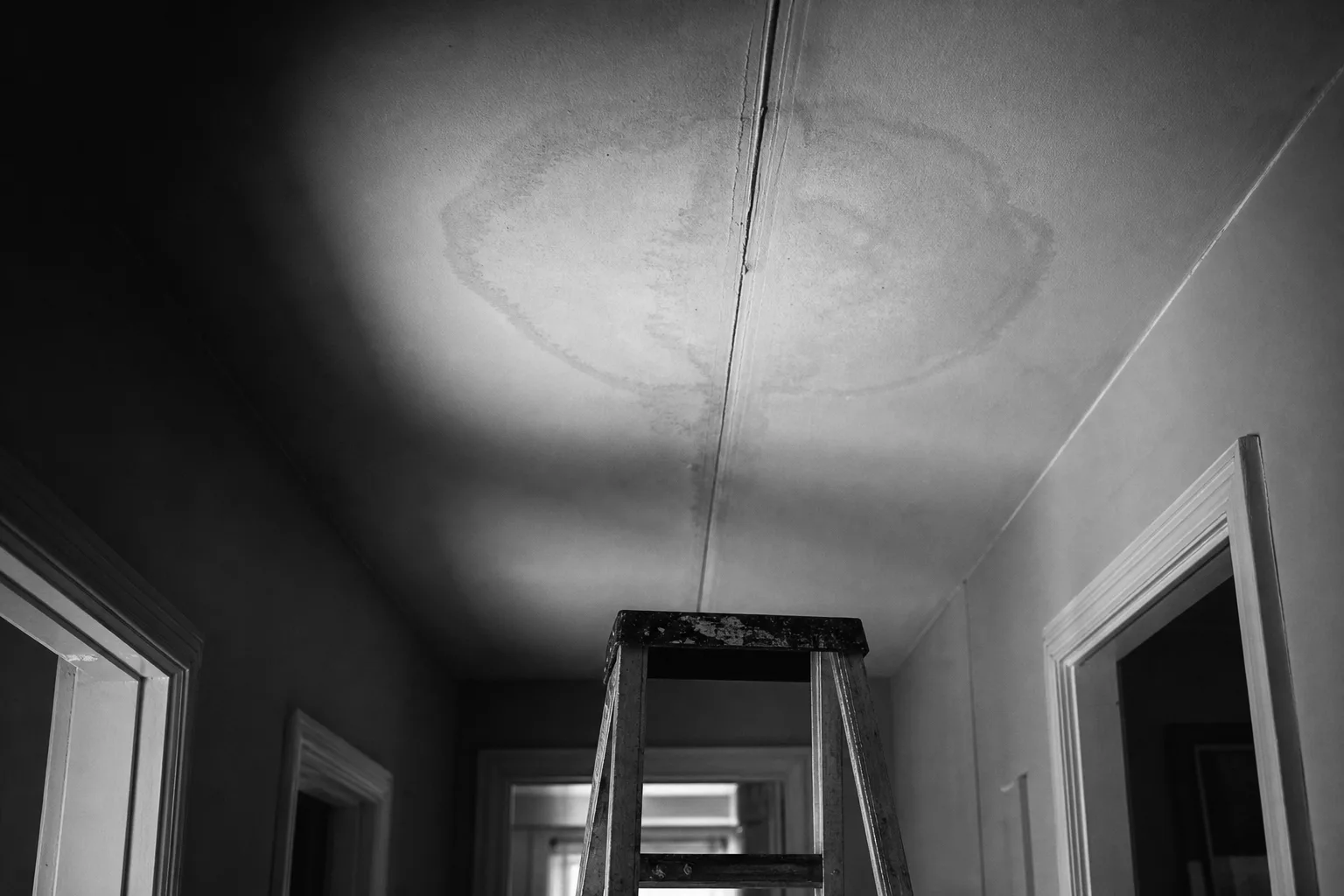
Then the fascia and soffit, which is where the consequences of a gutter problem first appear. Paint lifting on a fascia board, a soffit panel that has dropped slightly, or a stain running down from the gutter line all indicate water going somewhere it should not, and all of them are cheap now and structural later. Anything soft to a fingertip from a ladder, if a ladder is safe to use, is worth a note and a professional opinion.
The Ground Line, Where the Expensive Things Start
The bottom few feet of a wall repay more attention than any other part of the exterior. The ground should fall away from the building rather than toward it, and there should be a visible gap between soil or mulch and any siding, because material piled against a wall wicks water upward and gives insects a covered route inside. Beds that have been topped up annually for a decade are the usual culprit, and lowering them is an afternoon with a shovel.
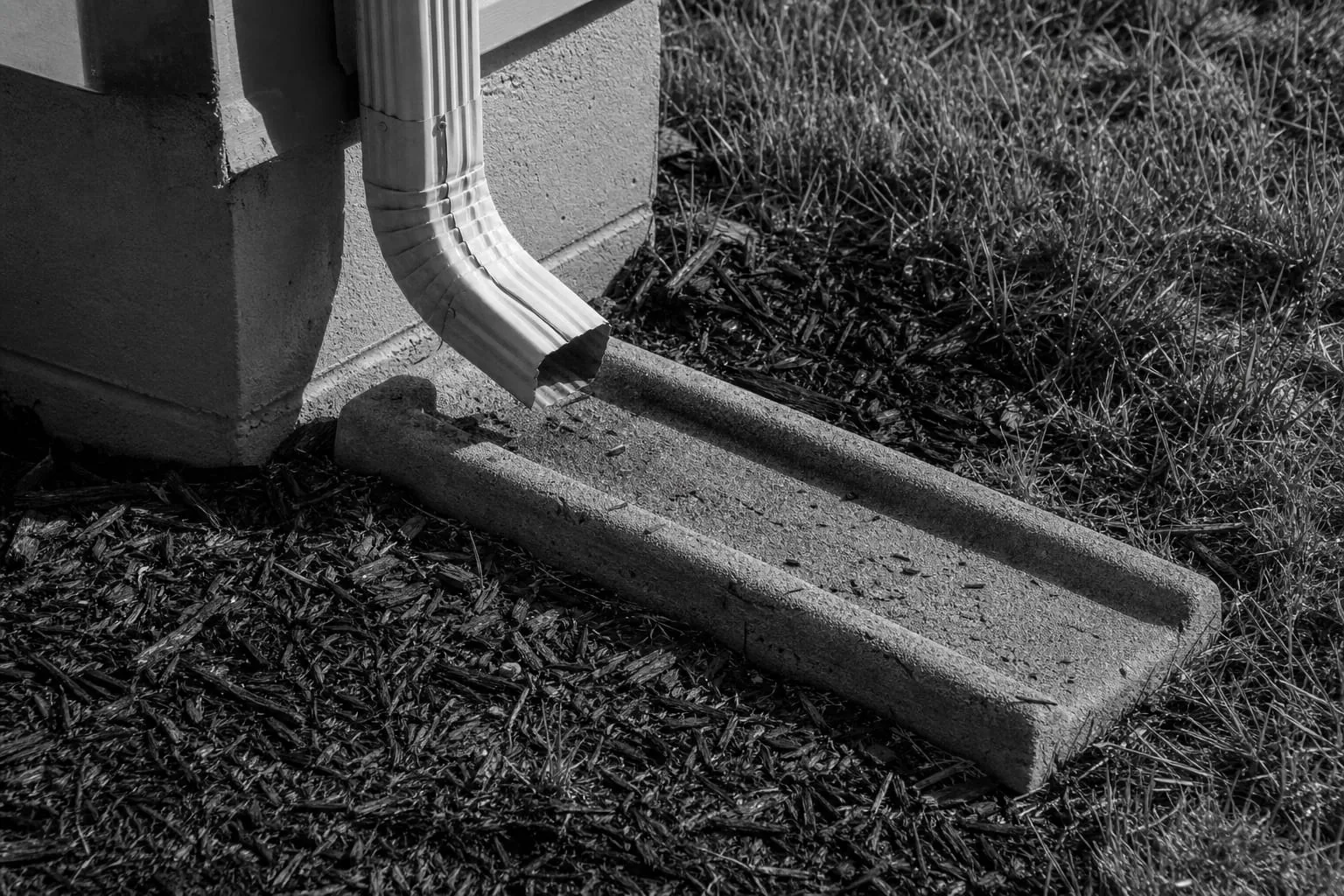
Look at where every downspout ends, which is the single most common defect on any house. A downspout discharging within a foot of the foundation is delivering the entire roof area’s rainfall into the ground next to the footing, repeatedly, for years. Extensions are inexpensive and they solve a problem that otherwise appears later as a wet basement, a moving slab, or a crack that used to be stable.
Openings, Penetrations, and Things Sealed Once
The last pass covers everywhere something goes through the wall. Sealant around windows and doors has a service life and fails gradually, so a bead that has hardened, shrunk or split is a note for the list. Every penetration for a vent, a hose bib, a cable or an air conditioning line was sealed once when installed and probably never since. Dryer and bathroom vent terminations should have working flaps, and a bird or wasp nest in one is common and worth removing before the season it matters.
Two things belong on the walk that are not part of the building. The first is vegetation, since anything touching a wall or overhanging a roof holds moisture against it and gives insects a bridge, and a branch that clears the gutter in August may not in a wet spring. The second is the meters and service entries: where the electricity comes in, where the gas shut-off is, where the water main enters and whether the valve turns. Those last items are the ones a household needs at short notice on a bad evening, and the annual walk is the sensible time to confirm they are still where everyone believes.
What to Do With the List Afterward
The list that comes back sorts into three groups without much difficulty: things fixed in an afternoon with what is already in the garage, things needing a modest purchase, and things needing somebody with a ladder and a license. Doing the first group immediately, while the walk is fresh, is what makes the exercise worth repeating, and quoting the third group in September rather than in January means choosing a contractor rather than accepting whoever answers. An hour, once a year, with a notepad, and the house stops surprising anybody.