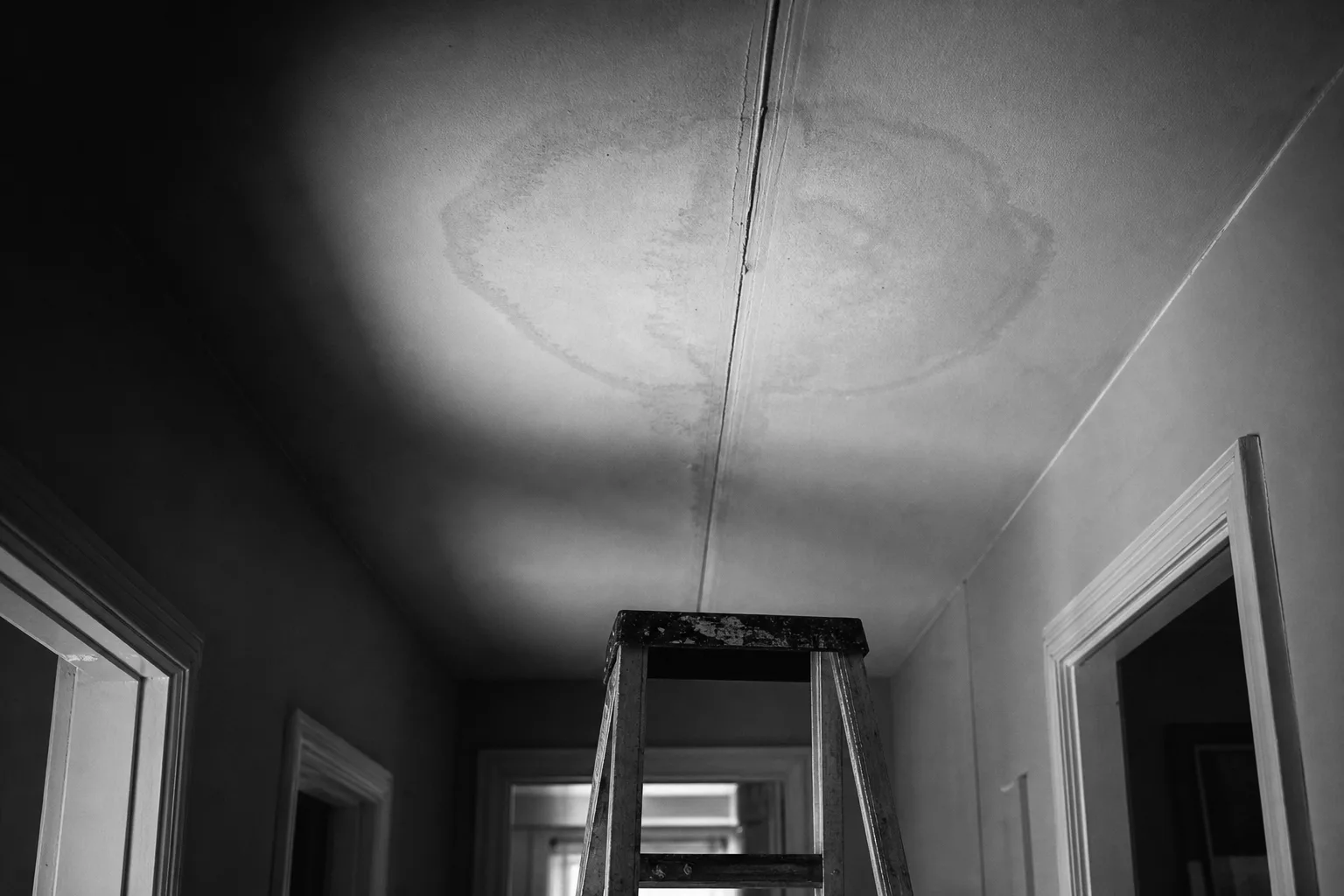
Water comes through a ceiling at nine in the evening, in a spot roughly under an upstairs bathroom, and the first instinct is to go and find a bucket. That instinct is not wrong, but it sits about fourth in order of importance, and the three moves ahead of it are the ones that decide what this ends up costing. The next twenty minutes matter more than anything that happens tomorrow, because several of the decisions available tonight stop being available by morning, and nearly all of them can be made in socks.
The First Two Minutes Are About Electricity, Not Water
Water arriving at a ceiling has already been somewhere else first, and that somewhere is usually a joist bay with wiring running through it. If the stain is spreading around a light fixture, if a ceiling fan sits in the affected area, or if water is running down a wall that contains outlets, the breaker for that circuit goes off before anybody stands underneath with a container. Throwing one breaker takes thirty seconds and removes the only part of the evening that can actually injure someone.
The judgment call is whether to kill the whole panel, and the answer is usually no. Cutting all power in a dark house makes everything else harder, from photographing the damage to finding the shut-off valve, and it takes a sump pump offline if there is one running. Turn off the circuits serving the wet area and leave the rest alone. If the panel is unlabeled, or if water is anywhere near the panel itself, that is the point where the whole thing goes off and an electrician gets called tonight rather than tomorrow.
Stopping the Supply at the Nearest Valve You Can Reach
The second move is to stop the water, and the useful question is which valve is nearest rather than which is most thorough. A toilet or a sink has a stop directly beneath it, so if the leak plainly comes from one fixture, that valve is faster and less disruptive than shutting the house down. If the source is unclear, or the water is arriving faster than a single fixture would explain, the main shut-off is the right answer and hesitation costs more than the inconvenience does.
In most houses the main sits where the supply enters the building, near the meter or the water heater, and in colder regions it is often in a basement or a crawlspace. A valve that has not been turned in twenty years may need a wrench and may not seat properly afterward, which is worth knowing before it matters. If the water keeps coming after the main is closed, the source is not the supply system at all, and the likely candidates are a roof, a drain line, or an appliance holding standing water.
What to Photograph Before Anything Gets Moved
Once the water and the power are handled, five minutes of photographs are worth more than an hour of explanation later. Photograph the ceiling from a distance so the room is identifiable, then close enough to show the extent of the staining. Photograph the floor beneath it, the furniture that was standing there, and anything already soaked. Photograph the source once it is found, including the failed component itself, because a claim frequently turns on whether that component failed suddenly or had been failing quietly for a long time.
Timestamps are doing quiet work in all of this, since a phone records when each picture was taken and that record is difficult to argue with. Keep the failed part rather than throwing it out, even if it is unpleasant to store, and put it in a bag in the garage. Adjusters and restoration contractors both ask about it, and a homeowner who can produce the split flexible connector is in a considerably stronger position than one describing it from memory a fortnight later.
Who to Call at Nine at Night, and in What Order
Two calls are worth making tonight and the rest can wait. The first is a plumber, if the source is a supply or drain line and the water is not fully stopped, because an overnight leak that continues is a different loss by morning. The second is the insurer, whose claim line runs around the clock and whose call log establishes the date you reported it. Both calls are short. Neither commits anybody to anything, and the second one starts a clock that is better started early.
A restoration contractor is the third call, and often the insurer will suggest one, though a homeowner is generally free to choose their own. Overnight is also when the value of having rehearsed any of this becomes obvious, and FEMA runs the Ready campaign largely because the household version of preparedness is a set of small tasks nobody does under pressure. Knowing where the main valve is, which breaker feeds the upstairs bathroom, and what the insurer’s claim number is takes an afternoon once and pays for itself in a single evening.
What Can Safely Wait Until Morning
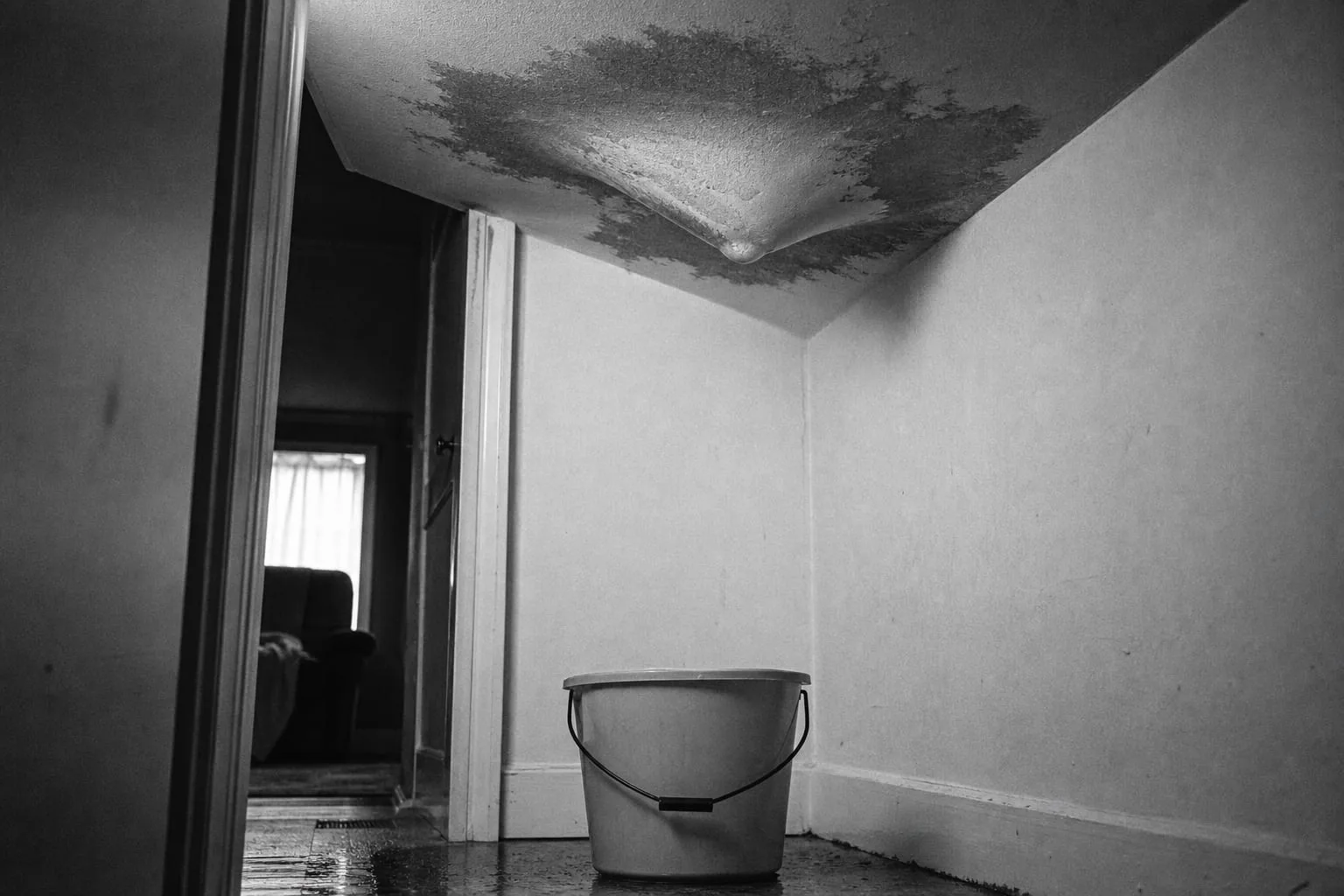
Almost everything else can wait, and treating it that way keeps the night from producing decisions that get regretted. Do not cut into the ceiling to release trapped water unless it is visibly bulging, because a controlled opening in daylight is safer and tidier than an improvised one at eleven at night. Do not start pulling up flooring, throwing away contents, or arranging repairs before the loss has been seen. Move what can be moved, put towels down, get some sleep. The bucket does eventually matter, and by then it is the least interesting thing in the room.