Most people still think of a first meeting with an attorney as the place where you tell the story. You sit down, you start at the beginning, the lawyer writes on a yellow pad, and somewhere around minute forty they say something useful. The belief is durable because it was true for a long time, and because it flatters the client: your account of events is the raw material, and the hour exists so you can supply it.
That is no longer where the hour goes.
Where the yellow pad idea came from
It came from a practice model in which the firm learned about you in person and nowhere else. The phone call that set the appointment captured a name, a number, and a rough subject line. Everything else waited. Conflict checks were run from memory and a card file. Engagement letters were signed on the way out, if they were signed at all. Under those conditions, spending the first half of a consultation on narrative was not waste. It was the only intake mechanism the firm had.
Two things dismantled that. Malpractice carriers pushed firms toward documented conflict screening before any substantive conversation, because a conflict discovered in month three is far more expensive than one caught on the intake form. And client portals became cheap enough that a solo practitioner can have one. The combined effect is that a competent firm now wants your parties, your dates, and your documents in the file before you arrive, not because it is tidier, but because the firm cannot ethically or safely proceed without the first part and cannot price the work without the second.
So the intake questionnaire you were emailed is not a formality the receptionist invented. It is the front half of the meeting, moved forward, and unbilled. People who treat it as paperwork show up and pay for the same ground twice.
What separates a good job from a barely adequate one
Barely adequate is the shoebox. Every document you own, in no order, handed across the desk with an apology. The attorney will take it, and then someone at a billing rate will sort it, and you will see that on an invoice.
A good job has three parts, and none of them require legal knowledge.
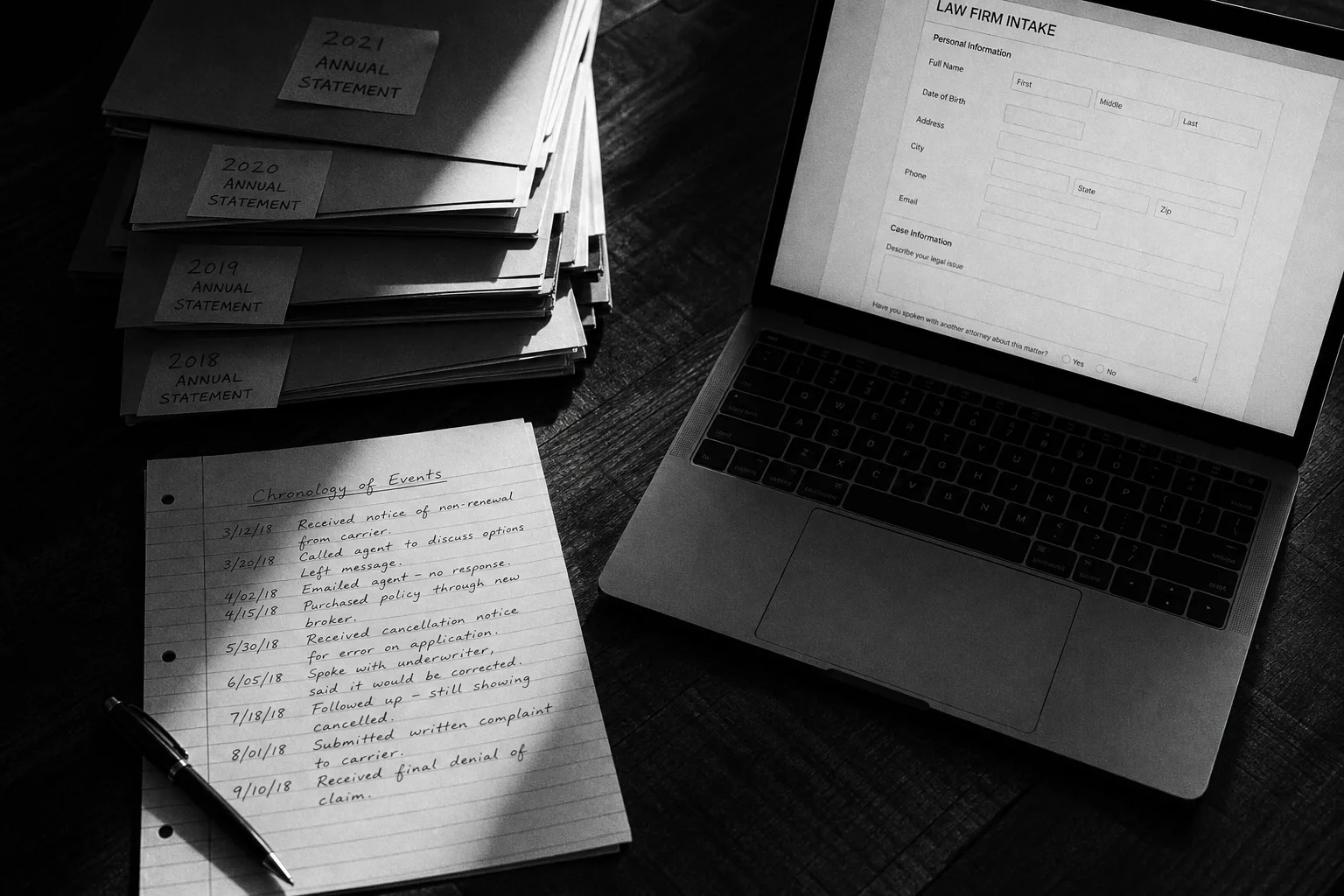
- A chronology. One page, dated entries, plain sentences. What happened, when, and who said it. No argument, no adjectives. If you do not know an exact date, write the month and mark it as approximate rather than guessing precisely.
- A named party list. Every person and business involved, with full legal names where you have them, including the other side's company and any affiliate you know of. This is what the conflict check runs against. A firm that discovers on day one that it represents the other party's parent company has cost you a week you did not need to lose.
- The decision you want made. Not "I want to know my options." Something closer to "I want to know whether to sign this by the fifteenth," or "I want to know if it is worth suing for eleven thousand dollars." The question shapes the hour. Without one, the hour shapes itself.
Documents come fourth, and only the ones the chronology refers to. Label them to match the dates.
Why winter does part of the gathering for you
January and February are unusually good months to bring a matter to an attorney, for an unglamorous reason: the annual paperwork arrives on its own. Year-end statements, W-2s and 1099s, the insurance declarations page that came with the renewal, the HOA's annual budget and assessment notice, the escrow analysis, the mortgage interest statement. Documents you would otherwise have to request in writing and wait three weeks for are sitting in a pile by the door.
The IRS is responsible for the record retention rules that govern most of that financial paper, and the retention windows it sets are the reason households keep any of it at all. Whatever the original purpose, the practical effect in a legal matter is that winter is when you can assemble a financial picture in an afternoon rather than a month.
The calendar helps in one more way. Contracts renew at year end, leases turn over, employment terms reset, and deadlines written as "within ninety days of the anniversary date" start running. If your matter has a clock in it, the clock is often visible in the documents that just came in the mail. Find it before the meeting and say so in the first two minutes.
What the paid hour is now for
If the facts are already in the file and the conflict check has cleared, the consultation starts at the part you cannot do yourself. Which of these facts matters and which is noise. What the realistic range of outcomes looks like. What the next three steps are, who takes each one, and what each one costs. Whether this is a matter that needs an attorney at all, which good lawyers say more often than people expect.
You should leave with something written, even if it is four lines you typed yourself while the attorney talked. A meeting that produces a plan you can act on without calling back is the whole point of preparing for it.