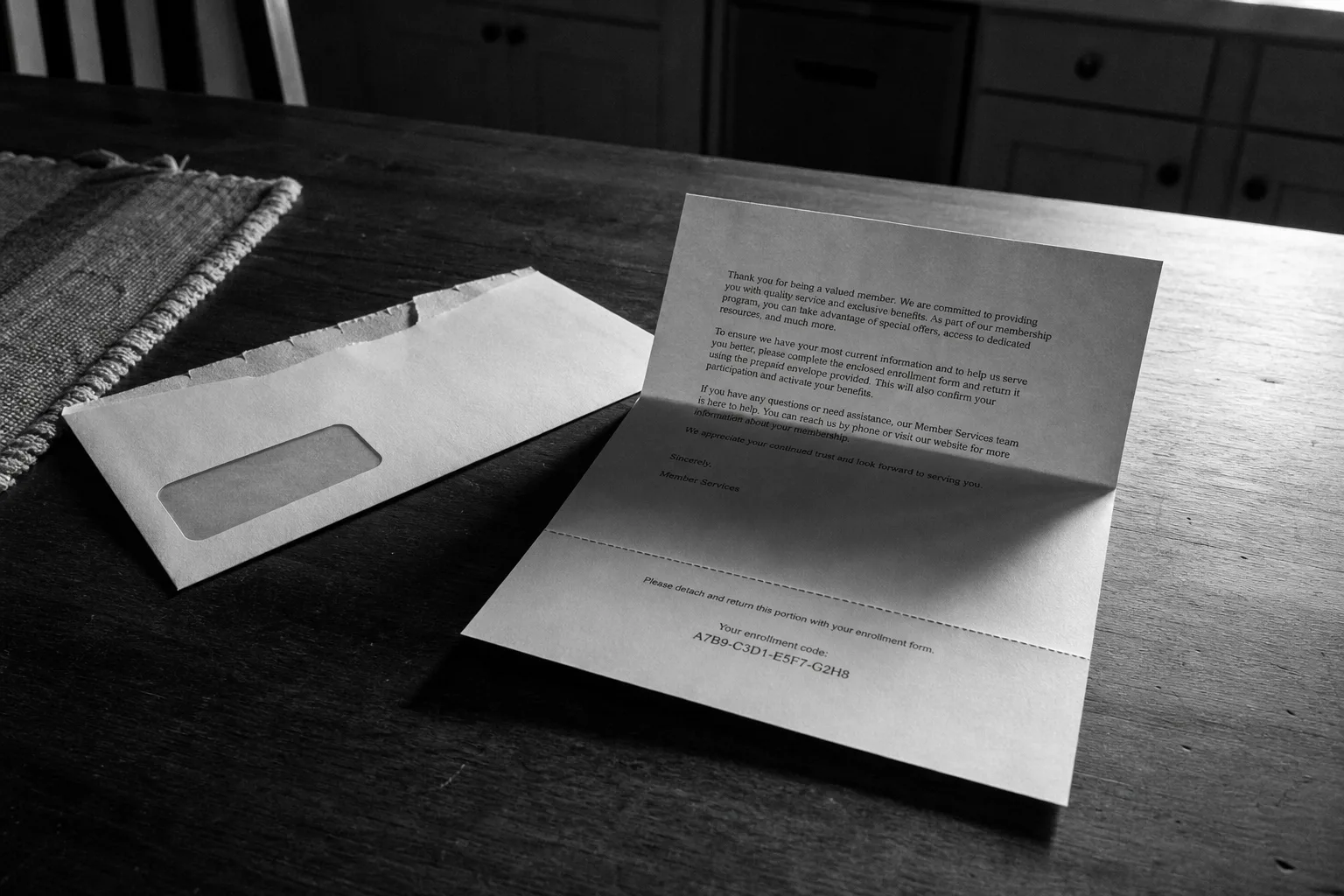
The common reading of a breach letter is that a company looked at what happened to your account, decided you were affected, and wrote to tell you so. The tone encourages this. It is addressed to you by name, it apologizes, it suggests steps you might take. It reads like correspondence.
It is closer to a filing.
Almost every breach letter in circulation is drafted by outside counsel to satisfy the content requirements of state notification statutes, reviewed for what it might concede in future litigation, and sent in near-identical form to every person on a list. You are one audience. The state attorney general who receives a copy is another. The plaintiffs' bar that will read it within the week is the third. Once you know all three are in the room, the strange flatness of the writing makes sense, and so does the question of where the specifics went.
How the letter got its shape
There is no single federal law telling a retailer or a dentist's office to write to you when their systems are compromised. What exists instead is a patchwork that began in California in 2003, when that state became the first to require notice to residents whose unencrypted personal information had been acquired by an unauthorized person. Other states copied the idea over the following decade, each with its own wrinkles: different definitions of personal information, different deadlines, different thresholds for also notifying the state.
Layered on top are sectoral rules. Health information carries its own breach notification requirements. Financial institutions have theirs. The Federal Trade Commission is responsible for enforcement against companies whose data handling amounts to an unfair or deceptive practice, which is the backstop that catches a great deal of what the state statutes miss.
A company breached across thirty states does not write thirty letters. It writes one, built to clear the strictest requirement in the set. That is why your letter describes categories of data rather than your data, and why the sentence about what happened is so carefully built. It has to be true for everyone and useful to no one in particular. The detail you want has not been withheld so much as relocated, and the next five checks are mostly about finding where.
1. Check whether the company that wrote to you is the company that was breached
The name on the envelope is the organization that held a relationship with you. It is frequently not the organization whose systems were entered. Billing processors, claims administrators, benefits platforms, file transfer services and print-and-mail vendors all hold consumer data on behalf of someone else, and a single compromise at one of them can produce letters from hundreds of unrelated brands.
Look for a sentence naming a service provider, a vendor, or "a third party we engage." If you find one, note that name. It is the search term that will tell you the real scale of the event, and it is the entity whose remediation matters.
2. Read the three dates separately
A properly drafted letter contains a date the incident occurred or began, a date it was discovered, and a date of the notice itself. These get skimmed as one blur. They are not one blur.
The gap between occurrence and discovery tells you how long the data was out before anyone knew, which bears on whether it has already been used. The gap between discovery and notice tells you something else: statutory clocks generally run from discovery, and a long gap usually means a forensic investigation, a law enforcement delay request, or both. Neither is sinister. Both are worth knowing, because the older the exposure, the more sense a credit freeze makes relative to monitoring.
3. Treat the list of data elements as a legal list, not a descriptive one
The paragraph listing what was involved is drawn from the statutory definitions of personal information: name plus Social Security number, driver's license number, financial account number with access code, in some states passport number, biometric data, health insurance identifiers, or online credentials.
Those elements are listed because they trigger the duty to notify. The practical consequence differs sharply between them. A card number is reissued and the problem ends. A Social Security number is permanent and feeds identity theft for years. A date of birth plus a street address plus a mother's maiden name is not always a triggering combination at all, but it is excellent raw material for someone answering security questions. Read the list for what is reusable, not for how long it is.
4. Go find the copy filed with your state attorney general
This is the overlooked party, and the most useful one. Many states require that notice to residents be accompanied by notice to the attorney general's office, and a number of those offices maintain a public database of what they receive.
What sits in that file is often better than what sat in your mailbox. The submission typically includes the sample letter, the date range, the name of the entity that was actually breached, and the count of residents of that state who were affected. A letter that told you "a limited number of individuals" may appear in the state's record attached to a six-figure number. Search your attorney general's site for a security breach or data breach notification list.
5. Check what the remedy offer actually commits them to
Credit monitoring enrollment codes expire, usually within sixty to ninety days of the letter. The monitoring term is separate from the enrollment deadline and is stated elsewhere, often in smaller type. Identity theft insurance attached to the offer is a reimbursement product with a claims process, not a service.
Accepting the free monitoring in a breach notification does not waive your rights. A settlement notice, which looks similar and arrives later, is a different document entirely and may require a choice between a payment and the right to sue. Check which one you are holding before you sign anything.
A breach letter is a document written to be read by people with subpoena power, and that is the thing to use. The letter tells you that something happened. The attorney general's copy, the vendor's name and the three dates tell you how much.