The belief is that a traffic ticket requires no preparation at all. You photograph it, you send it, somebody with a bar number handles the rest, and you go back to your week. The whole category has been priced and advertised to suggest exactly that: a flat fee, a short form, a promise that you will not have to appear. For a large share of cases that description is accurate, which is why it has survived.
It is also why the first conversation so often ends with the lawyer saying some version of it depends, and the driver hanging up no better informed than before.
Where the idea that there is nothing to prepare came from
Flat-fee traffic defense is a volume business, and volume businesses optimize the intake. The form asks for the citation number, the court, the date, and a card. That is not a trick. It is the minimum a firm needs to file a notice of appearance and get itself in front of the clerk before the clock runs out, and getting in front of the clerk is genuinely most of what a driver is buying.
The mistake is treating the intake form as the whole conversation. The form collects what the court needs. It does not collect what the lawyer needs in order to tell you which of the available outcomes is actually worth chasing in your particular situation, because those facts are not on the ticket. They are in your driving record, your insurance file, your employment terms, and your memory of the stop.
Nobody is hiding them from you. You simply were not asked.
One citation, one driver, and the fork in the road
Take a narrow case. A driver is cited for speeding well over the posted limit on an arterial, on a Friday evening, with a response deadline printed on the face of the ticket, typically a short window measured in days rather than months. The driver has one prior moving violation from several years ago that was resolved without a finding. She drives a company vehicle two days a week. Her auto policy renews in four months.
Every one of those facts changes the recommendation.
The prior resolution matters because most jurisdictions allow a deferral, dismissal-on-conditions, or similar one-time mechanism only at an interval, and spending it now means it is unavailable for the next three or four years. Whether she has already spent it is a question she probably cannot answer from memory, because the paperwork from a deferral rarely reads like one. The company vehicle matters because many employers run periodic record checks and have written thresholds for who stays on the insurance. The renewal date matters because the practical cost of a violation is usually not the fine, it is the rating effect across several policy terms, and the timing of when the violation posts to her record relative to that renewal is not trivial.
A competent traffic lawyer will ask about all of this, but only if there is time in the call to get past the citation number, and only if the driver has the answers to hand rather than promising to look them up later.
If she holds a commercial license, the calculus changes again. The Federal Motor Carrier Safety Administration oversees commercial driver licensing standards nationally, and the rules in that space deliberately restrict the kind of local accommodations that are routine for ordinary passenger-car violations. That is a thing to raise in the first minute of the first call, not the fifth.
The protections that already apply before you pay anyone
Drivers tend to assume that nothing attaches to a conversation until money changes hands. The professional conduct rules adopted in every state say otherwise, and it is worth knowing what you already have.
- Confidentiality covers prospective clients. What you tell an attorney while genuinely exploring whether to hire them is protected, and they cannot use it against you later, whether or not you retain them. You can describe what actually happened at the stop rather than a sanitized version. The sanitized version is the one that wastes the meeting.
- A conflict check is their job, not yours. Before taking the matter, the firm is obliged to check that it is not adverse to an existing client. If you are a passenger in someone else's case, or one of two people cited from the same vehicle, say so early.
- Fees have to be reasonable and the scope has to be communicated. A flat fee is perfectly proper. What is not proper is leaving you unclear on whether it covers one hearing or every hearing, whether an appeal is included, and what happens if the matter is continued twice.
- Licensure is public and verifiable. Every state bar publishes a searchable roster showing admission status and public discipline. It takes under a minute.
- The file is yours. On request, at the end, you are entitled to the documents in your matter.
None of that requires you to do anything clever. It requires you to know it exists, so you ask direct questions instead of hedged ones.
The folder, and the four items that do the work
For the narrow case above, four documents convert a vague call into a decision.
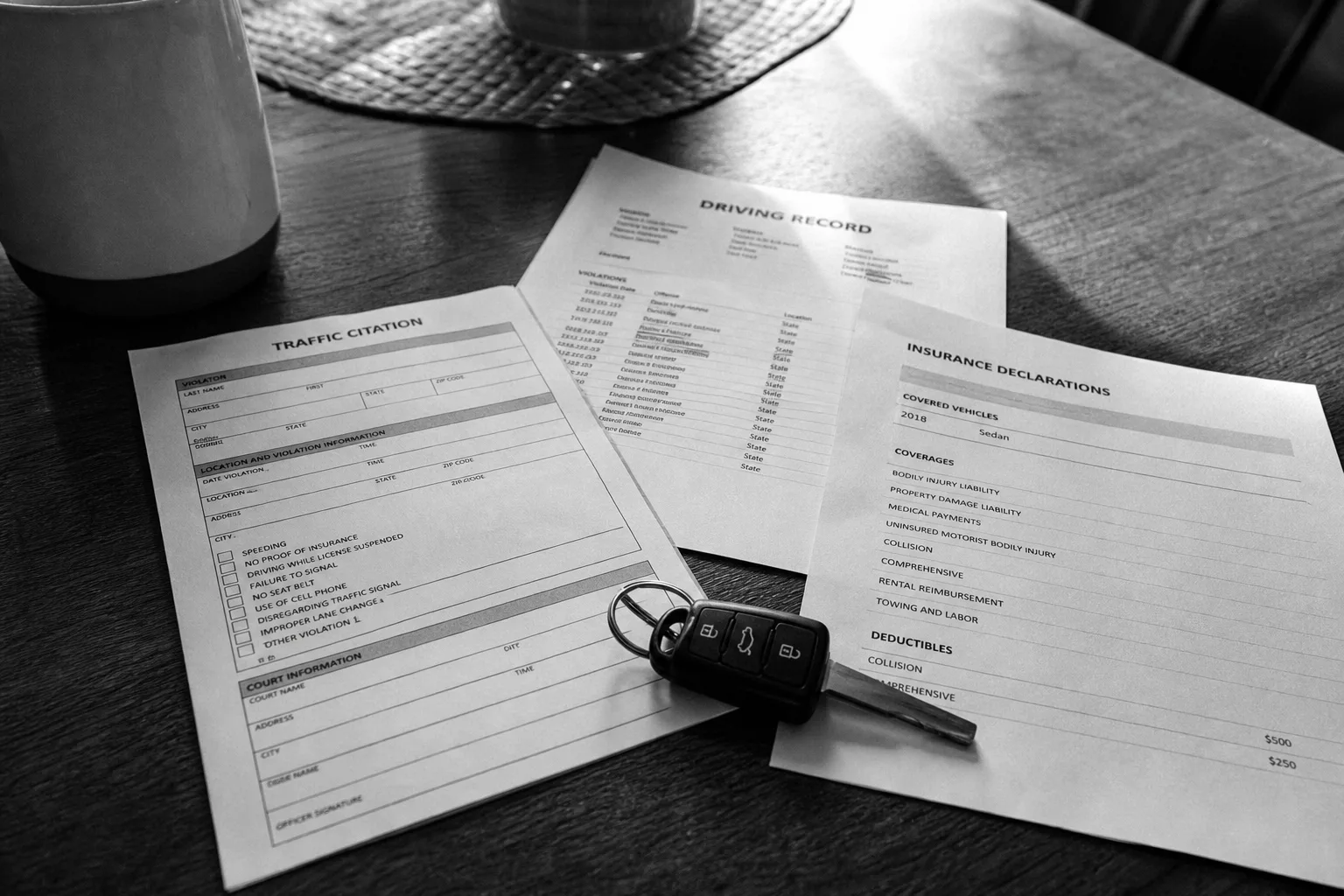
- Your official driving record, ordered from your state licensing agency rather than reconstructed from memory. It shows what is actually on your abstract, including how a past deferral was recorded. Order it the day you get the ticket; delivery is not always instant.
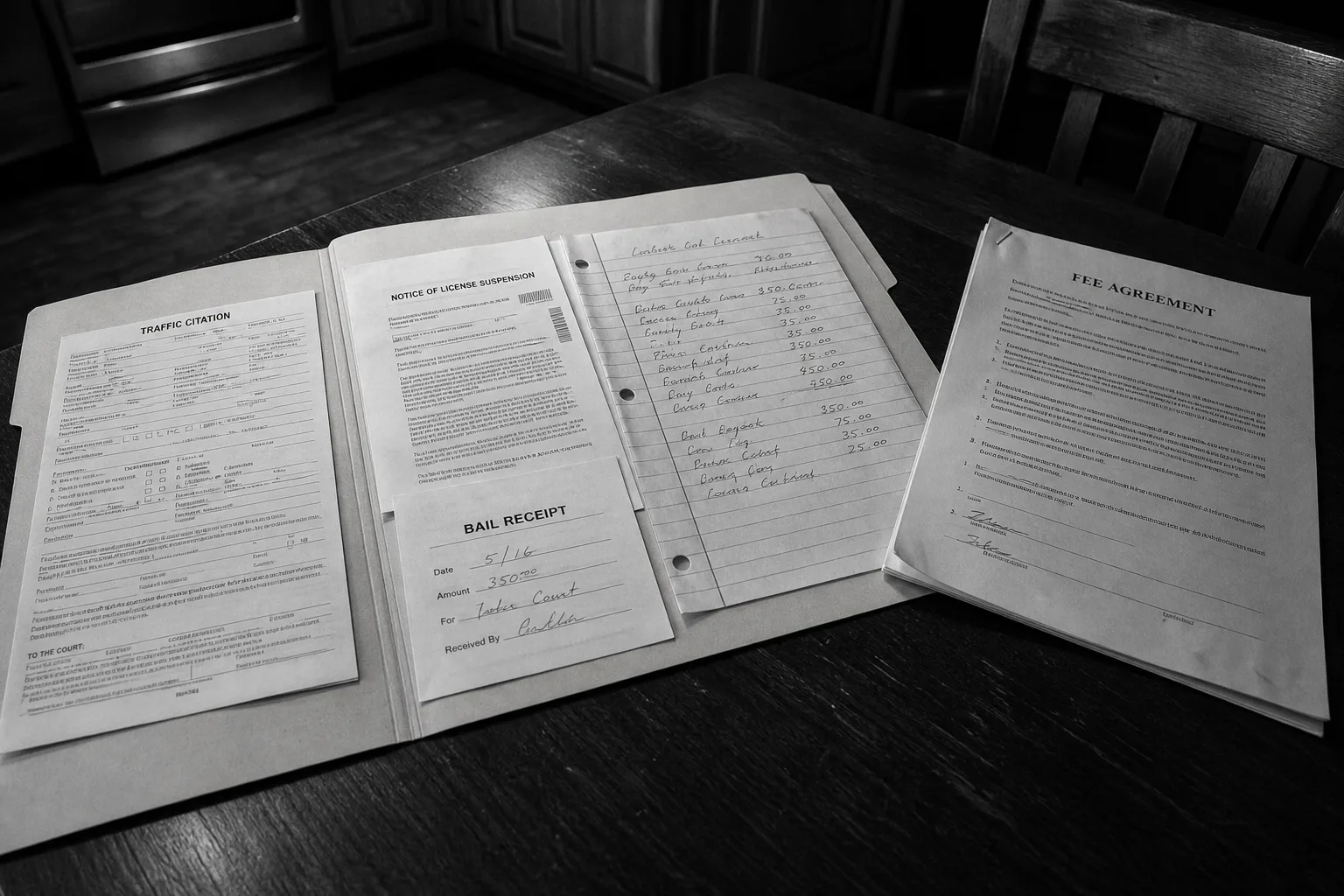
- Both sides of the citation, photographed flat and legible, including the printed response deadline and the box the officer checked. That deadline belongs to you, not to the firm you have not hired yet.
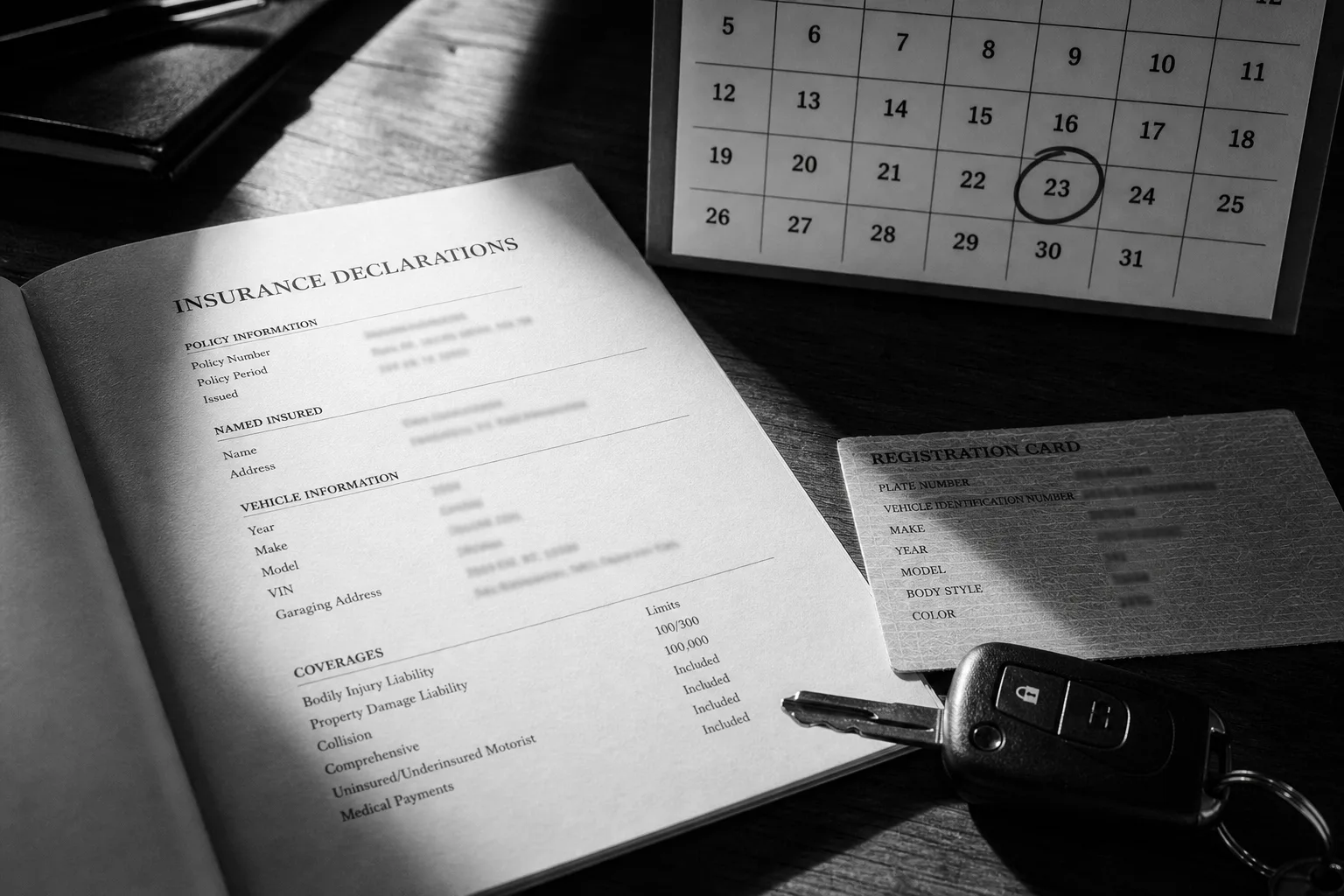
- Your declarations page, showing the carrier, the renewal date, and whether you carry any accident or violation forgiveness. This is how you find out whether the fight is worth its own cost.
- Anything your employer requires in writing, if you drive for work. A driver handbook clause about reportable violations will often settle the strategy on its own.
Add a plain note of what you remember from the stop, written the same week: the weather, the traffic, where the patrol car was, what was said, whether you were shown anything. Memory degrades quickly and in a predictable direction, which is toward the version that makes you look reasonable.
Thirty minutes of gathering, done before the call rather than after it, buys a conversation about which outcome to pursue instead of a conversation about which documents to send. That is the entire difference, and it is a larger one than the fee.