A homeowner handed a proposal in October is usually looking at two numbers: the price, and the number of years printed next to the shingle name. The second one is doing more work than it can bear. It describes a product tested under controlled conditions, not a roof on a particular house, at a particular pitch, over an attic that may or may not be venting properly. The gap between those two things is where most of the disappointment lives.
Here is the honest version, with the ranges stated as ranges.
The rated life is a laboratory result; the service life is a local one
Asphalt is still the default on most American houses, and the spread in how long it lasts is wide. Three-tab shingles tend to come off somewhere in the mid-teens to around twenty years. Architectural, or laminated, shingles generally run longer, commonly in the twenty to thirty year band. Standing-seam metal is usually quoted in decades rather than years, often forty and up, with the coating failing visually well before the panel fails structurally. Concrete and clay tile can outlast the house, but the underlayment beneath them cannot, and that replacement typically lands two to three decades in, at a labor cost most homeowners never budgeted for.
Those are bands, not promises. What moves a roof toward the bottom of its band is fairly consistent: poor attic ventilation that cooks the shingle from underneath, a south or west exposure with no shade, a deck that was already soft at tear-off, nails driven high or overdriven, and a hail climate. What moves it toward the top is dull by comparison. Adequate intake and exhaust venting, a sound deck, correct fastener placement, and a roof that never takes a direct hail hit.
Nobody can tell you which end of the band your house will land on. A contractor who gives you a single confident number for a roof not yet installed is giving you a marketing figure, not an estimate.
What changed, and why it shows up on your quote
Three things shifted over the past several years, and together they explain why a roof quoted today reads differently than one quoted a decade ago.
The first is the warranty language. The industry largely retired the "25-year" and "30-year" shingle label in favor of "lifetime limited" coverage. That sounds like an upgrade and is mostly a relabeling. These warranties typically include a short non-prorated period at the front, after which coverage steps down on a schedule, and they cover manufacturing defects rather than the roof's performance. Labor is often excluded unless the installer is manufacturer-certified and the job is registered. Read which of those applies before you treat the warranty as an asset.
The second is insurance. In hail- and wind-exposed states, carriers have moved steadily toward roof payment schedules that depreciate asphalt by age, and toward separate percentage deductibles for wind and hail rather than a flat dollar amount. A twenty-year-old roof that would once have been replaced at full cost may now settle at a depreciated value. That shift has made impact-rated shingles, tested to a Class 4 rating, considerably more interesting to homeowners than they were when the premium credit was the only argument for them. They cost more up front and they do not make a roof hail-proof. They change how it ages under impact.
The third is the material stack underneath. Synthetic underlayment has largely displaced felt on new work, ice-and-water membrane at eaves and valleys has become standard practice in cold regions, and ventilation requirements have tightened in successive code cycles. Those line items are the least glamorous part of a quote and the most predictive of whether the roof reaches the top of its band. Energy Star also sets the criteria for reflective roofing products, which matters more in cooling-dominated climates than most proposals bother to mention.
Season is not a scheduling detail on an asphalt roof
Asphalt shingles seal themselves. Each one carries a strip of adhesive that bonds to the course below once it warms enough, and that bond is what resists wind uplift. In practice the strip needs sun and surface temperatures reliably above roughly forty to fifty degrees to activate. Install in genuine cold and the shingles sit there unbonded, sometimes until spring, occasionally never if dust gets between the layers first.
Competent crews work through winter anyway. They hand-seal with roof cement, adjust nailing, and keep bundles warm before they go up. That is extra labor, and an honest proposal in January says so. It is one of the few places where asking a direct question gets a direct answer: ask how they handle sealing below fifty degrees, and listen for whether hand-sealing appears in the scope or only in the conversation. Most roofing contractors will tell you plainly that fall booking fills first for exactly this reason, and that the late-season calendar is the one that moves.
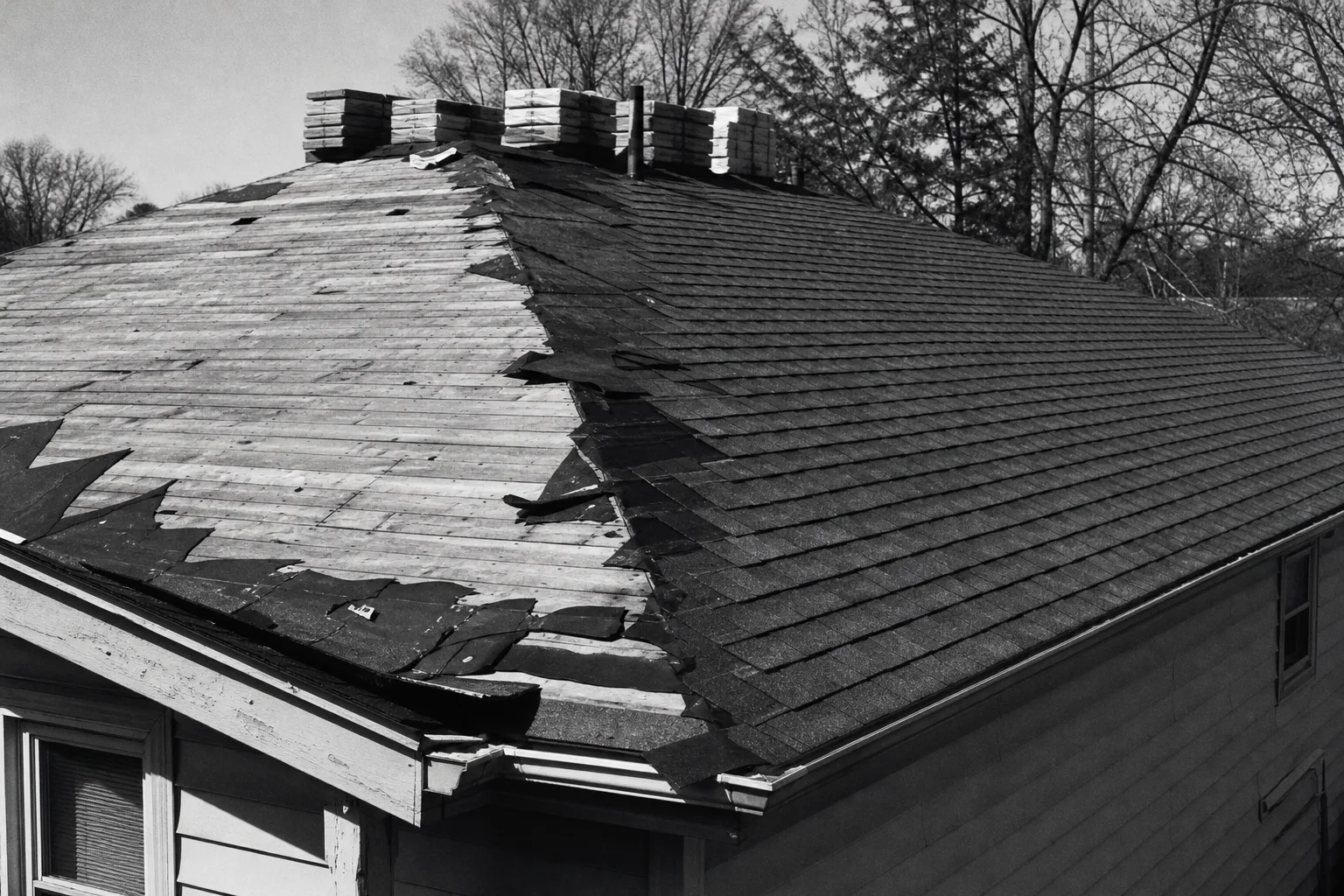
Fall also exposes the one thing that cannot be assessed from the ground: deck condition. Tear-off in October on a house with a history of ice damming often finds sheathing that needs replacing, which is why deck replacement should be priced per sheet in the contract rather than discovered on day two.
Comparing two quotes on lifespan terms
Price per square is the easiest comparison and the least informative. A more useful approach is to line the proposals up against the items that actually move service life.
- Ventilation: is intake at the soffit addressed, or only exhaust at the ridge? Exhaust without intake moves very little air.
- Underlayment: what product, and how far up from the eaves does the membrane run?
- Deck: is replacement sheathing priced per sheet, with a stated rate?
- Fasteners: nails per shingle, and whether the quote commits to the manufacturer's high-wind pattern.
- Flashing: new step and counter flashing, or reuse of existing metal at chimneys and walls.
- Warranty: manufacturer coverage, whether the installer is certified to register it, and the separate workmanship term in years.
Two quotes a third apart often turn out to be separated by three of those lines. Once you know which three, the gap stops being a mystery and becomes a decision about what you are buying.
What a reasonable expectation looks like
A well-installed architectural roof on a properly vented attic in a moderate climate is a twenty-five year asset, give or take, with a repair or two in the middle and a real possibility of a hail event resetting the clock. That is the shape of the answer. The precision that proposals imply does not exist, and the number that does matter, the workmanship warranty, is the one a contractor controls entirely and is therefore the one worth negotiating.
Ask for it in writing, in years, before the deposit.