The report lands at 9 p.m., forty-one pages, and by page six a pattern shows up. Not accessed due to snow cover. Not operated; outdoor temperature below manufacturer threshold. Recommend evaluation by a qualified licensed specialist. The natural reaction is that the inspector has covered himself on everything and committed to nothing, and that the useful content is buried in a summary somewhere near the back.
That reading is half right and it costs money. The hedges are written to protect the surveyor, yes. They are also the most factually precise part of the document. Each one records a specific thing that could not be observed on a specific date, and a large share of them exist because of the month, not because of the house.
The hedge is a date stamp before it is a disclaimer
An inspection is a visual examination of accessible components on one day, in whatever weather that day supplied. That is not a lawyerly dodge, it is the actual scope of the work. When a report says a roof covering was evaluated from ground level with binoculars because the surface was wet, the sentence is doing two jobs: it limits the inspector's exposure, and it tells you the roof has not been inspected in any meaningful sense yet.
Customers tend to treat those two jobs as one. They see the defensive purpose, assume boilerplate, and skip. Then eight months later a leak appears over the same slope, and the file already says, in plain language, that nobody looked.
Some limits are enforced by the standards inspectors work to and by equipment manufacturers. Central air conditioning generally is not run when outdoor temperatures sit below roughly sixty degrees, because starting a compressor cold can wreck it. That restriction protects the seller's equipment and the inspector's insurer at the same time, and it also means a January inspection of a house in Minneapolis tells you nothing about whether the condenser cools. A July inspection in Phoenix has the mirror problem with the furnace and the heat exchanger.
What each season quietly removes from the scope
Before you read the findings, it helps to know which absences were predictable. The pattern is consistent enough to anticipate.
| Season of the visit | Commonly not assessed | What it hides |
|---|---|---|
| Winter | Roof surface under snow or ice, cooling system, exterior hose bibs and irrigation (shut off and drained), grading under frozen ground, in-ground pool equipment | Hail bruising, lifted shingles, flashing gaps, failed condenser, cracked backflow devices, negative grade at the foundation |
| Spring | Nothing much, which is why spring reports are the fullest, though saturated soil can make a wet basement look like a chronic one | Whether the seepage is seasonal or structural |
| Summer | Heating system and heat exchanger, chimney draft, gutter performance, sump behavior | Cracked exchanger, blocked flue, undersized downspouts, a sump that only works in April |
| Fall | Gutter interiors and roof valleys under leaf cover, crawlspace and grading beneath leaf litter, driveway and walk surfaces | Standing water in gutters, rot at the fascia, trip hazards, settled slabs |
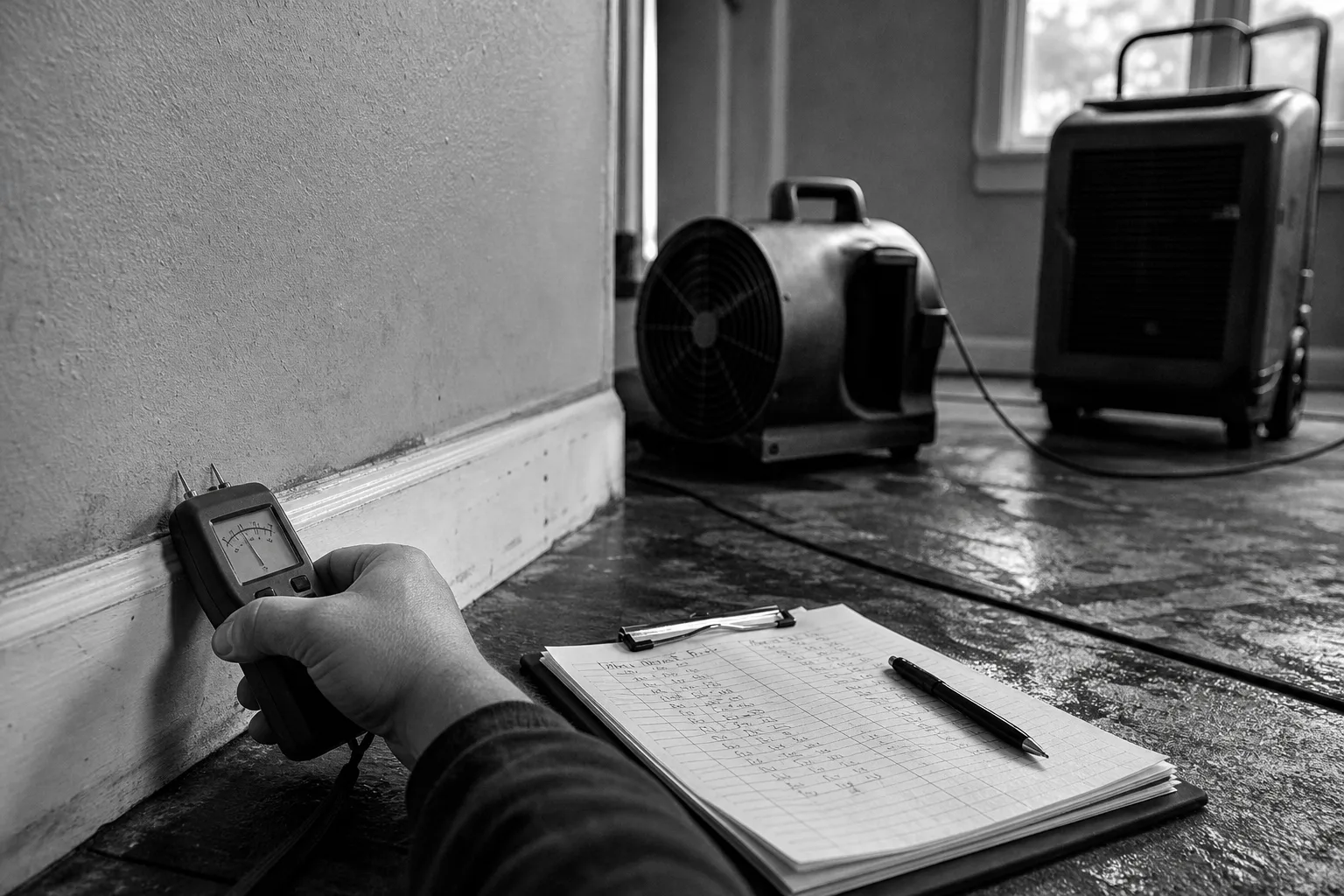
Dry weather is its own limitation and rarely gets flagged as clearly as snow does. A basement inspected in a five-week dry spell will look dry. The report will say the inspection was performed during dry conditions and that no active moisture was observed. Read that as a null result, not a clean bill.
Reading order from the buyer's side, which is not the order it was written in
Reports are structured for the writer's protection, so the scope and limitations language comes first and the findings come later, organized by building system. Buyers read in the reverse order, jump to the summary, and skim the front matter as legal throat-clearing.
Flip it. Do this in one sitting, with the report open and a blank page beside it.
- Read the scope and limitations section in full. Every sentence beginning not accessed, not operated, not evaluated, or outside the scope goes on your page as a line item.
- Search the document for the same phrases. They repeat inside individual system sections and do not always appear in the summary. Use the search function; do not rely on your eyes at 9 p.m.
- Sort your list into two columns. Left: things you can resolve inside your inspection contingency period. Right: things that cannot be resolved until the weather changes.
- Read the summary last. By then you know what it is silent about, and the silences are the part you are paying to understand.
The right-hand column is where negotiation happens. You are not asking the seller to fix an unknown. You are asking for a credit, a holdback, or a price adjustment sized to a bounded unknown, and the report's own hedges are your evidence that the unknown exists.
What can be closed out in a week, including from the air
A surprising amount of the left-hand column is solvable fast if you start the day the report arrives rather than the day before the contingency expires.
Roofs are the clearest case. If the surface was not walked because of ice, wet leaves, slope, or a fragile covering such as slate or old clay tile, aerial imaging fills part of the gap within a couple of days. Firms offering drone mapping services can produce measured overhead imagery of every slope, valley, and penetration, at a resolution that shows lifted tabs, hail impacts, and flashing separation. That is a genuine substitute for a ground-level binocular look and a partial substitute for a walk. It is not a substitute for hands-on inspection where the question is decking condition or underlayment, and a good operator will say so.
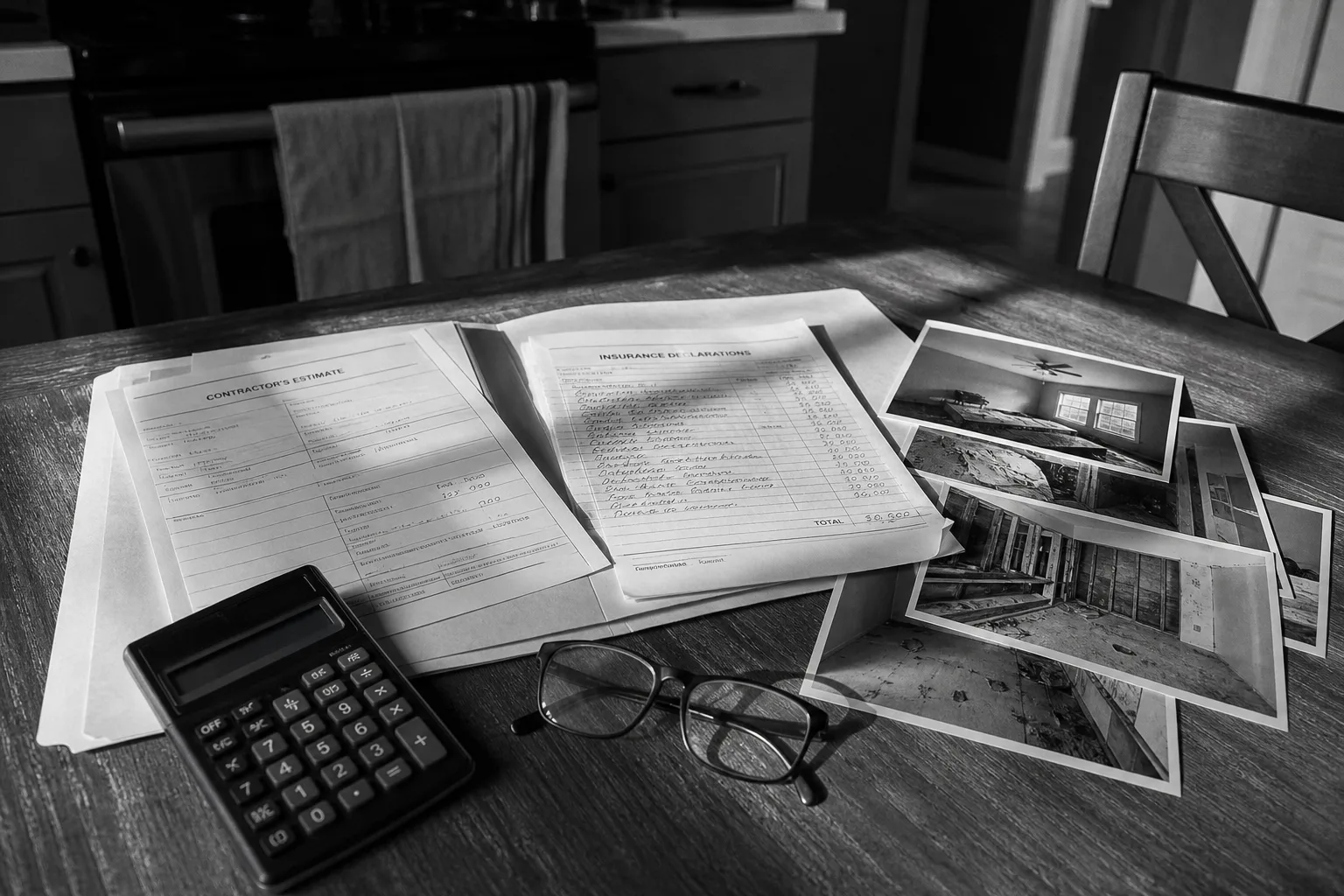
The same imagery has a second use. Storm damage is judged against condition on a date, and both insurers and public authorities work from documented before-and-after evidence. FEMA is responsible for federal disaster response and the flood mapping that sits behind it, and the general principle carries down to a single homeowner's claim: an image set from the week you closed is worth considerably more than a memory of how the roof looked.
Other quick items: a licensed HVAC contractor can inspect and test a furnace or condenser outside the temperature limits an inspector must respect, because the contractor is servicing the equipment rather than merely observing it. A sewer scope is weather-independent and answers a question no visual inspection reaches. A chimney sweep can run a camera up a flue in August. A structural engineer will look at a crack the inspector deferred, and a two-hour visit with a written letter usually costs a fraction of what people assume.
Where a delay stops being recoverable
Sequence matters more than thoroughness here, because the deadlines are not yours and they do not move.
The inspection objection window in a purchase contract is typically short and measured in days, not weeks, and it usually runs from the contract date rather than from the date the report arrives. Once it closes, a defect you could have discovered stops being the seller's problem, whether or not you knew about it. The report's hedges do not extend that window. They only prove, later, that you were told where the gaps were.
After closing, two other clocks start. Homeowners policies require prompt notice of loss, and a roof problem you first document eighteen months in gets characterized as wear rather than damage. New-home and workmanship warranties run on fixed terms from a fixed date, and the seasonal items in your right-hand column are exactly the ones that surface in month fourteen of a twelve-month warranty. If the furnace was never operated, the time to schedule its first real test is the first cold week you own the house, not the first cold week it fails.
So the right-hand column needs dates written next to it. Cooling system: first week above seventy degrees. Roof under snow: first clear dry week in spring, or drone imagery now. Grading and drainage: the next sustained rain. Gutters: after the leaves drop. A calendar reminder converts a hedge into a scheduled task, which is the whole point of having read it.
None of this makes the inspector's careful phrasing less self-protective. It makes it useful. A report that names its own blind spots, in writing, with the date and the weather attached, hands you a work order that a more confident document would have concealed.