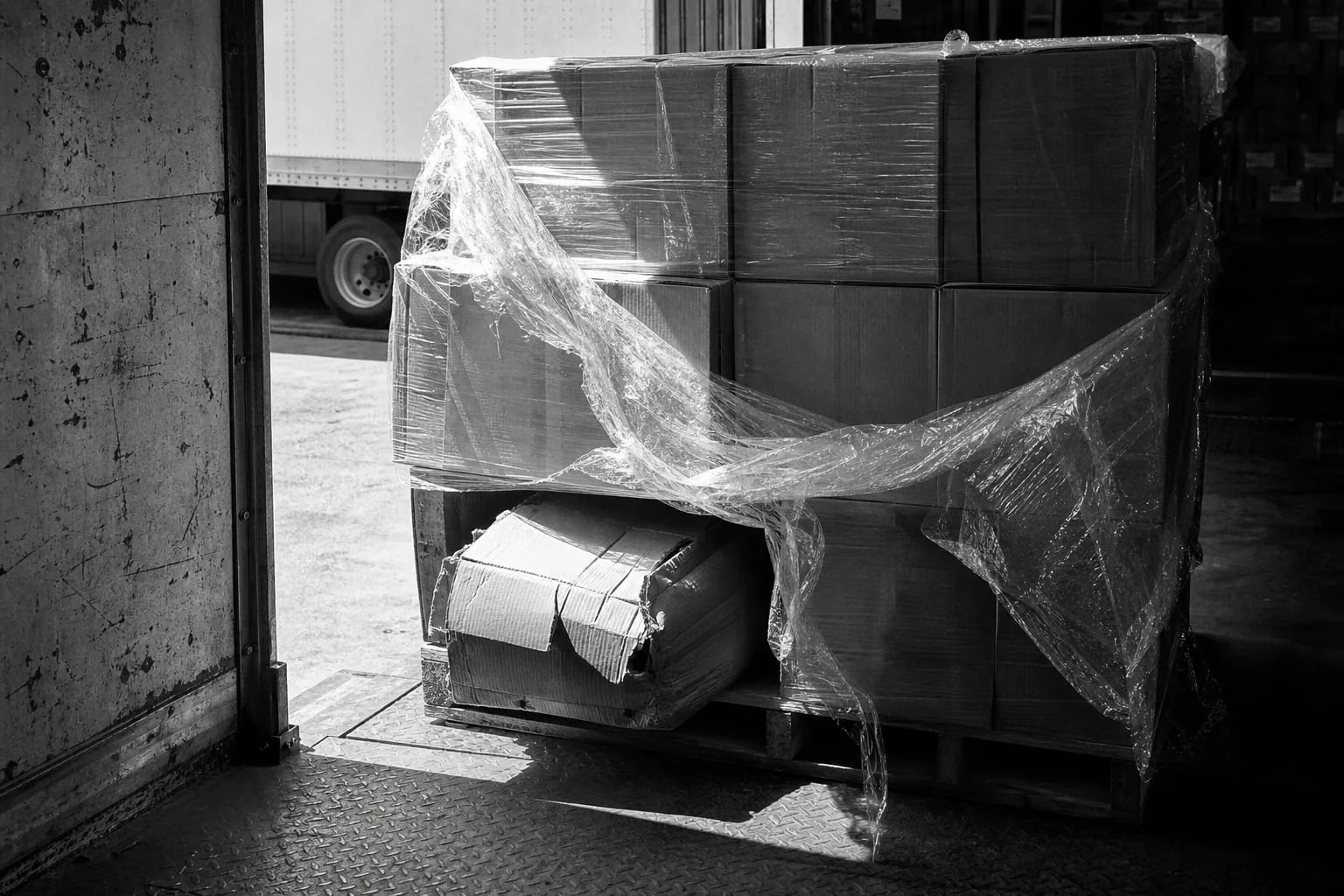
The standard assumption is simple and mostly wrong: the carrier had the goods, the goods broke, the carrier pays. Anyone who has actually filed a concealed damage claim knows how quickly that theory falls apart. The carrier's first question is not whether the pallet was dropped. It is whether the packaging was adequate for ordinary handling in the first place, and whether the person receiving the shipment wrote anything down before signing.
Liability in freight is allocated by a sequence, not by fault in the everyday sense. Understanding where in that sequence your loss sits is the difference between a paid claim and a polite letter.
Fault is not the test. Sufficiency is
Interstate motor carriers operate under a liability framework that makes the carrier responsible for goods in its custody, with a short list of defenses. One of those defenses is the inherent nature or defect of the goods, and in practice the most common version of that argument is inadequate packaging. If a carton fails under normal stacking, normal vibration and normal conveyor handling, the carrier's position is that nothing unusual happened. The box was simply not built for the trip it was sold.
That shifts the burden earlier than most shippers expect. The question is not what happened in the trailer. It is what condition the freight was in when it was tendered, and whether the packaging matched the transportation mode. A unit engineered for palletized LTL with a shrink-wrapped stack of forty is not the same unit that survives a parcel network alone, where it will be singulated, tipped, sorted and dropped onto a slide.
The Federal Motor Carrier Safety Administration oversees interstate motor carrier operations, and the bill of lading that governs a shipment is where the practical terms live. Read the one your carrier actually uses. The limits of liability, the notice periods and the definition of what counts as visible damage are all in there, and they vary.
What changed, and why claims now turn on the first fifteen minutes
Two things moved at once. Parcel and small-freight volume kept climbing as more manufacturers and distributors began shipping direct to end customers rather than to a handful of retail distribution centers. And the networks moving those packages became substantially more automated, which means more handling touches per package and fewer human decisions about which side is up.
The consequence is that damage patterns changed. Less crushing from bad stacking, more shock and drop damage to individual units. Carriers responded by tightening packaging expectations and by leaning harder on the sufficiency defense, particularly for concealed damage discovered after the driver has left.
The second change is procedural. Notification windows on many carrier contracts are shorter than the statutory backstop, and inspection requests are now frequently handled by photograph rather than by a physical visit. That sounds convenient. It also means the photographs you take in the first fifteen minutes are the entire evidentiary record, and there is no second chance to take them once the box is in the dumpster.
The order of operations at the dock
Everything recoverable happens before the driver pulls away. Everything after that is argument.
- Count and inspect before signing. A clean delivery receipt is a written statement that the freight arrived intact. Overturning it later is possible and expensive.
- Note exceptions specifically on the delivery receipt. Not "damaged." Write what you see: two cartons crushed on the bottom tier, shrink wrap torn on the north face, pallet stringer split. The driver's copy carries the same notation.
- Photograph before you unwrap. Shipping label, seal, pallet in place on the trailer if you can, then each layer as you break it down.
- Keep the packaging. All of it. The carrier's inspector will want to see the corrugated, the void fill and the pallet, because those are the exhibits in the sufficiency argument.
- Segregate the freight and stop work on it. Do not repair, do not repack, do not return it to inventory.
Concealed damage follows the same logic on a compressed clock. Most carrier tariffs require notice within a short window, commonly five business days from delivery, and the shorter the window the more likely a late report is treated as a failure to preserve evidence rather than a technicality.
The deadlines that are not negotiable
Two dates matter more than everything else in the file. Under the standard bill of lading terms used by interstate motor carriers, a written claim generally must be filed within nine months of delivery, and suit must be brought within two years and one day of the carrier's written denial. Miss the first and there is no claim. Miss the second and there is no remedy for a claim that was properly filed.
Those are outer limits, not targets. Contract carriage frequently shortens them, and parcel carriers operate on their own much tighter schedules. Pull the governing terms once, write the two dates on the file, and treat them as fixed.
Nothing in that sequence recovers a shipment that was inadequately packed. It only preserves the right to argue about it.
Moving the failure point upstream
The cheapest damage is the damage that happens where you can see it. That is the practical reason more shippers are consolidating loose components into a single pre-assembled, pre-packed unit before anything enters the transportation network. Bundling components, hardware, documentation and packaging into one shippable item is what kitting services handle, and the effect on damage exposure is structural: fewer packages per order, fewer handling touches, one carton engineered and tested for the mode it will actually travel in.
It also cleans up the claim itself. A single unit with a single tracking number and a single packing list produces a delivery receipt exception that maps directly to a dollar figure. Six loose cartons, two of which arrived on a later trailer, produce a week of reconciliation before anyone can even state what is missing.
Test the pack, document the test, and keep the specification on file. When a carrier raises sufficiency, a packaging protocol result is a considerably better answer than a description of how the box has always worked fine before.
Most shippers discover their packaging standard is inadequate by losing a claim. The alternative is to find out on a test bench, in a month when nothing is on fire, and to fix the carton before the network does it for you.