Two households on a suburban street agreed, without any difficulty at all, that the boundary between them ran along the line of an old hedge that had been there longer than either family. One of them replaced the hedge with a fence, on the same line, having mentioned it in advance and received a friendly yes. Four years later the other property was refinanced, a survey was ordered for reasons that had nothing to do with the fence, and the surveyor put the line eleven inches on the far side of it.
What the Neighbors Believed the Line Was
Both households were working from the same evidence and it was reasonable evidence. The hedge had been in place for decades, it ran straight, and it lined up approximately with the fences further down the street. Neither party had ever seen a survey, and neither had any reason to want one, since a boundary that nobody disputes generates no need to be checked. The deeds described the parcel in terms neither owner could translate into a position in a yard.
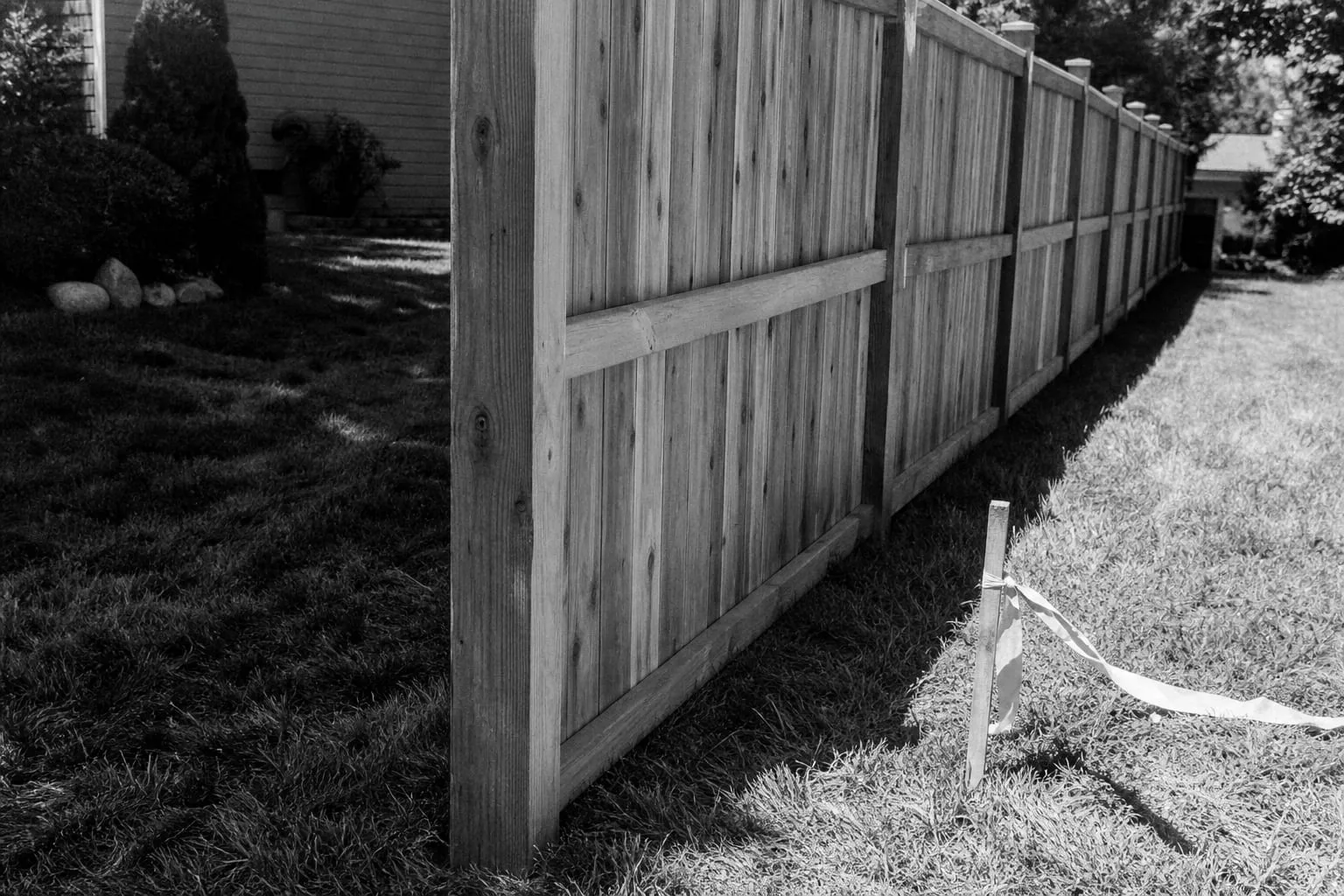
The fence itself was built carefully and with consultation, which turned out to matter later. It was discussed beforehand, positioned on the hedge line by agreement, and paid for entirely by the household that wanted it. There was no dispute at any point during the work and no reason for anyone to think one was possible. That history is worth noting because it is the ordinary case: most boundary problems are discovered years after a period of complete agreement between people who liked each other.
What the Survey Actually Found
A surveyor works from the recorded description of the parcel and from monuments set at the corners, not from what is visible on the ground. In this case the monuments were found, the description closed properly, and the resulting line ran eleven inches inside the fence for its full length, which put roughly forty square feet of one property on the wrong side of a structure. The hedge, it turned out, had never been on the line. It had been planted near it, at some point nobody could date, and had been treated as authoritative ever since.
That sequence is more common than it sounds. Hedges, driveways, retaining walls and sheds get placed by eye or by convenience, and each one becomes the reference for the next thing built near it. A yard can accumulate three generations of approximate decisions, all of them consistent with each other and none of them consistent with the recorded line. Nothing about it is anyone’s fault, and it stays invisible until a transaction forces a survey.
Why Nobody Involved Was Being Unreasonable
Once the survey existed, both households were in an awkward position rather than an adversarial one. The owner who commissioned it had not been looking for a problem and did not particularly want the eleven inches. The owner who built the fence had done everything correctly by any ordinary standard and now owned a structure that encroached. The lender, however, had a survey showing an encroachment, and lenders do not have the option of ignoring one, which is what turned a curiosity into something that required resolution.
The complicating factor was that neither party could simply agree to leave it, at least not informally. A quiet arrangement between two neighbors does not satisfy a title company, and it does not survive either of them selling, since the next owners inherit the discrepancy and not the goodwill. Whatever was going to be done had to be recorded somewhere, which meant involving people who charge for their time and moved the matter from a conversation over a fence to a small legal project.
What Fixing It Involved
The options were narrower than they first appeared. Moving the fence eleven inches was possible and would have cost a meaningful fraction of what the fence had cost to build, since a fence is not easy to shift without rebuilding much of it. A boundary line agreement, signed by both owners and recorded, could fix the line where the fence stood and would satisfy a title company. An easement was a third route, permitting the encroachment without moving the line. All three required an attorney, a recorded document, and the cooperation of both households, and the total came to a figure that was uncomfortable rather than ruinous.
Adverse possession came up, as it does in almost every conversation of this kind, and it did not help. The doctrine can move a boundary where someone has openly occupied a strip for long enough, but the required period runs to years or decades depending on the state, and several states additionally require the occupier to have paid property tax on the disputed ground. Four years of a fence, built with the neighbor’s cheerful agreement, is close to the weakest possible case, since permission is generally fatal to a claim that rests on possessing something as though it were yours. It is worth knowing early, because a great deal of time gets spent on the idea first.
The Part That Applies to Any Fence
The lesson is not that neighbors should distrust each other, which would be a miserable conclusion and the wrong one. It is that a fence is a permanent structure being placed against a legal line, and the cost of establishing that line properly is small compared with the cost of establishing it later under pressure. A survey before building is a modest expense, it takes a couple of weeks, and it turns a friendly assumption into a fact that will still be true after both households have moved on. The hedge was there for decades and was wrong the entire time, which is the ordinary condition of things everyone agrees about.