Most households believe their house is insured for what it is worth, and most of them are describing the wrong number. A policy does not insure market value, because a fire does not consume the land and a buyer’s willingness to pay has no bearing on what a framing crew charges. It insures the cost of putting the structure back, at today’s prices, under today’s building codes. The gap between those two figures opens quietly over years and is generally discovered at the least convenient possible moment.
Why the Purchase Price Is the Wrong Anchor
Purchase price is a market number and reflects things a builder never charges for: the school district, the commute, the view, the fact that three people wanted the house on the same weekend. It also includes the lot, which survives almost every insured peril. A house bought for a given sum in a desirable neighborhood might be rebuilt for considerably less, and a modest house in a market where construction labor is scarce might cost substantially more to replace than anyone would pay for it.
This is why an insurer setting dwelling coverage asks about square footage, the number of bathrooms, the roof covering, the foundation type, and the quality of the finishes rather than about the neighborhood. Those are construction inputs. When the resulting figure looks wrong to a homeowner, the instinct is to compare it against the mortgage or the assessment, and neither of those is the right comparison either, since a lender cares about the loan and an assessor cares about a tax base.
What Rebuild Cost Is Actually Made Of
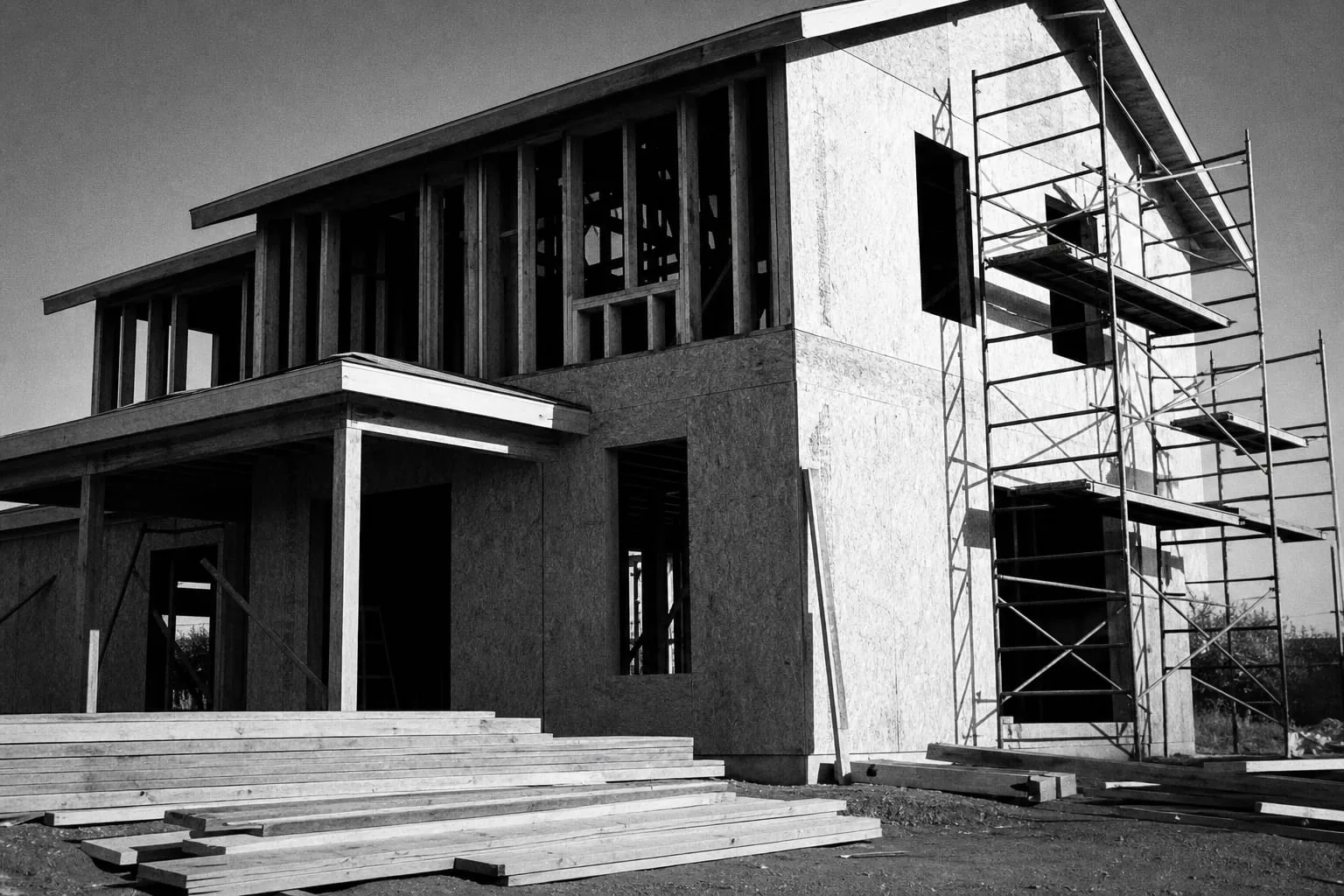
Rebuilding is not the same job as building, which is the part that gets underestimated. Before anything goes up, the remains of the old structure have to come down and be removed, which is a real cost on a house rather than a rounding error. The lot has to be worked around rather than worked on freely, since the neighbors, the trees, and the access are all fixed. A single house is also a small job for a builder, which means it is priced without the efficiencies that make a subdivision cheap per unit.
Then there are codes. A house built decades ago was legal when it was built and would not be legal now, and rebuilding means meeting the current requirements for insulation, electrical, egress, and in many regions wind or seismic detail. Standard policies frequently limit or exclude that additional cost unless an ordinance or law endorsement is added, which is a small line on a premium and a large one on a claim. Anyone with an older house should check whether that endorsement is present before assuming the rebuild figure is complete.
The Coinsurance Clause That Reduces Every Claim
The provision that turns under-insurance from a total loss problem into an everyday one is coinsurance, and it appears in some form in most property policies. It requires the dwelling to be insured to a stated proportion of its replacement cost, commonly eighty percent, and if it is not, the insurer pays only a corresponding share of any loss. The consequence is that a house insured well below its rebuild cost does not simply have a lower ceiling. Every claim it makes, including a small one, gets reduced.
That is the part homeowners find hardest to accept, and it is worth stating without softening. A kitchen fire that would have cost a certain sum to repair is settled at a fraction of that figure, minus the deductible, because a number on the declarations page was set years ago and never revisited. Nothing about the fire was unusual and nothing was done wrong at the time of the claim. The reduction was decided long before, by an arithmetic relationship nobody had looked at.
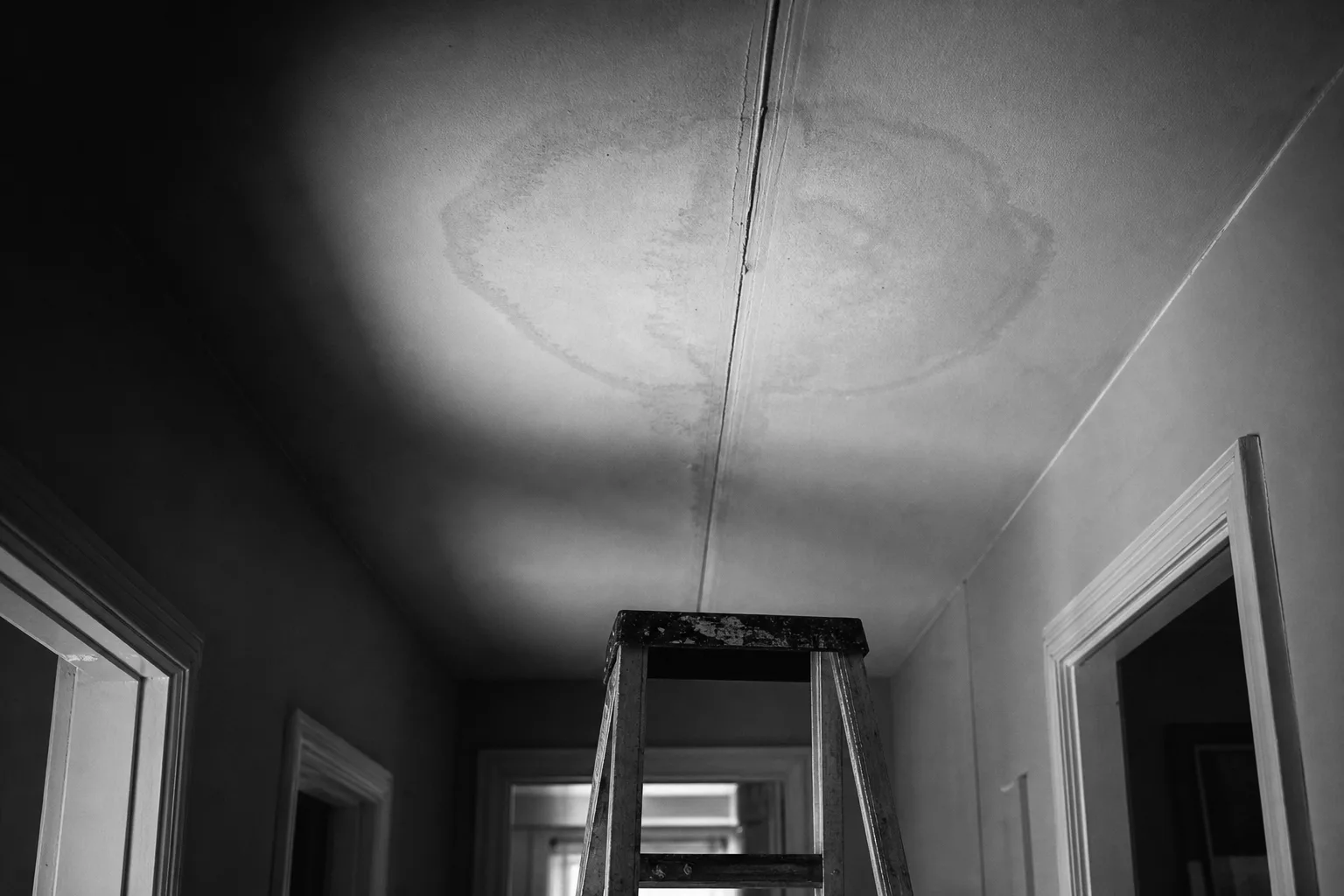
Partial losses are also the overwhelming majority of what actually happens to houses, which is why the clause deserves more attention than it gets. Total losses are rare and vivid, so the conversation about under-insurance tends to be framed around them, as though the risk were confined to the house burning to the ground. The realistic risk is duller and far more likely: a storm takes part of a roof, a supply line floods two rooms, a vehicle comes through a garage wall. Each of those is a claim the coinsurance provision touches, and each is settled against a percentage set by a figure nobody has reviewed in six years.
Getting a Number You Can Defend
Three routes produce a defensible figure. The cheapest is to ask the insurer to rerun their replacement cost estimator with current details, which costs nothing and catches the common errors, particularly a finished basement or an addition the carrier never learned about. The second is to ask a local builder what they would charge per square foot for new construction of similar quality, then apply that to the house and add demolition. The third, for unusual or historic properties, is a paid replacement cost appraisal.
Any of the three beats the alternative, which is accepting a number that was generated once at the point of sale and has been indexed automatically ever since. Automatic inflation adjustments are useful and they are not sufficient, because they apply a general index to a specific market and they cannot know about the addition, the new roof, or the kitchen that was rebuilt to a considerably higher standard than the one it replaced.
Keeping It Current Without Thinking About It
The maintenance version of this is short. Tell the insurer about any renovation that adds space or materially raises the quality of the finishes, at the time it happens, because an unreported improvement widens the gap in exactly the direction that hurts. Confirm once a year that the inflation guard is switched on. Ask about an extended replacement cost endorsement, which pays a stated percentage above the dwelling limit and exists precisely for the case where construction costs move faster than anyone expected after a regional disaster.
None of this takes longer than a phone call, and the whole point of doing it on an ordinary afternoon is that the alternative is doing it in the presence of an adjuster, when the number is already fixed and no longer negotiable. A house is insured for a figure somebody chose. It is worth being the person who chose it, and worth knowing when it was last looked at.