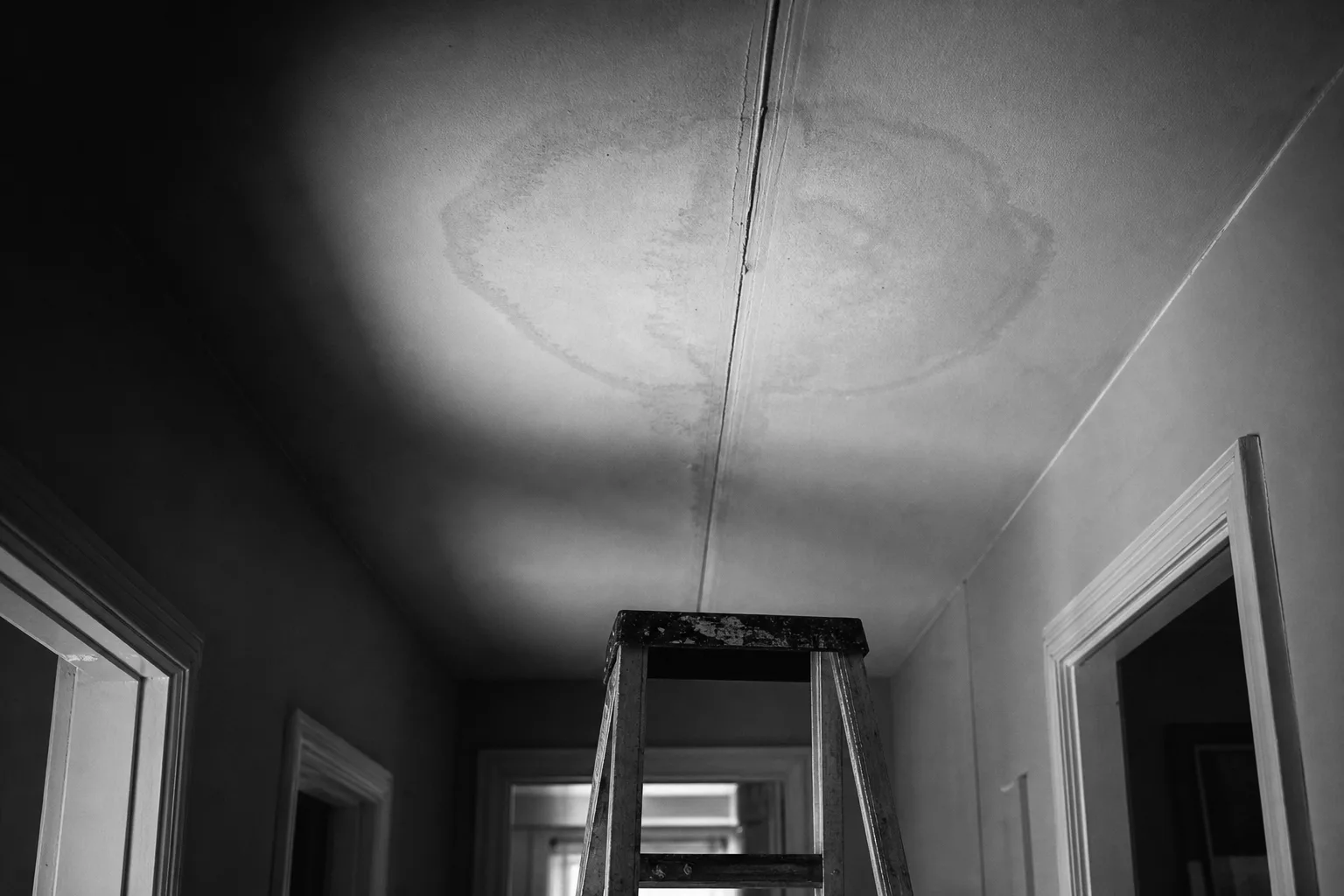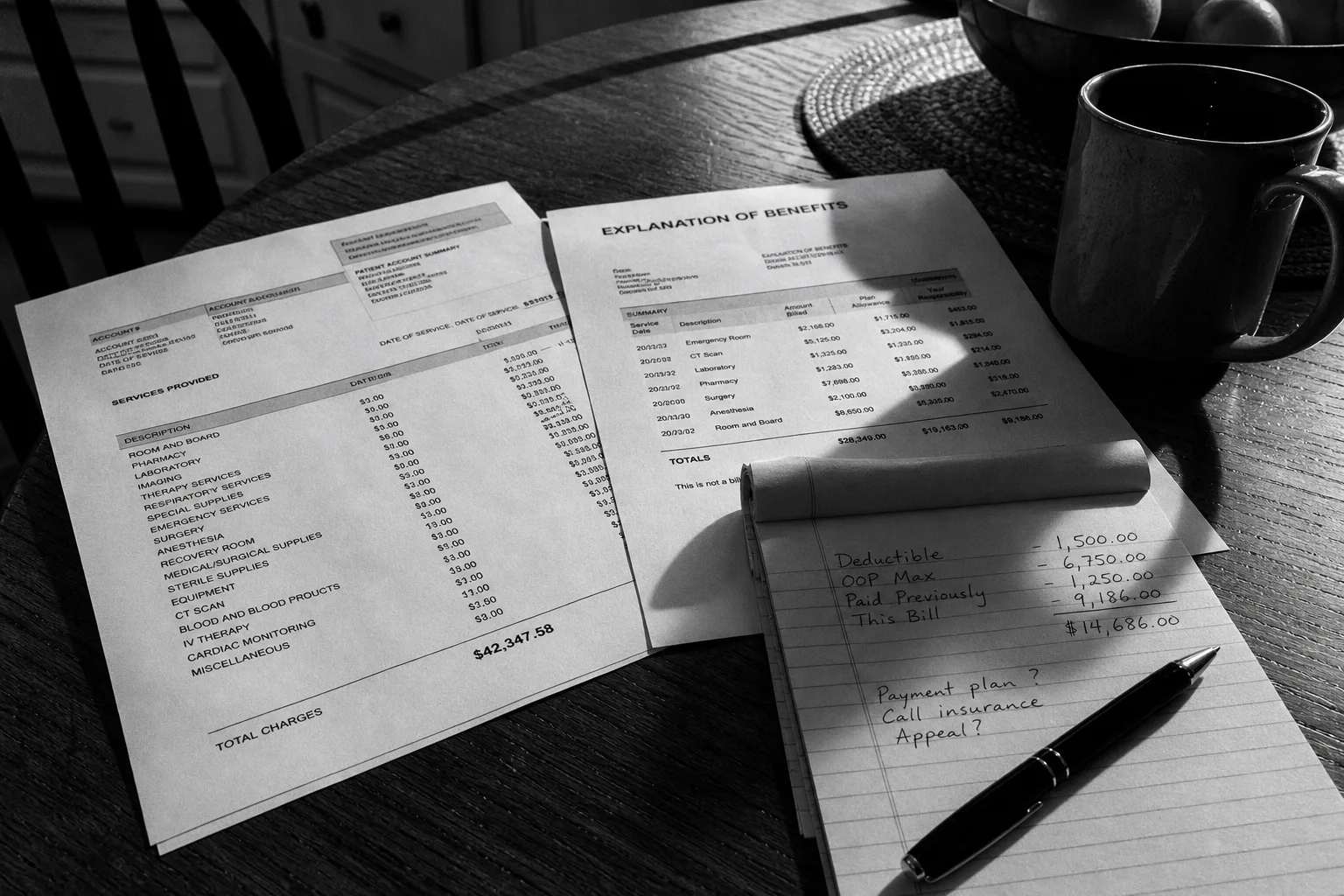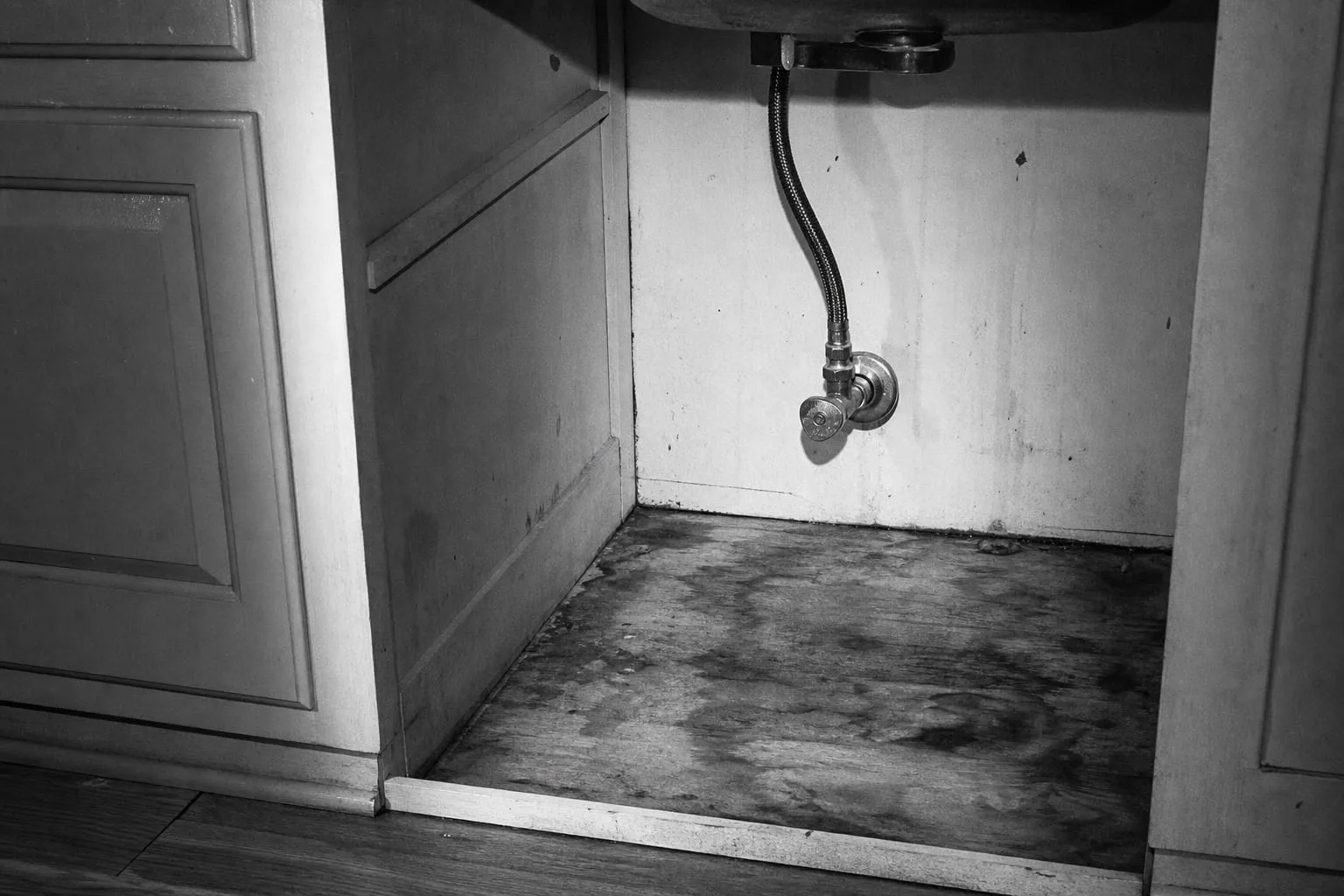
A homeowner opens a kitchen cabinet in January to find the base soft and the back panel dark, and pulls it apart to discover that the supply line to the dishwasher has been weeping for a long time. The floor under the run is spongy across three feet. The cause is not in dispute, the damage is plainly there, and everyone involved expects a straightforward claim. What actually happens is a settlement that pays for most of the kitchen and none of the thing that caused the problem, and the reason sits in one sentence most policyholders have never read.
The Loss as the Homeowner Described It
The account given on the claim call was accurate and, in the way these accounts usually are, incomplete. A leak was discovered in January. The cabinet base and back panel were ruined, the flooring under the cabinet run had lifted, and the subfloor beneath that was soft enough to give underfoot. A plumber attended, replaced the braided supply line and its connector, and put the discovery down to a fitting that had been slowly working loose. Nothing about the description suggested anything unusual, and the file opened as an ordinary water loss.
What the description did not say, because the homeowner did not know it, was how long the leak had been running. The kitchen was used daily and nobody had noticed anything, which felt like evidence that the leak was recent. It is not evidence of that at all. A weeping connector releases a small volume steadily into a cabinet base that absorbs it, and the first visible sign frequently arrives many months after the first drop, particularly where a dishwasher runs warm and dries the area between cycles.
What the Adjuster Was Actually Looking At
An adjuster inspecting this kind of loss spends very little time on the volume of damage and a great deal on its edges. Repeated wetting and drying leaves a layered mark rather than a single stain, and those layers are readable in the same rough way growth rings are. Mineral deposits build where water has evaporated repeatedly in the same place. Fasteners corrode in a pattern. Wood that has been wet once and then dried looks different from wood that has cycled through it thirty times, and the difference is visible to somebody who looks at it weekly.
None of that is an accusation. Adjusters are not generally looking for a reason to decline, and most of them will say so; they are answering a question the policy makes them answer, which is whether this was an event or a condition. An event is sudden and accidental and has a date. A condition has a history, and the history in this kitchen was written on the underside of a subfloor in tide lines that put the start of the leak somewhere in the previous spring.
The Sentence in the Policy That Did the Work
Most homeowners policies contain a provision excluding loss caused by continuous or repeated seepage or leakage of water over a period of weeks or months. The period is often stated outright, and fourteen days is the figure that appears most frequently. It is a short sentence sitting inside a long section, and it is doing more work than any other clause in the document, because it converts the question of coverage from how bad is the damage into how long was this running, which is a question about the building rather than about the homeowner.
The clause is also indifferent to whether anyone could reasonably have found the leak sooner. That feels unfair on first reading and makes more sense on second. Insurance prices sudden events, and a slow leak inside a cabinet is closer to a maintenance outcome than to an accident, however invisible it was. The practical consequence is that noticing is what matters, not blame, and a sensor costing very little under a dishwasher or a water heater converts a gradual leak into a sudden one in the only sense the contract recognizes.
Why the Repair Was Covered and the Pipe Was Not
The settlement in this case split along a line that looks arbitrary until it is explained. The failed supply line and connector were declined outright, since a fitting working loose over a year is wear rather than an accident, and that component had reached the end of a service life the policy never undertook to fund. Some of the resulting damage was paid. The cabinet run, the flooring, and the subfloor drying were covered on the reasoning that the escape of water from the plumbing system was itself the covered peril, notwithstanding how long it had been escaping.
How much gets paid in a split like this varies more than any figure would suggest, because it depends on the exact wording, the state, and how the seepage clause interacts with the ensuing loss provision. The honest range is wide. Some carriers pay the resulting damage in full and decline only the component. Others apply the seepage exclusion to everything downstream of it and pay very little. The only reliable way to know which version applies is to read the specific form, and the time to do that is before anything is wet.
What a Different Sequence Would Have Produced
The counterfactual is worth sitting with, because it is cheap. A leak detector under the sink or behind the dishwasher would have sounded within days of the connector starting to weep. The plumber would have replaced a fitting for a small fixed cost, the cabinet base would have dried, and there would have been no claim at all, no deductible, and nothing on the loss history that a carrier reads at renewal. The whole difference between that outcome and this one is a period of months during which nobody was in a position to notice.
The Part That Generalizes
Every household has two or three places where a slow leak could run for a year without announcing itself: behind a dishwasher, under a water heater, at the back of a laundry, inside a vanity that mostly holds cleaning supplies. Those are the places where a small sensor earns its cost many times over, and they are also the places worth opening once a year and looking at properly. The kitchen in January was not an unlucky house. It was an ordinary one, with an ordinary fitting, in a spot nobody had reason to look at until the floor moved.