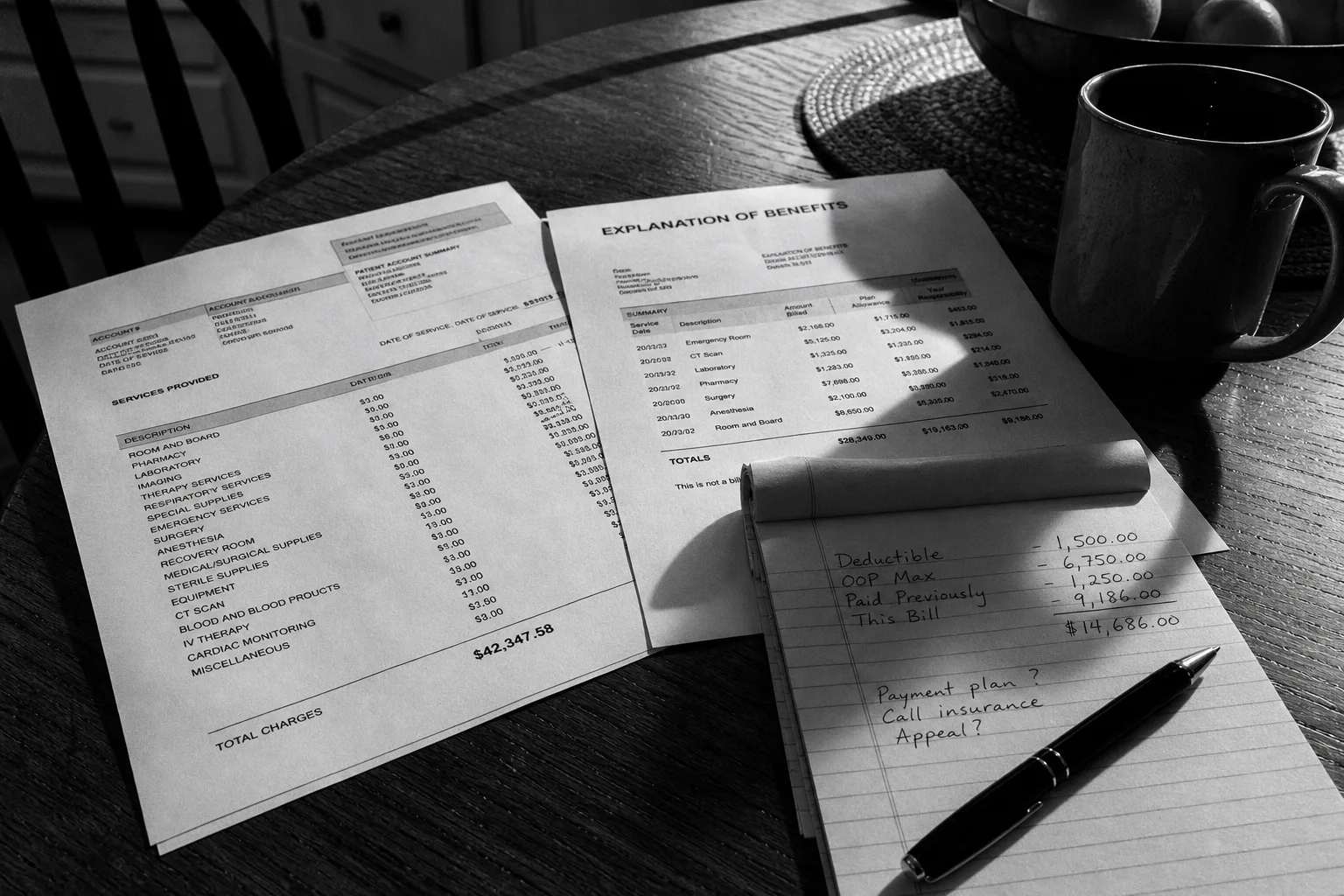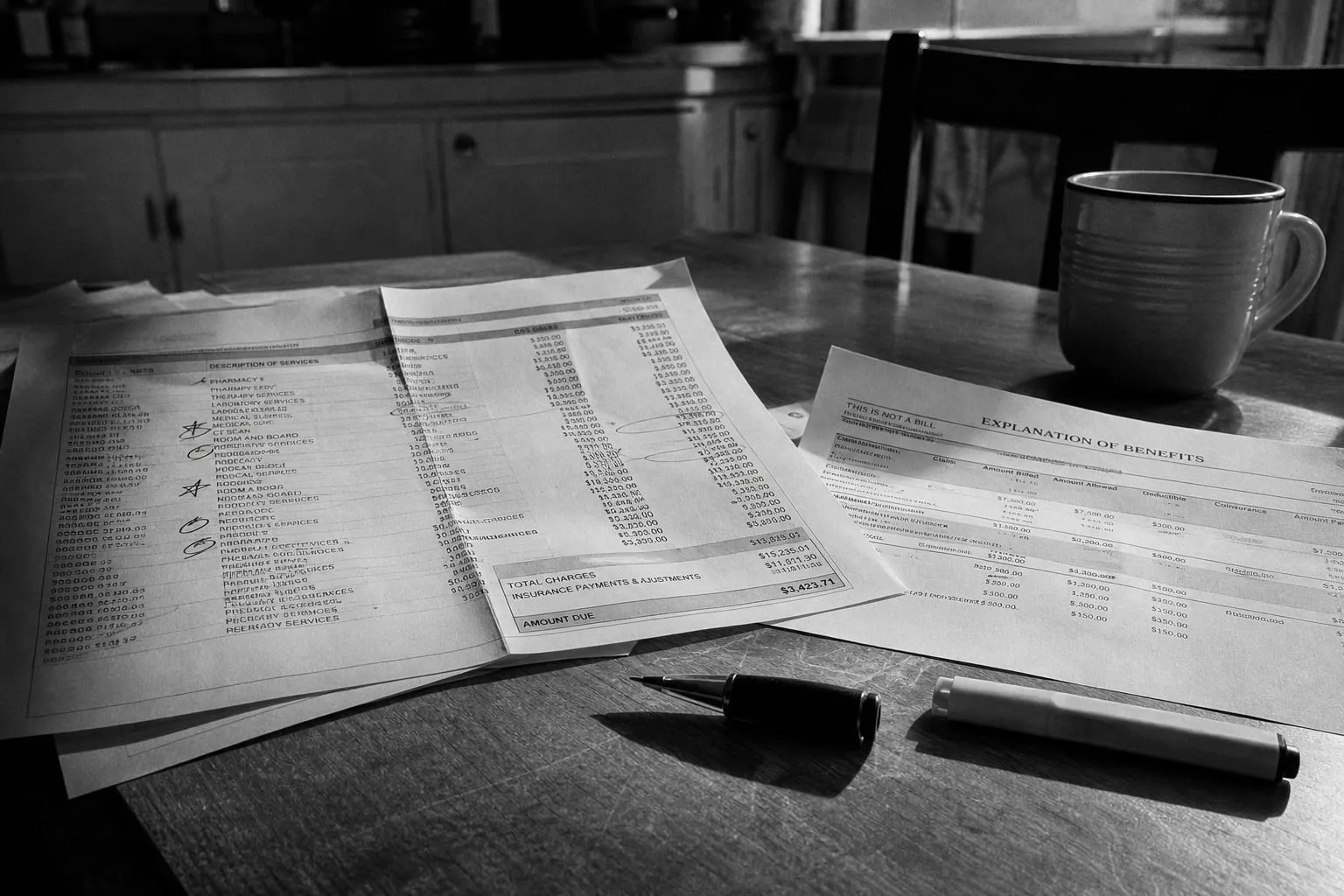
The first document a hospital sends you is usually not a bill. It is a summary: a few category totals, a balance, and a due date. Nothing on it can be checked against anything. If you intend to question a charge, the sequence starts with getting a different document, and it starts before you pay anything, because a paid balance is a much harder thing to reopen than an open one.
Ask for the itemized statement, and ask in writing
The itemized statement is the version with every line on it: date of service, a code, a description, a quantity, a unit charge. Hospitals produce it on request. Clinics usually can too, though smaller practices may need a day or two to pull it from their practice management system.
Make the request in writing, even if you also call. You want a dated record that you asked, because the date you asked becomes the anchor for everything that follows. If a balance later moves toward collections, a documented dispute in progress changes the conversation considerably.
Two other documents belong in the same folder. The explanation of benefits from your insurer, which is not a bill and says so, tells you what the plan allowed, what it paid, and what it assigned to you. And if you were uninsured or paying cash, the good faith estimate you should have received before the service tells you what the provider said it would cost. Line the three up side by side. Most real errors are visible in the gaps between them.
What the lines are actually made of
A hospital line typically carries a revenue code (the department or category) and often a CPT or HCPCS code (the specific procedure, test, or supply). Professional services from physicians usually arrive on a separate bill entirely, even for care delivered in one building on one afternoon. That surprises people who assume a single visit produces a single invoice. It routinely produces two or three.
Read for these things specifically:
- Quantities. A unit count of 2 where you received one dose is the single most common recoverable error.
- Dates. Charges dated after discharge, or on a day you were not there.
- Duplicates. The same code twice on the same date with no clinical reason.
- Level of service. Emergency department visits are billed at levels, and a level five charge for a short, uncomplicated visit is worth asking about.
- Room and board versus supplies. Items normally bundled into a room charge should not also appear as separate lines.
You are not auditing the medicine. You are checking that the paperwork describes the day you actually had.
What changed, and why the old advice is out of date
Billing guidance written before 2022 is missing most of the current protections. Three shifts matter.
The federal surprise billing rules took effect at the start of 2022. For emergency care, and for out-of-network clinicians working at an in-network facility, you generally cannot be balance billed beyond your in-network cost sharing. Air ambulance transport is covered by the same protection. Ground ambulance largely is not, which is a distinction worth knowing before you assume a bill is improper.
The same package created the good faith estimate for people who are uninsured or choosing not to use insurance. If the final bill exceeds that estimate by at least $400, there is a federal patient-provider dispute resolution process. It has a deadline: roughly 120 calendar days from the date on the bill. Miss it and the route closes, whatever the merits.
Hospital price transparency has also tightened. Facilities are required to publish machine-readable files of their standard charges and negotiated rates, and the required format has become more standardized rather than less. The Centers for Medicare and Medicaid Services oversees both the transparency requirements and federal enforcement of the surprise billing rules. In practice this means a charge you think is wildly out of line can sometimes be compared against the facility's own published rate for the same code.
The order the clock runs in
Sequence decides outcomes here more than argument quality does.
- Immediately. Request the itemized statement. Do not pay a disputed balance to be safe. Ask the billing office to note the account as under review.
- Within days. Compare the three documents. Identify specific lines, by code and date, rather than complaining about the total.
- Within the insurer's window. If the plan denied or underpaid, the internal appeal generally must be filed within 180 days of the denial notice. External review typically follows within four months of the final internal decision. These are the deadlines that are genuinely unrecoverable.
- Within 120 days of a self-pay bill. If the good faith estimate was exceeded by $400 or more, start the dispute resolution process rather than negotiating indefinitely.
- Before the account ages. Ask about financial assistance and charity care in parallel, not afterward. Nonprofit hospitals are required to have written policies, and eligibility is often broader than people expect.
Anything that can wait, can wait. Payment plans, hardship applications and negotiated discounts remain available later. Appeal windows do not.
If it reaches collections
Credit reporting on medical debt changed recently too, and in the consumer's favor. The three nationwide credit bureaus removed paid medical collections from consumer reports, stopped reporting medical collection balances under $500, and extended the waiting period before an unpaid medical collection appears to a full year. That year is usable time. It is enough to finish an appeal, complete a financial assistance application, or get an incorrect line reversed before the item ever surfaces on a report.
The itemized statement is the whole hinge. Ask for it on the day the first summary arrives, keep the dated copy, and every later option stays open a good deal longer than most people assume.