Walk into a room the morning after something has gone wrong in it and the strongest impulse is to start clearing. It is a good impulse, it makes the house feel manageable again, and it destroys a significant amount of the material that will determine what the claim pays. An adjuster forms a view from what they can see and what can be produced, and a homeowner who has spent Saturday being efficient may have removed most of both. A handful of categories are worth keeping until somebody with a clipboard has looked at them.
The Component That Failed
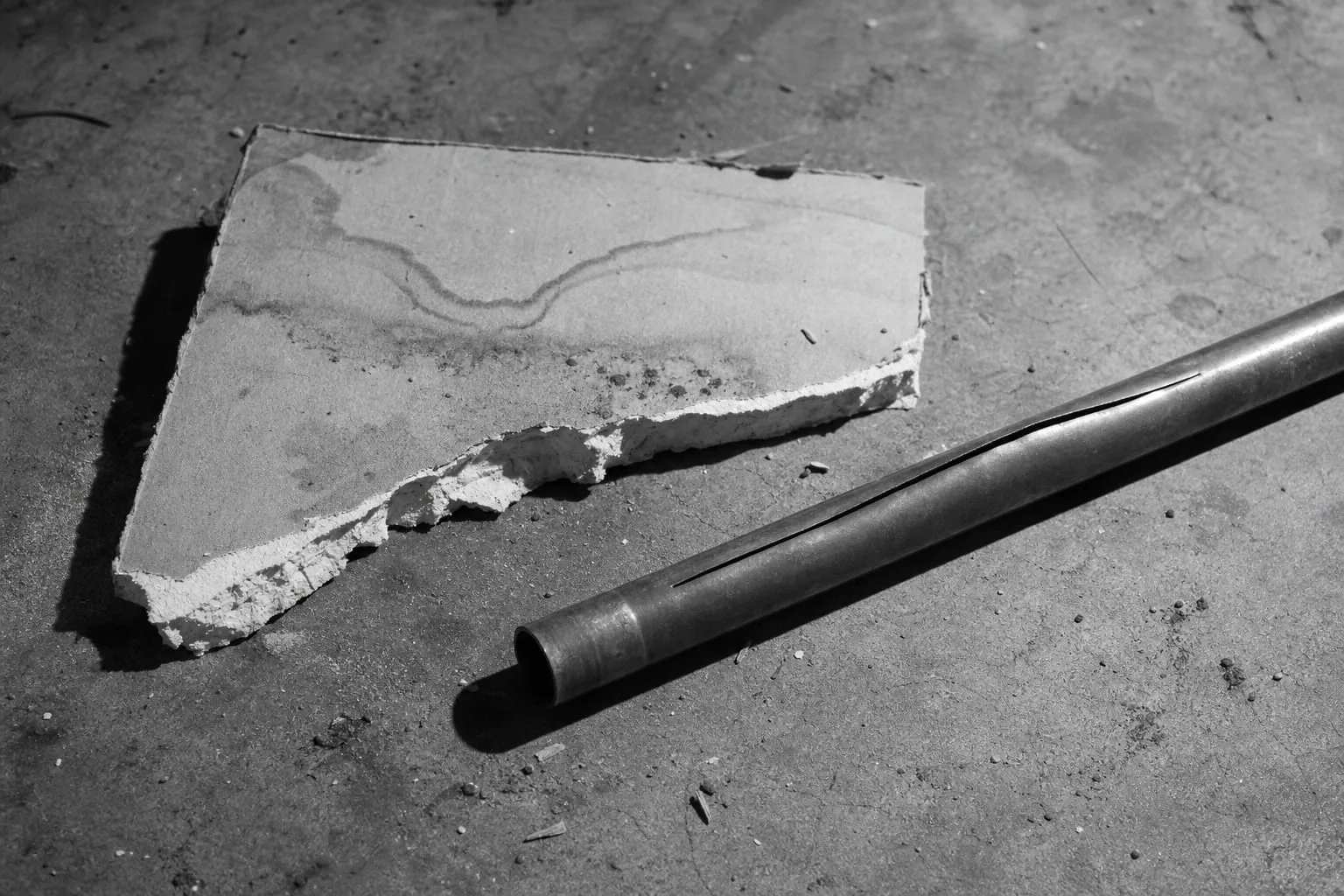
The single most important object is whatever broke. A split flexible connector, a corroded valve, a water heater fitting, a section of pipe: these are unpleasant to store and they are the physical evidence of how the loss happened, which is the question the policy actually turns on. Whether a failure was sudden or the end point of a long deterioration is often readable from the part itself, and that reading decides whether the component is covered, whether the resulting damage is covered, or neither.
Plumbers dispose of these as a matter of routine, so the request has to be made at the time rather than afterward. Ask for the old part to be left, put it in a bag, label the bag with the date and where it came from, and put it somewhere out of the way. If a contractor has already taken it, ask whether they still have it, because the answer is sometimes yes for a few days. Photographs of the failure in place are the fallback and they are worth taking regardless.
Damaged Contents, Left Where They Fell
Contents claims are settled from an inventory, and an inventory assembled after everything has been carried to the curb is a list of things somebody remembers owning. The stronger version is a set of photographs showing the damaged items in position, with the damage visible, before anything is moved. That establishes both that the items were there and what condition they were in, which are the two things that get questioned when a claim is reviewed by somebody who was not present.
Nothing about this requires keeping ruined furniture indefinitely in a wet room, which would be unreasonable and sometimes unsafe. It requires photographing before moving, and then storing what can be stored, ideally in a garage or another dry space, until the adjuster has been. Where an item genuinely has to be disposed of for health reasons, photographing it thoroughly first and noting the reason for disposal preserves most of the value.
Anything Cut Out of a Wall or Floor
Restoration work involves removal, and the material that comes out carries the record of the loss in a way that a photograph of the cavity afterward does not. A section of drywall showing a tide line, a piece of subfloor with staining that runs in a pattern, or a length of baseboard with layered marks all describe how long water was present and where it travelled. Keeping a representative piece of each, rather than everything, is usually sufficient and takes very little space.
Receipts, Model Numbers, and the Paper Nobody Keeps
Documentation is worth as much as the physical evidence and is easier to lose. Model and serial numbers of damaged appliances, receipts for anything relatively new, warranty paperwork, and the invoice from whoever last serviced the equipment all support a claim in ways that description cannot. Photographs of a data plate on the back of an appliance take a second and answer questions that would otherwise be resolved by an adjuster’s estimate of what a comparable unit costs.
Serial numbers matter for a second reason that has nothing to do with valuation, which is that an appliance failing under a manufacturer defect may be somebody else’s liability rather than the insurer’s. A water heater that split three years into a six year warranty, or a supply hose subject to a recall, changes who ultimately pays for the loss. Insurers pursue that themselves through subrogation, and they can only do it if the failed unit and its identifying plate still exist, which is another argument for the bag in the garage.
The Written Scope, Before Anyone Starts
The last thing to preserve is not an object but a document, and it is the one most likely to be skipped in the rush to get work underway. A written scope from the restoration contractor, stating what is being removed and dried and why, produced before the work begins rather than as an invoice afterward, is what allows a homeowner and an insurer to talk about the same job. Emergency mitigation should never wait for an adjuster, and the paperwork that describes it should never be written from memory afterward, which is the whole balance to strike in the first forty-eight hours.