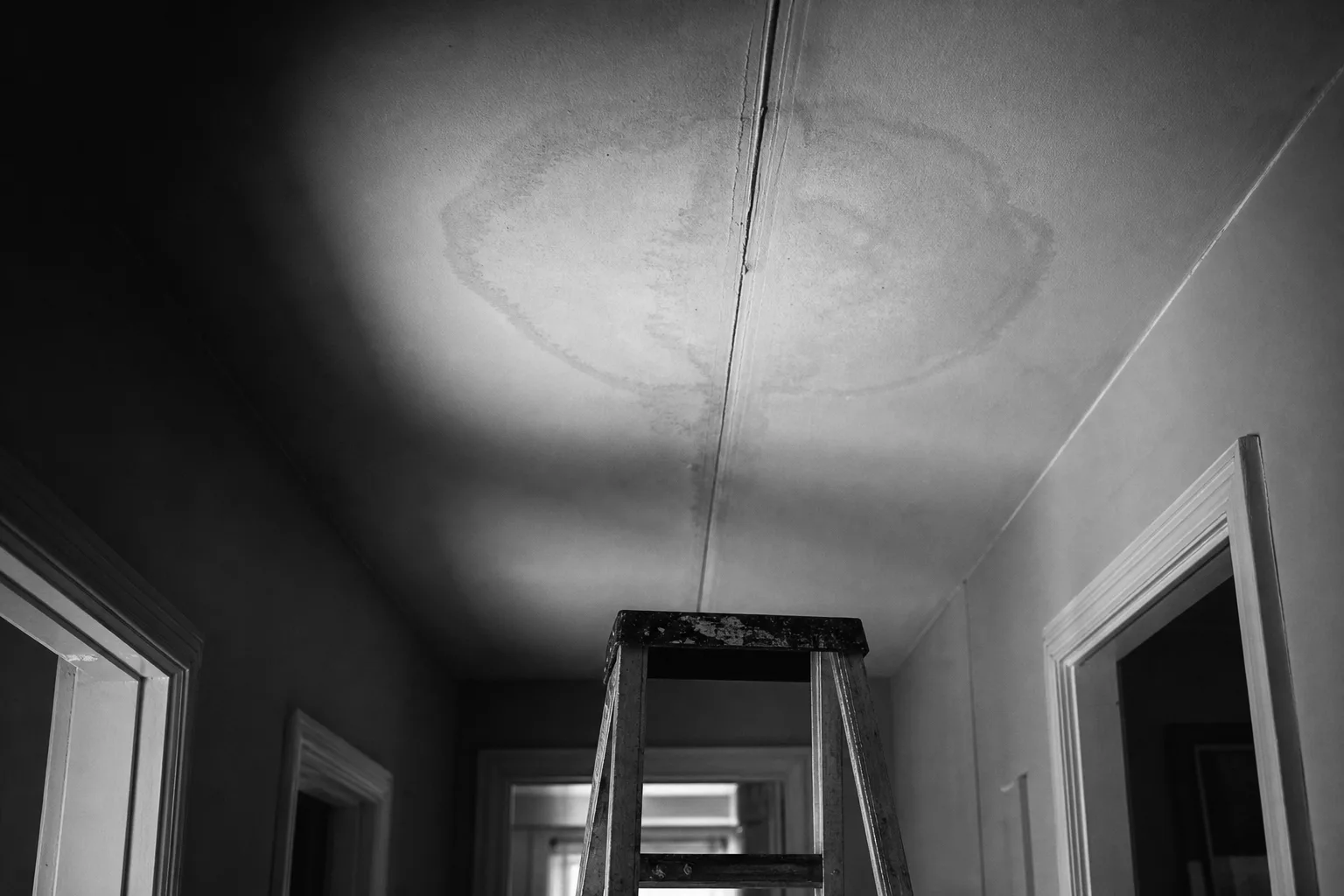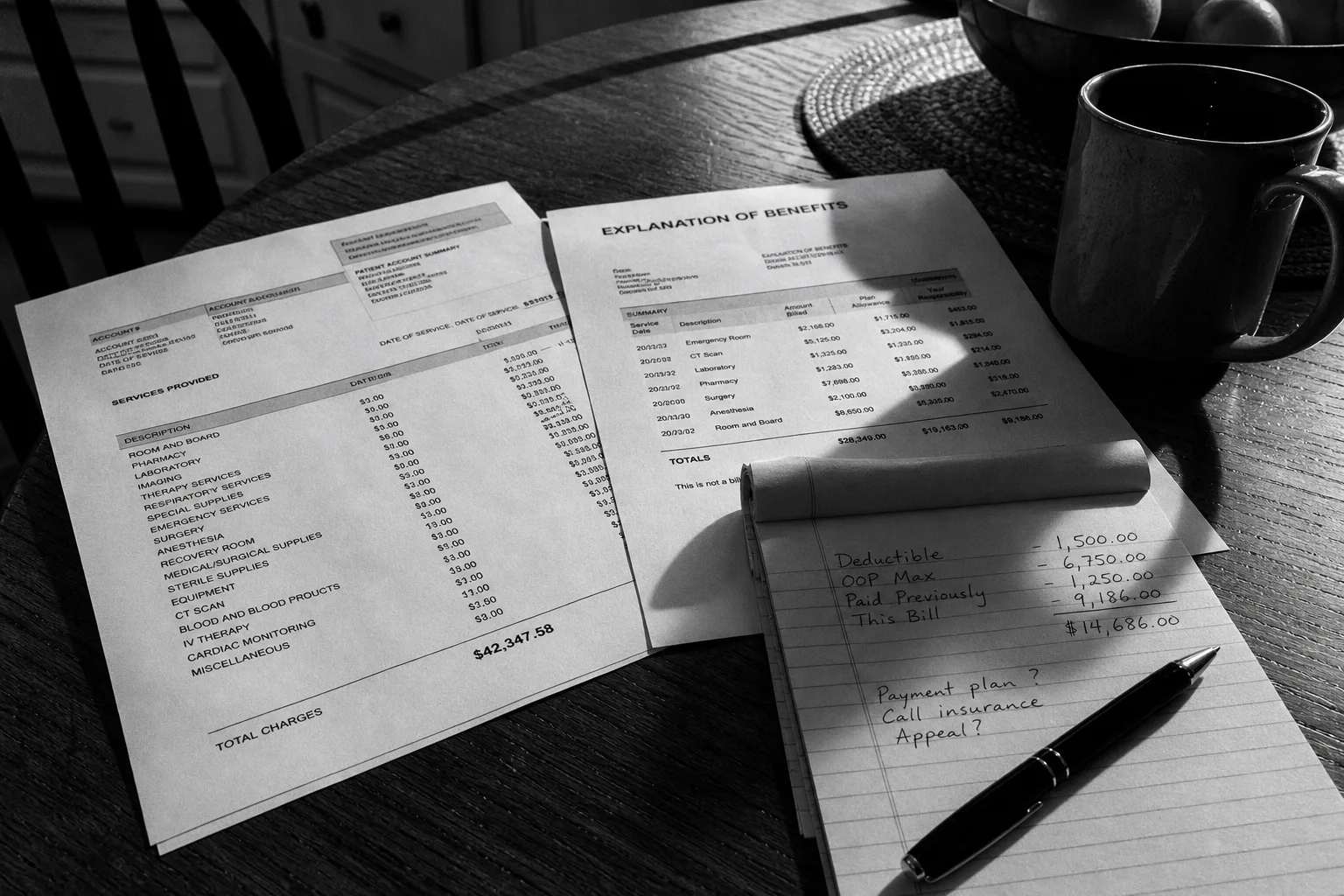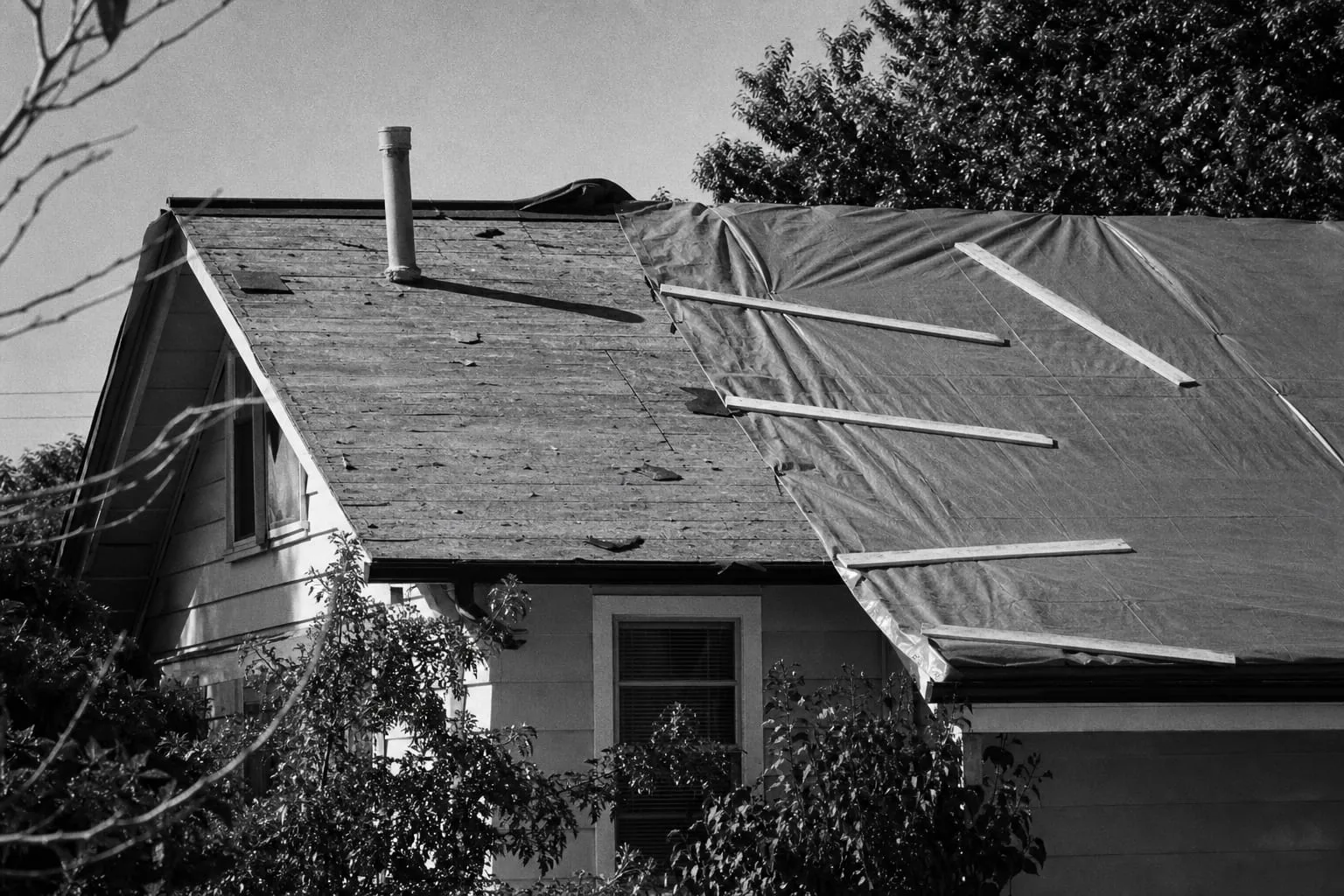
Drive through a neighborhood two months after a serious hailstorm and the evidence is easy to read. Some roofs are new. Some are untouched. And a scattered few carry a blue tarp that has been there since August, weathered at the edges, held down by lumber that has started to move. Those houses are not the ones that could not afford the work or chose to wait. They are the ones where the work started and stopped, and the reasons have far more to do with how the job was sold than with anything that happened on the roof.
Why the Work Gets Started and Not Completed
A roof that is half done usually reflects a contractor who has taken on more jobs than they can crew, which is the predictable result of a market where a year of demand arrives in a fortnight. Signing customers costs a conversation and doing the work costs a crew, so the two scale differently, and a company that signs aggressively in the week after a storm can be committed to more work than it can complete before winter. Every additional signature makes the queue longer.
The second cause is money rather than labor. Insurance proceeds arrive in stages, and a contractor operating without reserves may be using the deposit from one job to buy material for another, which works while the pipeline is growing and stops working the moment it is not. A crew pulled off a partially completed roof has usually been sent to a job where the next payment is available, and the household waiting under the tarp is not being punished so much as deprioritized.
The Crews That Arrive After a Storm
Storm work attracts companies that follow weather, and the category covers everything from established regional firms with a legitimate mobile division to operations assembled the week before. The honest position is that being from out of state is not itself a problem, since major events genuinely require more capacity than any local market holds. What matters is whether the company will still be reachable in three years when a workmanship issue appears, and that is a different question from whether they can put a roof on next week.
The checks that separate the two are ordinary and take an afternoon. A state contractor license verified against the state registry rather than against a card. Proof of general liability and workers compensation obtained directly from the insurer rather than as a photocopy. A local address that is a place rather than a mailbox. And a written answer to what happens if a leak appears in year two, which is the question that most reliably changes the tone of a conversation.
What a Signed Contingency Agreement Actually Does
The document presented at the door after a storm is frequently not a contract for a roof. It is a contingency agreement, under which the household appoints the contractor to handle the insurance claim and commits to using them if the claim is approved, often with a cancellation fee attached. It is signed within twenty minutes of meeting somebody, before any scope or price exists, which is a considerable commitment to make on the strength of a conversation in a driveway.
These agreements are lawful in most states and several regulate them, commonly by requiring a cancellation window of a few days and by limiting what can be charged. The practical advice is narrow: nothing has to be signed on the day, an adjuster will inspect regardless of who is standing next to them, and a household that waits a week loses nothing except the contractor’s preferred position in the queue. Reading the cancellation terms before signing is the single most useful minute available in the whole process.
Where the Insurance Money Goes and When
Understanding the payment structure explains most of what goes wrong afterward. A replacement cost policy typically pays in two parts: an initial amount reflecting depreciated value, and the remainder once the work is completed and documented. A mortgage lender is frequently named on the check and has its own release process, which adds weeks. None of this is unusual and all of it means the household controls a payment schedule that some contractors would prefer to control instead.
Federal disaster assistance sits alongside insurance rather than replacing it, and after a declared event the programs FEMA administers are aimed at uninsured losses and immediate needs rather than at topping up a settlement. That distinction catches households out, because the assistance arrives in the same period as the claim and is easily assumed to be part of it. Keeping the two accounted for separately matters, particularly where a contractor offers to handle both.
The deductible is where the pressure usually shows up first, and it is worth being direct about it. An offer to waive, absorb or rebate a deductible is illegal in a substantial number of states and is a form of insurance fraud in most framings, since the settlement is calculated on the assumption that the household pays it. Contractors who make that offer at the door are describing how they intend to handle the paperwork, which is information about everything else they will do. The households that later end up under a tarp are disproportionately the ones who accepted an arrangement that sounded generous in August.
Getting an Abandoned Roof Finished
A household under a tarp in November has a sequence available and it starts with documentation rather than with anger. Photograph the current state, gather the contract and every payment made, and send a written demand stating what remains and a deadline, by a method that produces a delivery record. That letter resolves a meaningful share of these situations on its own, because a contractor juggling twenty unhappy customers responds to the one who has created a paper trail.
If it does not, the routes are a claim against the contractor’s surety bond where the state requires one, a complaint to the licensing board, and a new contractor engaged to finish the work with the shortfall pursued separately. The insurer should be told the job was abandoned, since carriers deal with this regularly and can sometimes assist with the paperwork. What should not happen is a further payment to the original contractor in the hope of restarting the work.
Payment structure is the other lever a household holds and generally gives away without noticing. A deposit that covers materials is ordinary and reasonable; a deposit approaching half the job before anything is delivered is not, and it funds the contractor rather than the roof. Progress payments tied to visible stages, with a meaningful amount held until the work is complete and the site cleared, keep the incentive pointing at finishing. A household that has paid most of the money before the tear-off has already spent the only leverage it was going to have.
Hiring in a Month When Everyone Is Busy
The households that come out of a storm season well are generally the ones that behaved as though there were no hurry, which is difficult when there is a hole in the roof and easy once emergency mitigation has been done. A tarp properly installed by a competent crew buys weeks, and weeks are enough to get two or three written scopes from companies with a verifiable local history and to compare them properly. The neighborhood in November tells the story clearly enough: the finished roofs and the abandoned ones were mostly decided in the first week, in a driveway, by whether anybody felt able to say they would think about it.